
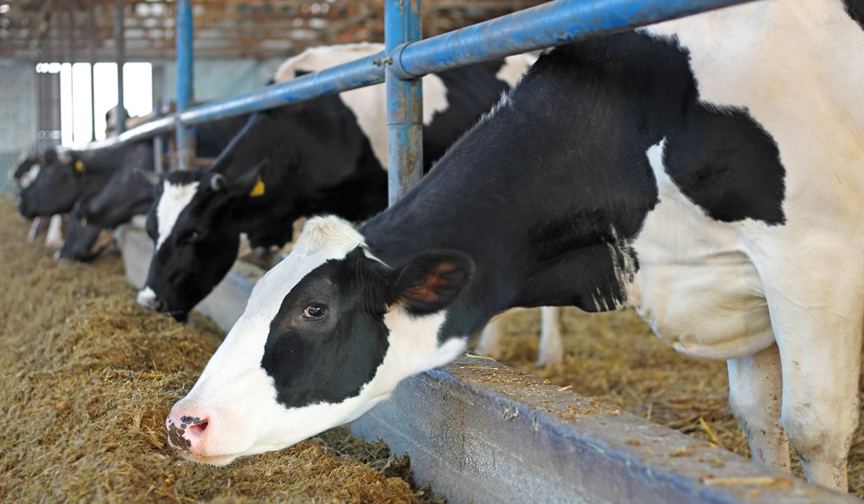

We are all aware of how critical nutritional management is to overall herd health and productivity. We are also learning more and more about how the connection between nutrition and efficiency begins at birth. It’s vital to deliver the necessary nutrients to each cow, at the correct stage of life, to maintain optimal output. Proper nutrition and an ideal rumen environment, appropriate animal growth, and condition all play a part when it comes to cow health, welfare, and the overall success of a farm.
Nutrition can help strengthen cell wall junctions to prevent leaky gut
The intestinal wall of a cow is only a single layer of cells that is bound together by what are known as “tight junctions.” These tight junctions are made of protein and are responsible for regulating what comes in or through the cells and into the animal’s bloodstream. Volatile fatty acids (VFA’s) that are produced in the rumen, including butyrate, are important energy sources for those intestinal epithelial cells. So, it is also important that the rumen is a stable environment where rumen microbes are able to continue producing appropriate VFA’s to ensure total gut health and function.
Optimal rumen environment can avoid SARA and lameness
Subacute ruminal acidosis (SARA) is another one of those stressors, that can cause leaky gut. SARA happens when the rumen pH drops below 5.6 on repeated or for prolonged periods of time. Yes, we know a cow’s pH will go down after a meal because bugs are working. Yet, it’s a matter of how low, for how long. A rumen pH that stays below 5.6 for too long causes death of rumen microbes and a release of LPS into the rumen. This stress is also another cause of leaky gut. So as the tight junctions lose their integrity, and there is an increase of LPS in the system; there is an increase in that LPS to cross through the intestinal epithelium and into the bloodstream affecting the health of cattle right down to what we commonly see as laminitis. Because of this, the goal is to maintain a proper rumen pH level.
One way to combat these challenges is to work with your nutritionist to incorporate an immune support feed additive. With the right immune support product, cows have a better chance of overcoming challenges, improving immune function, optimizing rumen and liver health, and maintaining consistent feed intake. A more robust and resilient rumen environment leads to more available nutrients, a better balance of VFAs, and a more stable rumen pH. This generates better animal performance and less incidence of subacute rumen acidosis (SARA).
Growth and body condition
Last, but certainly not least, is the importance of the growth and body condition of the animals entering or re-entering the milking herd. A growing first-calf heifer has different energy and glucose needs than a 3rd lactation cow. Ensuring that those animals coming into the milking string have proper maturity, growth, and condition directly relates to their health and productivity once there. Dry cows that are too fat, too thin, or those cows that lose condition too rapidly (more than 0.5 points of condition on a 5-point scale) during that transition period, are all at risk for metabolic and reproductive challenges.
Heifers that are immature will never produce the amount of milk as their counterpart who has reached appropriate maturity at calving. It’s well known that calf-hood diseases can have life-long consequences. So being able to bolster that calf’s immune system, optimize rumen development, and strengthen the gut microbiome to optimize her growth and condition will all contribute to the success of those animals and ultimately the success of the operation.
Editor’s note: The author is Ruminant Field Technical Specialist for Diamond V. She may be contacted at carie_telgen@diamondv.com


Be the first to comment