
The T.C. Jacoby Weekly Market Report Week Ending October 1, 2021
The bulls were put out to pasture this summer, grazing in paddocks far from LaSalle Street. But fall is here, and they are back home enjoying a high energy ration, pushing several markets to their highest price in months.
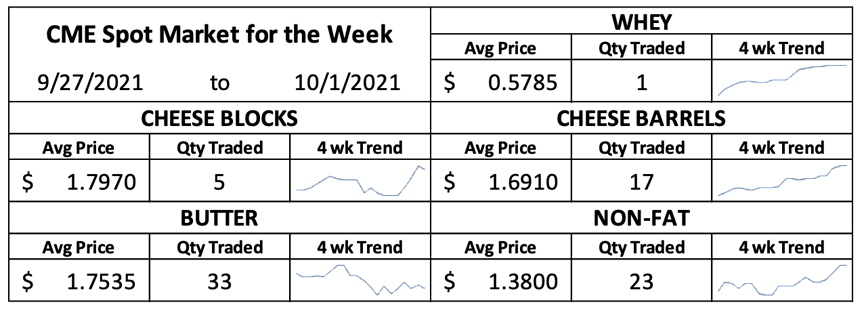
The bulls were put out to pasture this summer, grazing in paddocks far from LaSalle Street. But fall is here, and they are back home, enjoying a high energy ration. They frolicked through the dairy pits this week, pushing several markets to their highest price in months.
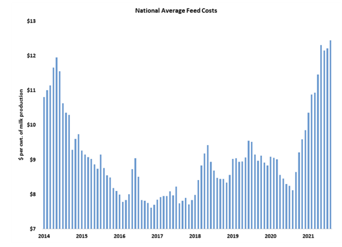 Costs are on the rise, which is weighing on farm margins and starting to slow growth in milk production. According to the Dairy Margin Coverage program’s income over feed calculation, the average dairy producer spent $12.45 on feed to produce 100 pounds of milk in August. That’s the highest national average feed cost since 2013, on the heels of the devastating 2012 drought. Even at eight-year highs, the index likely understates feed costs because it fails to account for this year’s stiff markups due to regional scarcity and expensive freight. Other costs are higher too. Wages and fuel are taking an especially big bite out of dairy producer incomes.
Rising expenses are pushing dairy producers to take a hard look at their less productive cows, 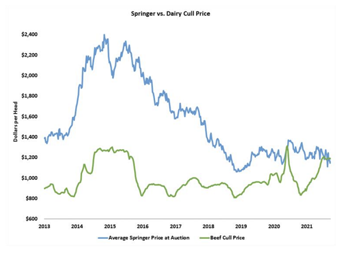 and high beef prices make culling more attractive. Today, the beef check from a heavy cull cow will generally cover the cost of a springer to fill her stall. Dairy cow slaughter volumes are high and likely to remain so, which will continue to chip away at the massive milk cow herd. That could slow growth in milk production in the months to come. But the weather has turned and milk yields are once again strong.
In Europe and Oceania, milk output has fallen short of year-ago volumes. European milk collections dropped 0.6% year-over-year in July, as the top five dairy nations logged deficits. Italy, Ireland, and Spain – ranked sixth, seventh, and 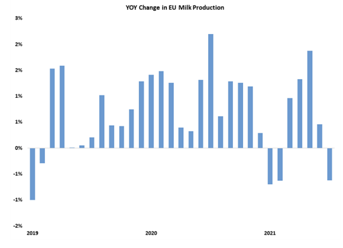 eighth, respectively – are making more milk than last year, but they could not fully offset declines in Western Europe. The weather is partly to blame for the summer slowdown, but there are structural issues too. In Germany, France, and the Netherlands, some dairy producers are aging out of the business, and their younger peers are less inclined to expand amid higher costs and increasingly strict environmental regulations.
The season is getting off to a slow start down under. Australian milk collections fell 3.5% short of last year in July and dropped 3.7% in August. Across the Tasman Sea, New Zealand milk output was surprisingly weak in August, with collections down 4.2% year over year. Together, the Aussie-Kiwi deficit more than offset the increase in U.S. milk output in August. But New Zealand’s milk output likely improved in September, and South American production is going strong.
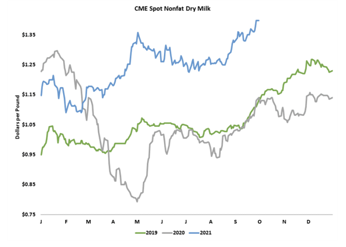 Hiccups overseas have made more room for U.S. dairy exports, which is keeping a bid under the milk powder market. CME spot nonfat dry milk (NDM) jumped 3.75ȼ this week to $1.3975 per pound, a seven-year high. USDA’s Dairy Market News reports that exporters expect higher prices will deter demand at some point, but it hasn’t happened yet. Although NDM is historically pricey, American milk powder is eminently affordable compared to foreign skim milk powder.
Butter makers are keeping product moving as retailers stock up for the holiday baking season. After scaled-down celebrations in 2020, Americans may feel a little more festive this year, which could boost cream, butter, and cheese sales. CME spot butter bounced back this week, climbing 2ȼ to $1.7475, smack-dab in the middle of the recent trading range. Advances in butter and milk powder lifted the Class IV markets. Fourth-quarter contracts closed at their highest values since June.
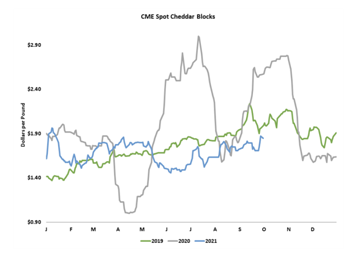 While the bulls had free rein of the whole dairy complex this week, they seemed especially lively in the cheese markets. CME spot Cheddar blocks leapt 14.25ȼ this week to $1.85 per pound. For the past four months, blocks have not been able to hold above $1.80 for more than a day or two at a time, but they logged three days above that mark this week. Barrels were similarly strong. They vaulted 14.5ȼ higher to $1.745.
As the Daily Dairy Report notes, “The strength in the cheese market is a bit surprising because stocks abound.” Inventories of American-style cheeses, including Cheddar, topped 823 million pounds on August 31, the largest August stockpile since 1985, when the government purchased surplus American cheese for donation. The surge in the spot market signals that fresh cheese supplies are much tighter, likely reflecting ongoing headaches in the dairy supply chain. Staffing issues continue to slow production at the margins.
With cheese climbing quickly and whey inching higher, the Class III markets surged. November Class III closed today at $18.20 per cwt., up an impressive $1.24 since last Friday. The other contracts moved sharply higher as well. That’s good news for dairy producers, because expenses are climbing too.
The corn markets shrugged off a bearish USDA report and rallied back toward their recent highs. The December contract settled at $5.415 per bushel, up nearly 15ȼ this week. USDA reported corn stocks on September 1, the first day of the 2021-22 crop year, at just shy of 1.24 billion bushels. That was larger than the trade expected, and larger than USDA had penciled in for end-of-season corn stocks. The miss signals that demand slumped in the final three months of the 2020-21 season.
The soybean market collapsed under the weight of much larger-than-expected stocks. End-of-season inventories were still extremely tight, but soybeans were not scarce enough to justify a $13 price tag. November soybean futures settled today at $12.465, down nearly 40ȼ. December soybean meal dropped $12.10 to $326.90 per ton, an 11-month low.
Original Report at: https://www.jacoby.com/market-report/the-bulls-frolick-through-the-dairy-pits-this-week/


Be the first to comment