
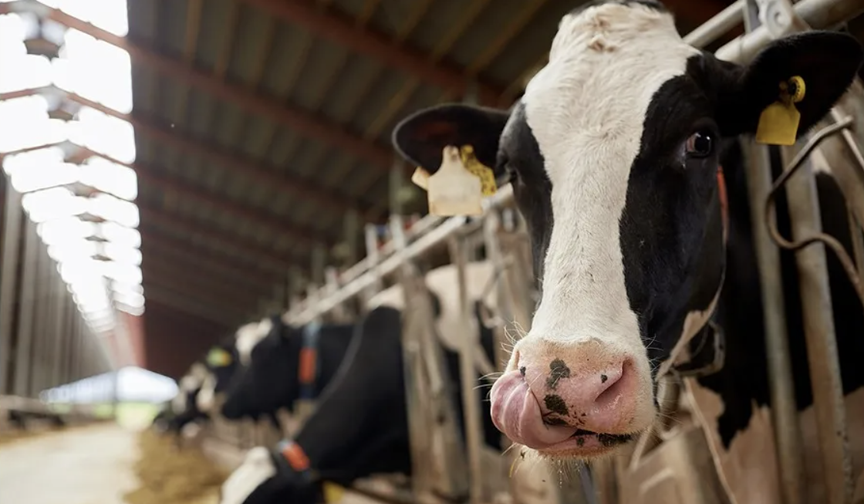
The availability of genetic information gives producers options and opportunities to shape their herd’s genetic composition. Research results indicated that genetic selection can be an effective management strategy for dairy producers.
Farm management is a key principle for success in farming operations. A farmer’s ability to efficiently use their resources allows them to get more bang for their buck, which is increasingly important in the current economic landscape. There are several areas within a farm that can benefit from effective management, and this article will dive into the management strategy of genetic selection on dairy operations.
History on Availability of Genetic Information
Using Genetic Selection as a Farm Management Strategy
The availability of genetic information and the introduction of artificial insemination, which enabled the widespread transportation of semen, gave producers options and opportunities to shape their herd’s genetic composition. Farmers are able to select genetics for their herd from bulls across the nation and can select for specific characteristics or traits. We measure genetic potential with the net merit index, which is the expected lifetime profitability of a dairy cow, measured in dollars. The index is a weighted average of several economically relevant traits which include milk yield, milk components, productive life and others. The traits included in the index vary by breed, and Holstein cattle had 39 traits included in the index.
Knowing this, how do we use this information for our management decisions? Does investment in genetics increase my farm’s profitability? We answered these questions in our research using a unique dataset, including genetic data from the Council on Dairy Cattle Breeding and farm financial data from FINBIN from 2012 to 2018 for Minnesota dairy farms. We evaluated the relationship between investment in genetics and farm profitability by analyzing the net merit index and the individual traits obtained in the data.
There were four profitability measures analyzed, which included the rate of return on assets (RROA), operating profit margin (OPM), net farm income (NFI), and net farm income per cow (NFI/cow). The RROA measures the return on all investments of the farm and is considered a long-term measure of profitability, whereas the OPM is a short-term measure of profitability, measuring the percentage of farm revenue that is retained as profit. Net farm income is the difference between total revenues and expenses on the farm, and while it is included in the analysis, it is not a preferred measure of profitability as it’s highly correlated with farm size, so we also include a standardized measure, net farm income per cow.
At this point you might be thinking, these profitability measures on an annual basis, and net merit is measured on a lifetime basis, so how do these really compare? We took our results a step further to dive into this. The net merit index was constructed with the assumption that a cow will have an average of 2.69 lactations in her lifetime, and each lactation is approximately equal to one year. Our assumption is that a $1 increase in net merit corresponds to a $1 increase in lifetime profitability, so if we compute this on an annual or lactation basis, we expect a $1 increase in net merit to correspond to a $0.37 (1/2.69) increase in profit per lactation. Our results indicated that a $1 increase in net merit was associated with an increase of $0.87 in net farm income per cow, which is nearly 2.5 times larger than expected!
Similarly, how important is it to manage my herd’s genetics? How much of my profit is explained by the genetic composition of my herd compared to other factors? Our study found that 2.5-3.6% of the variation in profitability is explained by net merit. While this may seem like a small percentage, it is important to note that market conditions are a major factor and that other management decisions are likely to have a similar contribution to profitability although exploration of other management practices were not pursued in this study.
Key Takeaways
As dairy producers, it’s critical to remain nimble and consider various management strategies to enhance your operation and its economic viability. It is especially important in today’s economy with strong volatility in input and output prices, and it is valuable to keep in mind that there is no one-size-fits-all strategy for farm success, but identifying some key characteristics can enhance the economic longevity of dairy operations. Investing in genetics is an effective management strategy as increases in net merit were associated with increases in profitability. Finally, when selecting genetics for your operations, it’s more effective to select based on the net merit index than to select based on an individual trait within the index.


Be the first to comment