
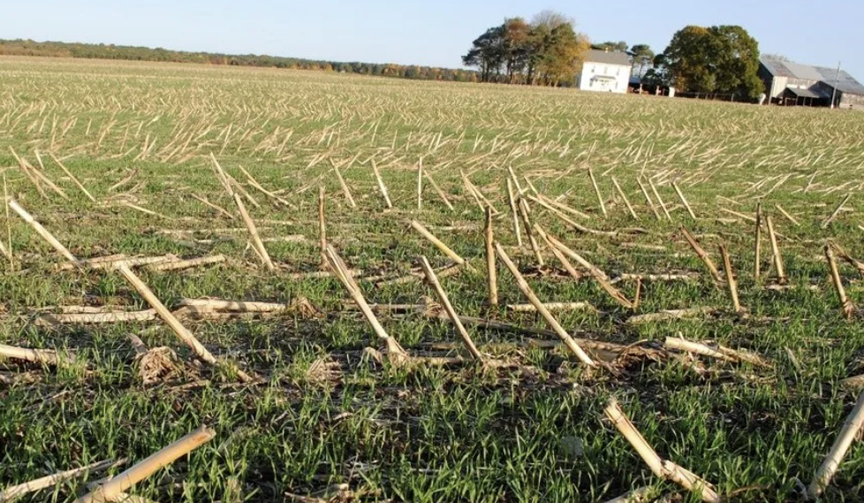
Cover crops are important after any crop, but never as important as after corn silage. Plan to drill the cover crop immediately after harvest to maximize its benefits.
Cover crops are essential for sustainable annual crop production. But nowhere as important as after corn silage for these reasons:
-
Soil erosion control. Because the entire crop is harvested and only a little stem is left with 30-inch row spacing, the soil is virtually bare after corn silage. Because soil cover is the most important determinant of soil erosion potential, a fast-germinating cover crop is essential to protect the soil from erosion.
- Nutrient management. Corn silage is predominantly grown on dairy and beef farms that need forage. They also have manure to spread, and often apply high rates of fertilizer to maximize corn yields. This often leaves residual soil nitrogen that will leach into groundwater over the winter. Often, manure needs to be spread to empty the manure pit over the winter. This manure should be spread to feed a living cover crop that can utilize and hold on to the nutrients so they don’t get lost. Further, manure management laws in Pennsylvania don’t allow spreading of manure on corn silage ground with less than 25% cover (i.e. without a cover crop) between December 15th and February 28th.
- Soil compaction management. Harvesting, liming, fertilization, and manure spreading – all these operations can cause soil compaction. The root system of a vigorous cover crop acts as a geotextile, protecting the soil from compaction and restoring porosity and aggregation with its actively growing root systems over the winter.
- Forage production. Although you probably don’t need any encouragement in this area, I do want to point out that a cover crop can produce significant amounts of forage. If managed well, most of the soil health benefits of the cover crop will still be maintained, while the nutrient balance of the farm is tightened because less feed needs to be imported.
These are the ‘Big 4’ reasons for planting cover crops after corn silage. It is important to get the cover crop planted as quickly as possible after silage harvest. Preferably, you have the drill in the field at harvest time. Seeding rates can vary depending on the purpose of the cover crop and planned termination date, with lower rates justified with an early-planted, late-terminated cereal cover crop, while higher seeding rates are justified if the cover crop is harvested for forage or the cover crop is planted late. Refer to the companion article on species selection in this issue of Field Crop News to determine which species to plant.

Be the first to comment