
Introduction
What is anaerobic digestion?
Anaerobic digestion is a practical manure treatment and handling method for dairy farms . It takes waste such as dairy cattle manure and turns it into valuable products in closed tanks called digesters (Figure 1) . After sealing manure or complex organic material in digesters and depriving it of oxygen, microorganisms break it down and convert it into a renewable energy called biogas, which is made up of methane, carbon dioxide, water vapor and other gases (Figure 2) .
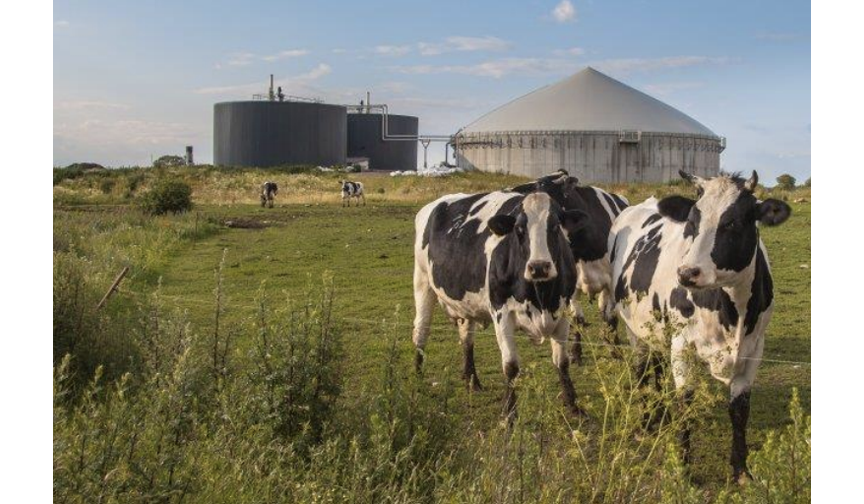
Figure 1: Example of a closed tank in the background
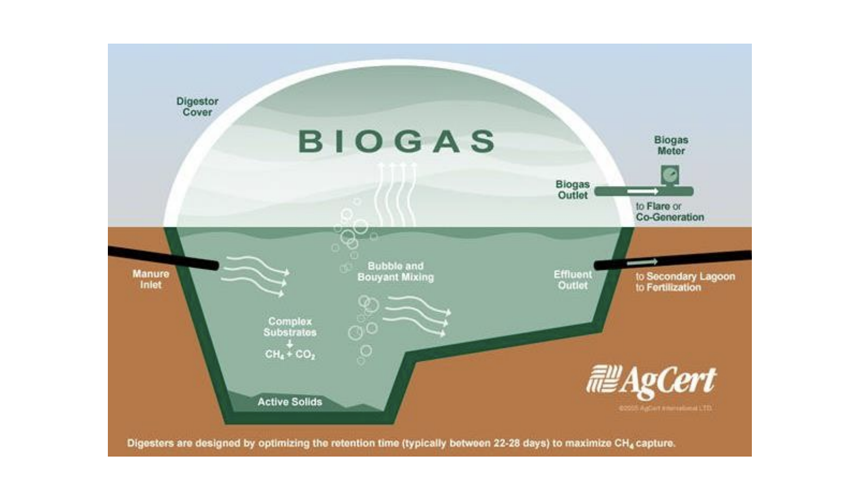
Figure 2. From manure to biogas. Picture from: http://www.agcert.com/agriculture.aspx
Benefits
Anaerobic digesters help decrease risks of water pollution (manure, nitrogen and phosphorus excretion) through the improvement of water quality (pH, dissolved gasses, acidity and alkalinity). In addition, anaerobic digesters help minimize odors and reduce GHG emissions and pathogens while generating renewable energy, increasing revenue potential and conserving agronomically important nutrients. These systems, along with a nutrient management plan, improve community interaction and provide for sustainable growth within the dairy industry.
Challenges
Some of the biggest challenges include initial cost and how to successfully operate the system on-farm4 . This renewable energy could partially replace conventional sources such as fossil fuel and oil; however, the potential cannot be completely tapped due to limitations such as longer hydraulic retention time and low production of gas during winter . Nonetheless, it provides an answer to one of the current challenges facing the U.S. dairy industry: designing new areas of revenue while considering environmental constraints and improving competitiveness.
Anaerobic Digester Systems
Different systems exist that may be used with anaerobic digesters. The most common is a plug flow system . Manure is added to one end of an insulated impermeable container, and the added manure forces out an equal amount of effluent from the other end of the digester . With a typical 20-day retention time, manure that enters will leave, neglecting dispersion, 20 days later as digested effluent . Mixed systems may also be used. These systems use agitators to mix the incoming manure with the material in the digester, keeping the material in constant slurry, which is a semiliquid mixture of fine particles of manure suspended in water . The material leaving the digester will contain only a fraction of the added manure.
Products of Anaerobic Digester
Biogas is an extremely useful source of renewable energy. The material that is left after anaerobic digestion occurs, digestate, is a nutrient-rich, wet mixture that is separated into a solid and a liquid and is a valuable biofertilizer. Biogas is generated when microorganisms digest the organic materials in the absence of oxygen
Dewatered digestate is made into products like bedding for livestock, flowerpots, soil amendments and fertilizers . It can be directly applied to the land and incorporated into soils to improve soil characteristics and facilitate plant growth. It can be further processed into products bagged and sold in stores . With the help of technologies, it can be used post-digestion via liquid and solid coproducts to recover the nitrogen and phosphorus in digestate and create concentrated nutrient products.
The biogas quality determines how efficiently it is used . Biogas from an anaerobic digester is cleaned to remove the remaining carbon dioxide, water vapor and trace contaminants5 . Removing these compounds increases the energy value of the biogas. High quality biogas is used in more efficient, sensitive engines like alternative-fuel vehicles, while low quality biogas is typically used in tougher, less-efficient engines, such as those with internal combustion engines.
Conclusion
Dairy producers have taken costly advances within manure management to satisfy environmental requirements with regards to odor and GHG control. Anaerobic digestion may be the most suitable option to treat organic effluents as it can be used to overcome the negative problems satisfactorily. The economic value of this benefit varies by region and farm; however, it has substantial economic importance as biogas alternatives are becoming increasingly popular.
Resources
- Petersen, S.O. 2018. Greenhouse gas emissions from liquid manure: prediction and mitigation. J. Dairy Sci. 101:6642-6654.
- Nielsen, O.K. 2016. Denmark’s National Inventory Report 2015 and 2016. https://dce2.au.dk/pub/SR189.pdf.
- US EPA. Recovering value from waste. https://www.epa.gov/sites/default/files/2014-
- 12/documents/recovering_value_from_waste.pdf
- CornellCals. Anaerobic Digestion. https://cals.cornell.edu/pro-dairy/ourexpertise/environmental-systems/anaerobic-digestion
- US EPA. Basic information about anaerobic digestion (AD). https://www.epa.gov/anaerobicdigestion/basic-information-about-anaerobic-digestion-ad
- US EPA. Types of anaerobic digesters. https://www.epa.gov/anaerobic-digestion/typesanaerobic-digesters
- Wilkie, Ann. 2005. Anaerobic digestion: biology and benefits.
- https://biogas.ifas.ufl.edu/Publs/NRAES176-p63-72-Mar2005.pdf
- Usack, J. G., L. Gerber Van Doren, R. Posmanik, J.W. Tester, and L.T. Angenent. 2019.
- Harnessing anaerobic digestion for combined cooling, heat, and power on dairy farms: An
- environmental life cycle and techno-economic assessment of added cooling pathways. J. Dairy
- Sci. 102:3630-3645.
- E. Armah, T. Armah. 2017. Biogas production from anaerobic digestion – a systematic review.
- IJAR. 5:495-50.
- Sanders, D.J., M.C. Roberts, S.C. Ernst, and C.S. Thraen. 2010. Digesters and demographics:
- Identifying support for anaerobic digesters on dairy farms. J. Dairy Sci. 93:5503-5508.


Be the first to comment