
Assessing disease incidence and severity is important to determine the impact of small grains diseases on yield.
Earlier this year , we discussed the decision-making process to help decide if a foliar fungicide would be warranted for small grains like barley and wheat. Now that we have passed flowering in many areas of the state, this is the time to start to think about how to evaluate the efficacy of any fungicide treatments, as well as determine what might be the potential impact of any disease on final yield. This is especially important, not only for Fusarium Head Blight (FHB) but also for important foliar diseases like rusts and powdery mildew. Also, with the spring conditions that our small grains faced this year, we saw an increase in leaves and heads damaged due to low temperatures and frost (Figure 1).
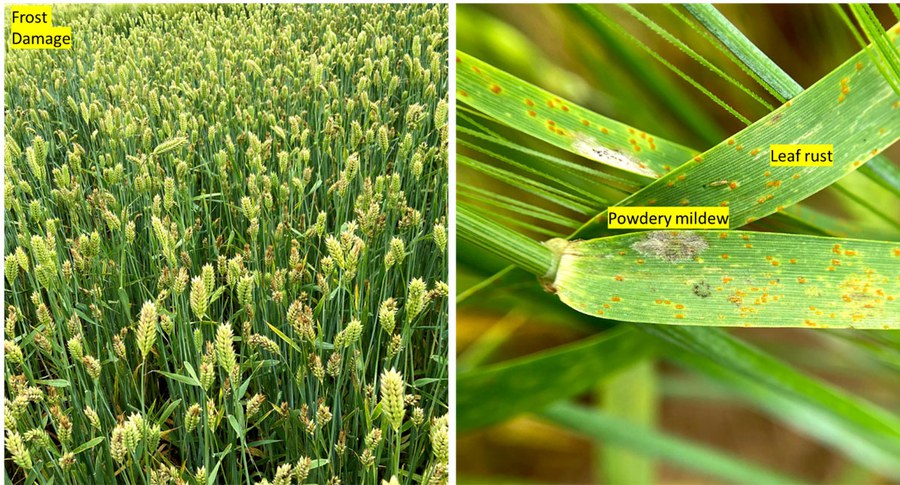
Figure 1. Frost damage and symptoms and signs of leaf rust and powdery mildew in non-sprayed malting barley (Photo credit: A. Murillo Williams, Penn State Extension).
As we wrote in our earlier article, we recommend scouting and assessing multiple areas of the field (minimum of 10 locations) wherein each location, we examine 10 randomly selected plants. We recommend that you use one of the following patterns: “zig-zag”, “diamond-shaped”, “X-shaped”, or “W-shaped” to get around the field to make your assessments.
Final yield in small grains is a function of the relative contribution of different leaves, the leaf sheath, and the wheat ear (or head). In Figure 2, the relative contribution of the primary components is provided, which can use be used to prioritize where assessments are obtained. We can see for both wheat and barley that the upper part of the plant (flag leaf and higher) contributes approximately 50 to 65% to final yield. Depending on the small grain species, we often start there with our assessments, but for crops like barley, the leaf below the flag leaf actually adds another 20-40% to final yield, which is important to take into consideration as sample and estimate the impact of foliar diseases.
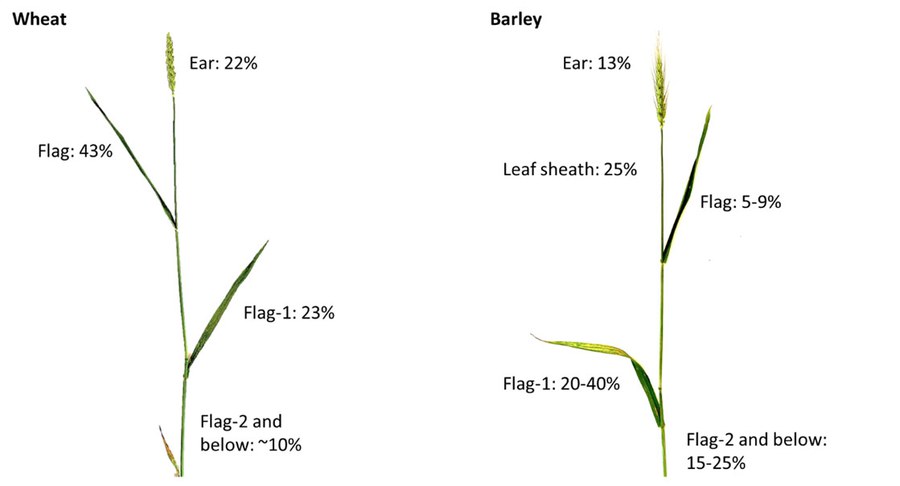
Figure 2. The relative contribution to yield of different plant parts in wheat and barley (Adapted from the Foundation for Arable Research, 2009; Photo credit: A. Murillo-Williams, Penn State Extension).
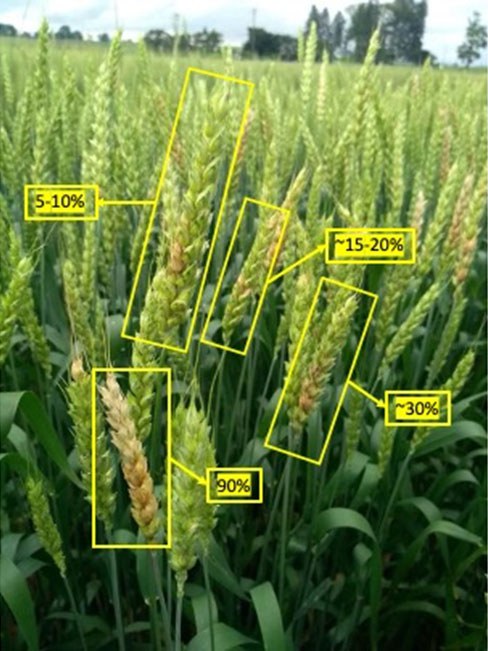
Figure 3. Examples of Fusarium head blight infected heads showing different levels of disease severity (Photo credit: P. Esker, Penn State Extension)
Diseases that could be confused with FHB are glume blotch and black chaff. However, both diseases will lead to darkening of the glumes rather than the typical bleaching observed in FHB and will not produce the scabby/tombstone grains. For more details on these diseases, visit Crop Protection Network.
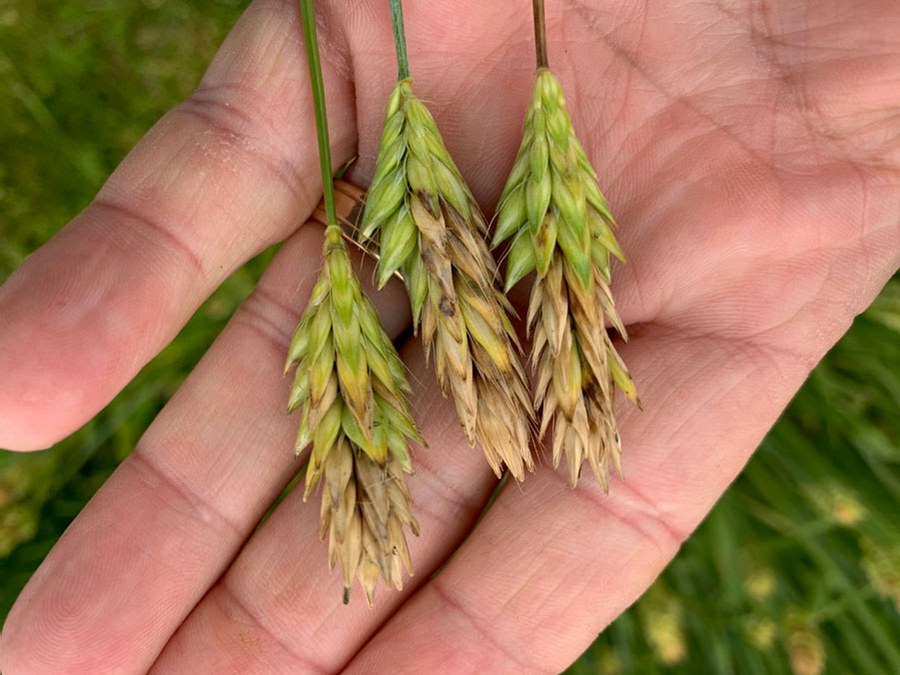
Figure 4. Cold temperature damage on barley (Photo credit: J. Graybill, Penn State Extension)

Figure 5. FHB symptoms on barley (Photo credit: A. Collins, Penn State Extension)

Figure 6. Advanced FHB on barley, showing fungal mycelium (Photo credit: A. Collins, Penn State Extension)
References:
Foundation for Arable Research (FAR), 2009. Cereal growth Stages. The link to Disease Management. ISSN 1175-5504


Be the first to comment