
The SBA recently clarified that farm participation in the PPP is based on net farm profits (or losses), line 34, form Schedule F, from 2019. While the agriculture sector welcomed this clarification, many self-employed farmers are finding it to be a barrier to participation in the program.
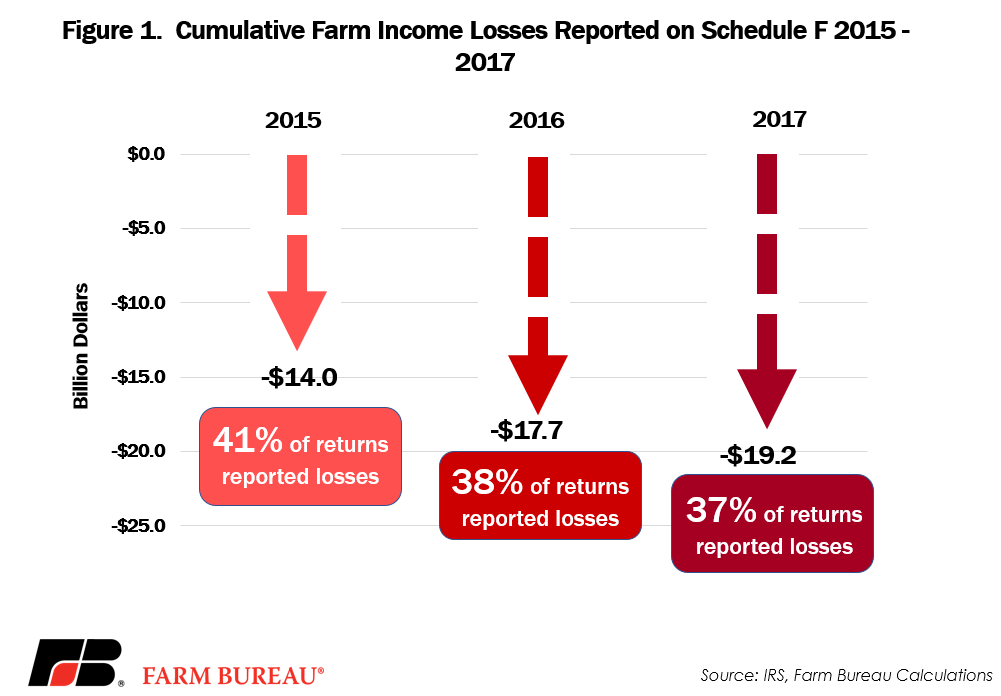
Based on 2017 IRS data, the most recent available, 37% of self-employed farmers would have not received a loan from the PPP because they’ve reported net losses in the prior year. Program eligibility is based on returns filed for 2019, so the percentage of self-employed farmers receiving a zero-dollar loan could be higher following devastating natural disasters and trade troubles that continue to weigh negatively on farm income and cash receipts.
Schedule F Trend
Farmers operating as sole proprietors determine their net profits or losses on the Schedule F tax form by inputting their annual farm business profits and subtracting expenses. According to the most recent IRS tax statistics, 1,789,262 Schedule F tax returns were filed in 2017, netting a cumulative loss of over $19.2 billion. For the same year, Schedule F cumulative farm losses increased 8.5% from 2016 levels and nearly 40% from 2015.
The IRS data categorizes the Schedule F returns only by adjusted gross income brackets and does not break down returns filed by commodity type or reflect any income that is reported via corporation or partnership. However, following the trend in Schedule F returns filed in 2017, net income losses would preclude 37% of farmers from participating in the PPP. The 2016 and 2015 percentages were similar, with 38% and 41% of the Schedule F returns showing net income losses, respectively.
Figure 1 shows cumulative losses reported on Schedule F from 2015 to 2017 with the percentage of returns reporting losses in each year.
Summary
In contrast to PPP, SBA’s Economic Injury Disaster Loan will be based on gross revenues, cost of goods sold, cost of operations, and other compensation sources for the 12-month period prior to Jan. 31, 2020. The SBA recently began accepting EIDL advance applications on a limited basis exclusively for agriculture. The EIDL will provide small business owners impacted by COVID-19 a loan of up to $10,000 that will not have to be repaid.
Be the first to comment