A new review from the Journal of Dairy Science® looks at the next 50 years
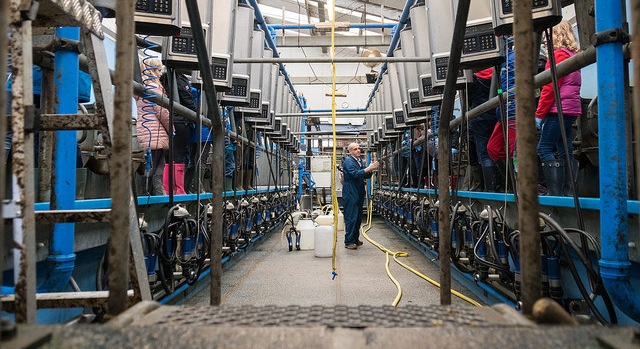
In the future, global food production systems will come under increased pressure from population growth, urbanization, and climate change. Over the last two years, scientists from the United States, the United Kingdom, and Sweden have examined projections and current data to identify ways in which the dairy industry may respond to these challenges to meet increased demand for dairy products over the next half century. A new review published in the Journal of Dairy Science® projects how dairy producers will meet these challenges and take advantage of opportunities in 2067 and beyond.
To meet increased demand in the face of these challenges will require dairy farms to be profitable and sustainable. “Dairy farmers in 2067 will meet the world’s needs for essential nutrients by adopting technologies and practices that provide improved cow health and longevity, profitable dairy farms, and sustainable agriculture,” said Jack H. Britt, PhD, professor and associate dean emeritus from North Carolina State University, Raleigh, NC, USA. The authors forecast that dairy farmers will adopt ways of managing the microbiomes of cows’ digestive systems and other body systems to improve health and well-being. They also believe that there will be more attention to managing a cow’s epigenome, which mediates longer-term responses to the environment.
“The world faces a challenge in feeding its expanding population during the next 50 years, and we forecast that dairying will meet this challenge by exploiting knowledge and technology to develop better dairy cows and more productive and sustainable dairy farms,” according to Dr. Britt. “Our vision is that dairying in the future will reflect sustainable intensification that benefits animals, agroecosystems, and humankind through production of key nutrients for human consumption.”
The review is available online at http://www.journalofdairyscience.org/article/S0022-0302(18)30181- 4/fulltext.