
In many parts of the U.S., the temperatures are dropping and the days are getting shorter, which means it’s time to start planning for the winter months to come.
Managing your dairy during cold months requires a different set of standard operating procedures (SOPs). A good winter management strategy strives for optimal udder health, which means keeping cows’ teat skin conditioned, and aims to protect your calves from the cold. It is always good to revisit your plans and make adjustments where needed. That could mean retraining staff on your wintertime SOPs, which should be visible for all to see. If you need to rework your winter plan, utilize the support of experts, like your nutritionist, veterinarian, and dairy equipment dealer as well as the university extension specialists in your area.
Teat Health Procedures
Choose a teat dip that is free of nonylphenol ethoxylate (NPE). While NPE dip products have properties to help remove soil, they can also have a drying effect on skin. In a recent study from Sima NMC, the use of NPE free dips on cows was found to be 3.4 times more likely to result in better teat skin and 1.2 times more likely to have improved teat end roughness.
There is also potential for teat freezing in cold temperatures. Winter dips dry quickly to reduce the potential of teat freezing, however it is important to double-check that teats are completely dry prior to milking and before the cow leaves the parlour. Blotting off excess post-dip disinfectant may be required.
Providing proper shelter and bedding for the animals is also an important to avoid frozen teats. In free stall, tie-stall or sanction barns, drop curtains or ensure doors are closed to control the temperature and drafts, and provide windbreaks for cows outside. Ensure that clean and dry bedding is available at all times to avoid wet teats or body-surface heat loss.
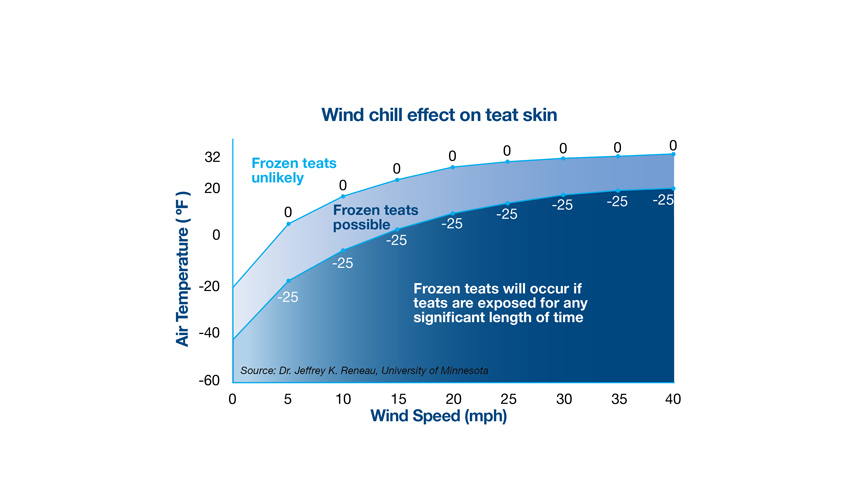
Studies have shown that wind chill matters more than ambient temperature. If the wind chill is below -25°F (-32°C) and teats are wet, they can freeze in less than one minute.
Caring for Calves
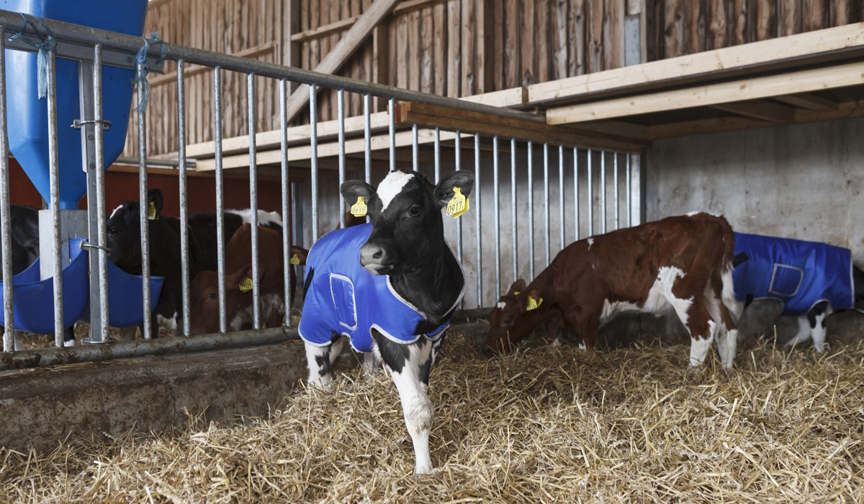
Calves forced to use more energy to regulate their body temperature in cold conditions may suffer from decreased growth performance, increased risk of diseases due to suppressed immune function, and poor response to treatment. To help young calves to cope with the harsh winter weather months, it is important to ensure good nutrition, provide housing with adequate air exchange and clean, dry bedding. Additionally, calf coats can provide extra insulation from cold weather.
Your Employees
Not only is it important for you to have a plan to keep your cows and calves prepared for the winter months, but your employees need proper gear as well. This might include insulated boots, jackets and coveralls. Keeping your employees dry is also important which milking aprons and sleeves can help with.
Winter SOPs can add extra time and effort to your routines, but it’s a crucial step to maintaining udder health, milk quality, calf protection and employee satisfaction. Start planning now for success during the cold winter months.
Editor’s note: The author is Market Development Manager, Consumables & Services, for DeLaval North America. She has an MS in Animal Science from the University of Connecticut. Jami and her family live in Gurnee, Illinois.

Be the first to comment