
Shade structures can help reduce the effects of heat stress.


Heat stress occurs when cows generate and absorb more heat than they can get rid of through respiration, sweating, and from wind or fans blowing air on them. As humans, it can be difficult for us to understand the heat stress thresholds of cattle because we do not weigh 1500 pounds or have a leather hide that we wear around 24/7. Dairy cows are extremely sensitive to heat and begin experiencing heat stress at just 65 to 68°F. In July 2018 and 2019 an average high temperature for Southeastern Pennsylvania was 85 to 88°F with July 2020 coming in at an average high of 91°F (U.S. Climate Data, 2021). Environmental scientists predict that global temperatures will continue to rise, leading to variable weather patterns such as heat waves that will become more frequent and severe in certain areas of the world (Intergovernmental Panel on Climate Change, 2018). With increasing environmental temperature and humidity
Dairy cattle can experience heat stress in some regions of Pennsylvania as early as March and April and continue all the way to October and November. Dairy producers often notice the drop in milk production during periods of heat stress and even into the months following heat stress bouts. Another production parameter that is decreased due to heat stress is conception rate. Some producers may see conception rates take even longer to rebound back in cooler months compared to milk production levels. Lactating cows begin experiencing signs of heat stress sooner than heifers due to their larger size, lactation, and feed intake. However, heifers can also become heat stressed and can experience negative effects such as decreased feed intake, decreased growth, and decreased conception rates. If pregnant, heifers are more likely to abort. In spring and summer months, moving heifers to a pasture with little to no shade access can create problems in the future.
Cows and heifers experiencing heat stress will have an increased respiration rate, increased body temperature, increased time spent standing, decreased dry matter intake, increased water intake, decreased pregnancy rates, and in severe cases death. Estrus expression is decreased when cattle are heat stressed. Without the visual signs of estrus this can make it more difficult for producers to know when to breed those animals. To add to that, pregnancy rates can decrease by as much as 53% in periods of heat stress. Heat-stressed late gestation cows have shorter gestation periods, lower birth weight calves, reduced milk production, and impaired immune function. Heifer calves that come from heat-stressed cows will produce less milk for their first 30 weeks of lactation after they freshen. All these negative effects of heat stress can lead to a decreased profit for your dairy business.
The easiest and cheapest strategy to keep cows more comfortable during times of heat stress, is to provide 24/7 easy access to drinking water both in the barn and on pasture. Dairy cattle will increase drinking water consumption by 20 to 35% in hot weather. Sweat is negligible for dairy cows. They do sweat to a limited extent but not enough to release heat that has been accumulated throughout the day. Cows lose water through increased respiration rate; this increases the evaporation from the respiratory tract drawing heat from their core. Cows also urinate more in hot weather, again removing heat from their core. In general, the recommendations are to have a total accessible water tank perimeter of 3.5 to 4″ per cow. When providing water on pasture it may be beneficial to consider laying a concrete base to put the water tank on top of or to design something that would prevent cattle from creating a mud pit around the waterer.
When shade is provided, cattle will use it to help alleviate the negative effects of heat stress. The benefits of providing shade on pasture can vary depending on breed, coat color, weight, and health. Portable shade structures can be purchased or built cheaply and used out on pasture to provide protection from the sun (Image 1). A benefit of portable shade structures is that you can move them around the pasture with a tractor or another vehicle to prevent manure and urine build-up in one area underneath the shade. Due to cattle drinking more water when they are heat stressed, this often leads to overgrazing of areas near the waterer and under grazing farther away. By adding a couple different portable shade structures throughout the pasture, this can result in more uniform grazing of the pasture and encourage them to graze more often rather than just staying under the one or two shade trees that are available during the day.
When purchasing a shade cloth to use for the structure, using at least an 80% UV protective cloth is ideal. Securing the shade cloth tightly to the top of the structure will prevent the cloth from blowing in the wind and potentially ripping. To increase the lifespan of the shade cloth, removing the cloth and store in a dry area for the winter. Providing enough space underneath the shade structure for all animals on pasture and the location of the structure in the pasture is essential for the shade to be effective. Placing the structure at least 50 feet away from large buildings or obstructions allows for good airflow. As for space allowance, for heifers from 300 to 600 lbs. providing 15 to 20
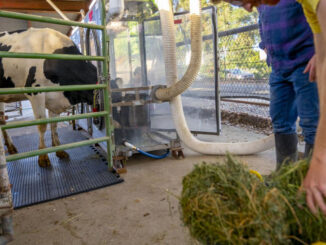
Providing evaporative cooling on pasture may sound expensive but there are affordable options out there, and it may just take a bit of creativity and experimenting to find out what works best for your operation. A simple, portable, PVC pipe sprinkler system was designed by researchers and staff at Mississippi State University and put to the test to see if the cows would use it and if it would even be an effective form of heat abatement for cows on pasture (Image 2). The researchers reported that cows that had access to portable PVC pipe sprinklers on pasture outperformed cows that only had access to portable shade structures or no form of heat abatement. These cows had greater milk production, lower respiration rates, lower hygiene scores, and improved udder health compared to the shade and no heat abatement groups. Even in the hottest part of the day, cows would be standing underneath the sprinklers chewing their cud. Whereas cows that only had shade were breathing heavily or open mouth panting as they grouped together underneath the shade structure during the hottest part of the day. And the no heat abatement group had created a mud puddle around the waterer that they would wallow in to try and escape the heat.

This portable PVC sprinkler system is an innovative cooling system that has only been tested in one research study with lactating cows. This method of cooling could be beneficial for heifers on pasture too. Some benefits of this sprinkler system are that it is inexpensive, portable, and easy to build. The cost to build one sprinkler tower can range from $130 to $150. Producers can get creative and build a different type of sprinkler system that may be even more affordable than this version. Other expenses associated with this sprinkler system would be the cost of water and any repairs that may be necessary due to regular wear and tear. For this specific design, 4 to 6 adult lactating cows can comfortably use one sprinkler tower. Multiple sprinkler towers can be used in one pasture and they can be connected with hoses if desired. Sprinklers can also be used in combination with portable shade structures as well. As with the portable shade structures, these sprinkler towers need to be rotated around the pasture to prevent the ground underneath from becoming muddy. To use sprinklers on pasture it is necessary to have access to a water source nearby.
Keeping all cattle, including heifers, cool can provide a good return on your investment as it makes them more comfortable, thereby making the negative effects of heat stress less severe Shade and water should be available to all animals at all times and in some situations, incorporating water into the heat abatement plan to facilitate evaporative cooling can be beneficial.
For more information on heat abatement strategies visit Penn State Extension’s article on heat stress abatement techniques for dairy cattle .
References
Higgins, S. F., C. T. Agouridis, and S. J. Wightman. 2011. Shade Options for Grazing Cattle. University of Kentucky Extension Publication. AEN-99.
Intergovernmental panel on climate change (IPCC). 2018. Climate Change: Special report; Summary for Policymakers.
U.S. Climate Data. 2021. Weather History Lancaster.
Editor’s note: This article appears in the Penn State Dairy Digest for April, 2021 and is used here with permission.

Be the first to comment