
The previous article focused on the advantage of deep sand bedding and choice of sand quality. Clean, deep-bedded sand has been associated with the best outcomes in cattle health, cleanliness, lying times, and cow’s preference. However, producers need to consider logistical practicalities in recycling and upkeep of the sand system. This article will focus on the management of sand bedding, manure management, and sand recovery.
Managing the Sand Bedding
Cows drag sand contaminated with feces and other waste material out of the stalls on a daily basis. Therefore, it is required to refill the stall with fresh sand every 12-14 days with additional sand between these days to keep the curb from protruding (Schoonmaker, 1999). The total sand required in a US dairy is 20 to 25kg per stall per day which is equivalent to 7.3 to 9.1 tons per stall every year.
 The depth of the bedding and the concavity of the middle portion of the sand influences the cow’s overall productivity and wellness. Fresh or recycled sand placed in the stalls is not compact until a cow steps and lays on it. Sand will compact the most within the first day of placing fresh or recycled sand due to the amount of air within the sand. Drissler (2010) found that daily lying times were 1.15 hours shorter in stalls with the lowest amount of bedding and for every 1-centimeter decrease in bedding, cows spent 11 minutes less time lying down. An increase in concavity for an extended period will cause lameness and hock lesions in cows. Sand must be raked to reduce the concavity. Araneda et al. (1970) obtained a correlation that for every 2.5 centimeters that the sand gets depressed, the possibility of a severe hock injury increases by 1.08 times. If a farmer is using a skid steer in the freestall barn, then a small cultivator could be placed on the side of it to loosen the layers of packed sand. Breaking the layers apart can help to reduce the amount of new or recycled sand required and help to reduce sand dampness. It has been shown that on average cows will lay down 4 more hours every day when provided with a dry lying surface (Jose et al., 2008).
Manure Management
Sand Recovery
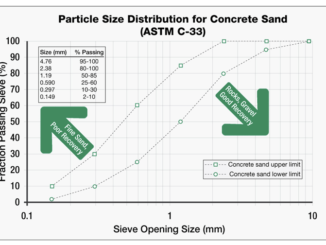
Two methods of sand separation are currently being used in the US. In the non-mechanical separators, known as the sedimentation process which is used to separate sand from manure. A sand trap is a good example of this method. These traps slow down the velocity of the flush less than one foot per second for a retention time of approximately one minute which leads to most sand and some manure to settle. These sand traps should be emptied regularly, and the sand from these traps contain some organic matter which requires further cleaning before reuse. In general, separation and recovery units are suggested to be 12 feet wide and 300 feet long with a minimum lane curb of 12 inches and a lane floor slope of 0.2%.
References: Available upon request.


Be the first to comment