

The milking parlor is the “heart” of your operation. It’s the harvest point for you and your herd’s hard work. However, without proper management, you can miss minuscule but crucial problems that can escalate quickly. Poorly maintained and operated milking equipment can lead to unproductive or incomplete milking, poor milk quality, and multiple health issues.
1. Conduct a parlor audit to make sure protocols are followed.
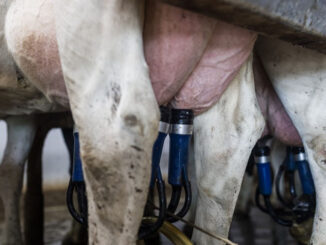
When it comes to protocols, two key factors come to mind – maintaining the equipment and working with the cows themselves. It’s important to make sure your parlor is set up correctly as well as maintained. A good relationship with your equipment supply company is vital. To best fit the needs of your herd and the equipment that you are using, your supplier can help you make and maintain the correct settings on your vacuum and pulsation systems. To determine how well your equipment is performing, make sure you know your maintenance schedule and have your equipment checked on a regular basis.
The second key factor is the cows themselves. Cows can show us many different things based on their behavior, body condition, and data reports from your parlor management software. When evaluating cows in the parlor, here are the main questions to ask yourself:
- How clean are the cows?
- How clean are teat ends?
- Is the milking routine or equipment affecting the teat ends?
Although every dairy is different, here are some baseline goals you should evaluate to make sure everyone is hitting their mark.
- Stripping: According to the National Mastitis Council, gentle but firm removal of three to four streams of milk from each teat before milking is known as ‘stripping’. Careful stripping of milk during the preparation procedure is imperative for stimulation of milk let-down.
- Pre-dip contact time: Ensure a minimum of 30 seconds to allow for a proper kill time for any pathogens on the teat.
- Pre-dip coverage: Make sure the entire teat is covered when applied.
- Prep-lag time: The milking unit should be applied 90 seconds after stimulation, according to the Holstein Foundation. A herd with 3X milking needs a slightly longer prep-lag time compared to a 2X herd.
- Two-minute milk: Basic goals are that 15 lbs. or 50% of the milk should be harvested in the first two minutes.
- Post-dip coverage: Similar to pre-dip coverage, make sure the entire teat end is covered before the cow returns to the barn.
3. Focus on training parlor employees for maximum compliance
It’s imperative to continuously train new employees both new and current employees, not only in proper milking practices but also in animal welfare and handling. It’s important to have monthly milker training, to achieve the proper consistency needed in our high demand milking parlors. Regular meetings with your team about parlor upkeep, parlor malfunctions, milking routines and performance helps keep parlor function top of mind and confirms guidelines are being followed.
Managing the milking parlor is a massive responsibility with multiple moving parts that need constant attention and evaluation. A parlor audit can help with evaluating key factors for cows, equipment, and people. Regular milker training, working with your equipment dealer and veterinarian will help you hit your marks and keep the heart of the dairy ticking.

Be the first to comment