
Joe Lawrence
Closely monitor first cutting hay
Don’t miss peak quality for dairy cows. 100 percent grass field are already there in many areas of the state and mixed stands will be following closely. Several CCE teams provide updates on alfalfa heights. Check with your local team for updates.
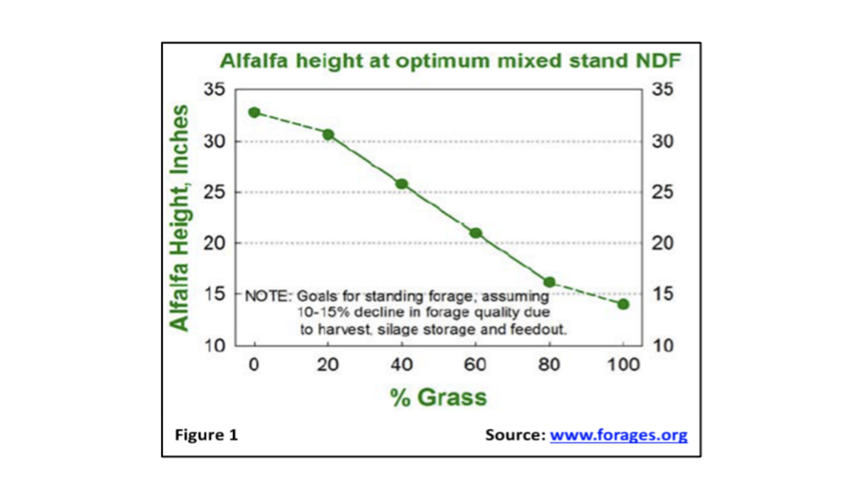
Figure 1 above shows the target alfalfa height to optimize timing of first cutting perennial hay crops for dairy quality forage.
For prediction of NDF content, the height of alfalfa as an indicator is as follows:
- 100 percent grass stands – cut when nearby alfalfa is 14 inches tall
- 50/50 grass/alfalfa stands – cut when nearby alfalfa is 22 inches tall
- 100 percent alfalfa stands – cut when alfalfa is 28 inches tall
Focus on crops at your target quality
By the time this is read, the window for capturing dairy quality winter cereal (rye, triticale) forage and early perennial grasses will have past. Once this happens re-order your harvest plan and send these fields to the back of the list for non-lactating quality feed. Prioritize fields that are still at their dairy target quality for harvest.
For winter cereals past their prime on fields intended for corn planting, decisions will need to be made regarding terminating these as a green manure cover crop for timely corn planting or leaving them to harvest as non-lactating quality feed at which point an alternative to corn may be needed for the subsequent crop.
Harvest within limited weather windows
Harvest management strategies can make a significant difference in successfully capturing forage at the target quality despite weather challenges.
- Be ready and nimble.
- have harvest equipment and plan ready
- watch individual fields and seize opportunity to harvest when ready
- Wide swath – greater than 80 percent of cutter bar width.
- Cutting height – a three to four inch cutting height has numerous benefits.
- Keeps windrow up off of moist soil for better drying
- Reduces risk of soil contamination (ash)
- Reduces stress on grass forages (target four inch cutting height)
- Use of tedders and rakes – an important tool for managing harvest in small weather windows. Take care to minimize leaf loss with legumes.
Hay before corn – especially on wet soils
Guidelines around “parking the corn planter” to harvest hay at the optimum time have been common for several decades now but are still often ignored. Timely corn planting is important, but the window of opportunity is wider than first cut hay crop forages. Corn performance remains strong with planting through late May, dairy quality hay crop forage will be long gone by late May for grasses and many mixed stands.
Additional problems from the rush to plant corn result from planting into wet soils as many are experiencing now. This article on the Risk of Sidewall Compaction from Penn State is a good reminder of why it is not worth it to rush corn planting in wet field conditions.
PRO-DAIRY FORAGE SYSTEMS

Be the first to comment