
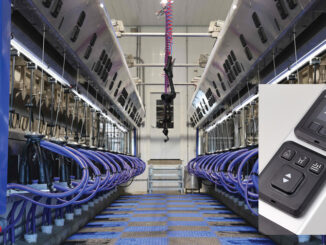
Evaluate practical upgrades that can help extend the life and value of your parlor.
The parlor is the heart of your dairy business. But as equipment ages, outdated technology can limit performance, make parts harder to find and increase service costs.
“Start by asking, ‘What do you want to accomplish?’ Some dairies want to move more cows through the parlor,” says Andy Hughes, dairy equipment sales specialist with GEA. “Others want better data, lower maintenance costs or more reliable equipment. Once you identify your goal, you can start looking at the right opportunities.”
Here are four tips to help you evaluate your parlor modernization options.
1.Start with the problem you want to solve
Older parlor equipment can create several challenges, from harder-to-find parts and rising maintenance costs to limited integration with newer herd management platforms. Some dairies are still using technology that is 20 to 30 years old, while others may have equipment that is only a generation or two behind but no longer connects easily with newer software.
Before choosing an upgrade, identify what is holding your parlor back.
A walkthrough with your milking equipment dealer can help uncover opportunities. Signs may include worn stalls, repeated welds or repairs, outdated pulsators, older claws, undersized milk hoses or equipment that requires frequent service to keep operating.
2. Look for upgrades that improve milk flow
One of the most common modernization goals is to improve how efficiently milk moves through the system. That may start with the milk meter, especially when replacing older fill-and-dump meters with newer flow-through technology.
“With a flow-through meter, farmers are looking for fewer restrictions, less maintenance and better access to data,” says Hughes. “They want to milk cows efficiently, but they still want accurate information from each milking.”
“Something as simple as replacing older claws, updating liners or moving to a larger milk hose can be a quicker win,” says Hughes. “Those changes are not always difficult to implement, but they can help the parlor milk better.”
Pulsation is another area worth evaluating. Because pulsators are often out of sight, they can be overlooked until performance issues arise. Regular testing and graphing can help determine whether your system is operating consistently and supporting efficient milk harvest.
3. Use parlor data to manage performance
Newer parlor management technologies can provide a clearer view of what is happening during each milking session. Instead of looking only at total cows per hour or total milk shipped, you can also evaluate individual cow performance, unit-on time, peak milk flow, reattaches and flow curves.
That information can help show whether prep routines are consistent and if cows are letting milk down properly when units are attached.
“The flow curve tells you a lot about the milking session,” says Hughes. “If you’re seeing bimodal milk flow or longer unit-on times, that can point to prep timing or consistency.”
Easier access to information is often one of the first benefits you may notice after upgrading. Cloud-based platforms and dashboards can make it easier to monitor parlor performance without having to review multiple reports.
“You want to open a dashboard and know what happened in the parlor yesterday,” says Hughes. “The easier that data is to access, the more useful it becomes for making decisions.”
Added visibility can also help teams spot trends earlier, support more proactive maintenance and address small issues before they become larger disruptions.
For some dairies, modernization may also include upgrading animal identification systems so parlor data connects more clearly to individual cow performance and herd management decisions.
4. Consider the payback beyond new equipment
With cautious capital spending, you may question whether an upgrade will pay for itself. In some cases, the return may come from reduced maintenance. For others, it may come from more cows or more milk moving through the parlor with the same labor.
Labor is often part of that payback conversation too. Upgrades that improve cow flow, reduce service disruptions or make parlor tasks less intensive can help the same team manage more cows more consistently.
Older fill-and-dump meters, for example, may require more frequent and more expensive service kits. Newer flow-through meters can reduce service needs and simplify maintenance.
“If you’re asking, ‘How is this going to pay for itself?’ consider whether the upgrade is more reliable, less costly to maintain or helps the same labor force milk more cows,” says Hughes. “Those factors become an important part of the calculation.”
Stall upgrades can also deliver meaningful improvements. In some remodels, moving to a newer stall design or vertical-lift front end can improve cow positioning, loading and exiting. Better cow access can also make the work less intensive for employees.
“You do not need to tear out walls or raise the roof to make improvements that help the parlor perform,” says Hughes.
Make the most of the parlor you already have
If you are unsure whether an older parlor is worth upgrading, Hughes recommends starting with your farm’s long-term plan.
“If you are going to milk cows for another 10 years, there may be things you can do to make life easier for your team and improve how the parlor performs,” says Hughes. “The key is understanding what you want the parlor to do and which upgrades support that goal.”
Modernization does not have to happen all at once. Focus first on the biggest bottlenecks, then take practical steps toward better milk flow, stronger data and more efficient day-to-day management.
To learn more about modernizing your existing parlor, contact your local GEA dealer.

Be the first to comment