
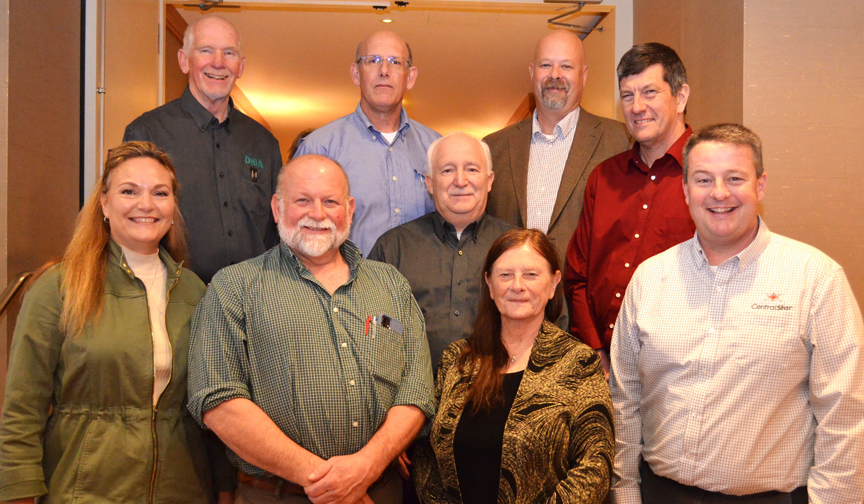
The 59th annual meeting of the National Dairy Herd Information Association (NDHIA) was held March 5 and 6, 2024 in New Orleans, La. The trade group for state and regional DHI milk recording organizations, NDHIA at this session brings together dairy farmer leaders, DHI staff and a wide range of industry representatives with a total of 118 attending this year.

At the annual meeting held on day two, CEO Jay Mattison made the distinction between those who want change, but for someone else, and those who want to change. He said there are new data opportunities to provide genetic evaluations for added traits and management. He outlined statistics saying there are 10,300 herds on DHI with 3.9 million cows for an average herd size of 288 cows providing records for the national database. There are another 1.5 million cows going through DHI field service with certified meters and labs with data returned directly to the farm. Over 60 percent of DHI cows are in herds of 1000 cows or more but 51 percent of DHI herds are 100 cows or less. Annually there are 72 million lab samples run. He said the industry’s continuing increase in milk solids and decrease in somatic cell counts are made possible by the data DHI provides to dairy herd managers.
He emphasized the importance of QCS (Quality Certification Services) insuring conformance to processes and documentation, training, lab proficiency and meter calibration. He said data exchange for producers’ benefit will be enhanced by NDHIA participation in the International Dairy Data Exchange (iDDEN) with six other international milk recording groups. International groups are also involved in developing a new device for collecting milk samples as milking equipment continues to evolve. New factors are being developed and will be implemented for estimating 305-d and 365-d mature equivalents along with lactation summaries and projections for milk and component yields based on today’s cow biology and management. He concluded saying, “… We have to work together to change because the status quo is not an option.” He said DHI must continue to stay in the forefront of providing dairy protein to a growing population.
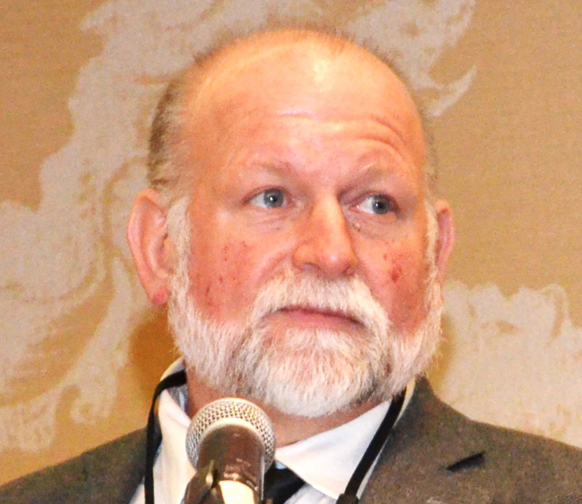
President Allen Chester, dairy producer from Lisbon, N.Y., chaired the annual meeting. In his address he expressed satisfaction in hearing from the young researchers who had reported earlier, encouraged that younger leadership is emerging for the future. He said dairy farmers must stay engaged in the larger industry and with consumers to ensure opportunities to manage their cows successfully.
Five resolutions were passed unanimously. One reaffirmed last year’s motion supporting USDA’s effort to implement mandatory bovine identification with support for electronic ID. Others supported the board and staff effort to review QCS fees and NDHIA dues structure, supported the development of new agreements for data exchange between DHI
Three directors were unanimously reelected to the nine-member NDHIA board of directors. They are Julee O’Reilly of DHI Cooperative, Inc., in Columbus, Oh., and dairy producers Jeff Horning, Manchester, Mich., and Daniel Nodolf, Belmont, Wis.
The first morning the Field Service Advisory Committee met with an agenda that allowed attendees to share strategies for marketing DHI services, especially to herds with robotic milking systems. Sessions also covered new ways to collect data on dairies and recruiting and retaining employees. Several participants here said that the Advisory Committee meetings held in person and remotely through the year provide high value for their membership.
Animal identification, the fundamental requirement for DHI as well as herd management, was the first topic in the opening public session the afternoon of March 5. Leading off was Dr. Ferdinand Schmitt, managing director of a German company introducing a new style of ear tag scheduled for approval by USDA later this year. He said the tag developed by Caisley International GMBH is in wide use in Europe and allows a tissue sample for genomic testing to be collected as the ear tag is installed.
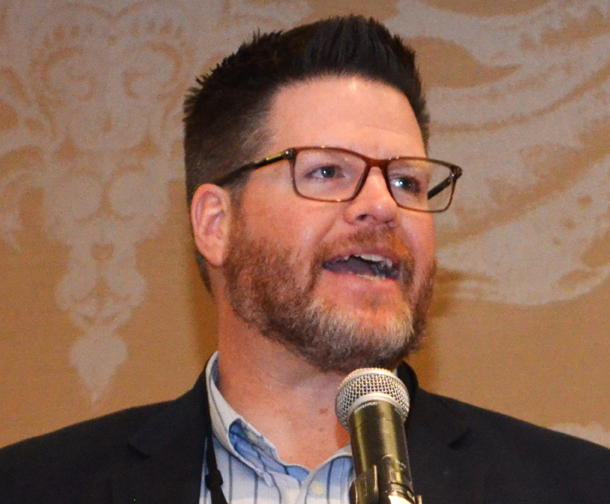
Speaking next was Dr. Alex Turner, a veterinarian for USDA / APHIS Veterinary Services. He said the administrative process for requiring electronic identification of cattle and other species continues to move forward as part of USDA federal rule making. He said the purpose is to provide traceability for animal movement in case of infectious disease outbreaks.
Research Using Dairy Records
The latest research being conducted by NDHIA, the Council on Dairy Cattle Breeding (CDCB) and USDA / AGIL (Animal Genomics and Improvement Laboratory) was presented. Dr. Taylor McWhorter of CDCB presented her heat stress research on Holsteins and Jerseys. She said that nationally, as much as $2 billion is lost to dairy producers because of lowered milk production and reduced breeding efficiencies. Her work, funded by Select Sires, Inc., involves development of a genetic evaluation for heat stress.
PhD student Fiona Guinan, with support from NDHIA and CDCB, described her work on the heritability of dairy cow resilience at the University of Wisconsin – Madison. She said the goal using DHI records is to define heritable traits for longevity in trouble free cattle… cows that are robust and labor efficient while breeding back every year.
Dr. Mahlia Caputo, post doctorate fellow at CDCB, provided an update on the new DHI production factors that have been developed. She also talked about research on milk samples for fat, protein, lactose and fatty acids, all with the goal of improving milk solids.
Another presenter on day one was Katie Schmitt, Outreach Specialist at CDCB, who reported on the National Cooperator Dairy Database Workshop held last August in Chicago. Over 100 participated in the first of its kind session with collaboration among all dairy sectors including DMI. She also spoke about industry meetings she had attended describing the role of CDCB. She said she was always available to speak at upcoming dairy meetings.
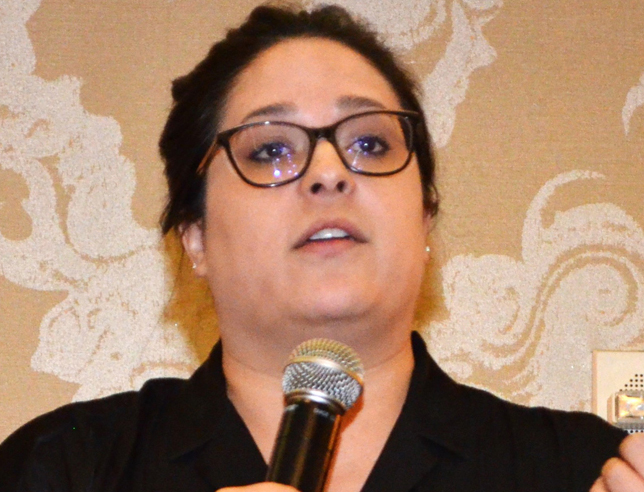
Dr. Asha Miles of the AGIL staff spoke about her research on milking speed with the possibility of developing a genetic evaluation for this trait. She said work is being done on herd level sustainability and other research topics in partnership with a range of collaborators.
Reports from Industry Organizations
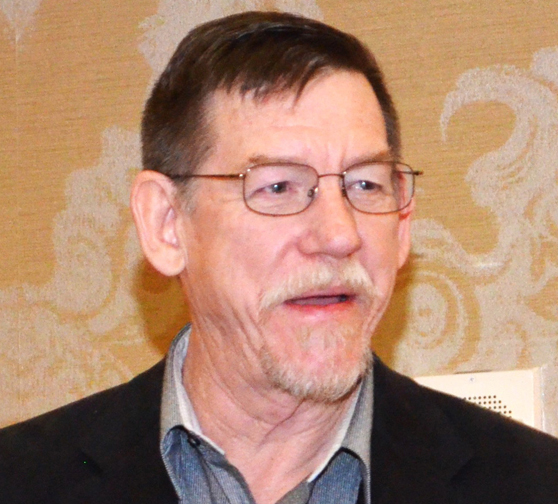
Leading off on March 6 was Dr. Randy Baldwin, research leader at USDA / AGIL. He gave an overview of the staffing and research being done at the Beltsville facility. He said that while the longstanding dairy herd was being eliminated, unique research was being done. Animals are euthanized after 100 days in milk with information captured on feed efficiency and 50 more days of methane assessments. Then tissue samples are collected and recorded from liver, lung, adipose, tailhead fat and gastrointestinal organs.
From Canada, Neil Petreny spoke as CEO of Lactanet, the organization north of the border that combines animal ID, field services and labs for milk recording, dairy records processing and national genetic evaluations. He said the industry’s first genetic evaluations for methane efficiency had been introduced. Looking ahead, he sees opportunities in sustainability – demanded by processors and consumers; providing more efficient coordination of on-farm records; new services for robotic dairies; and developing added information about milk solids content.
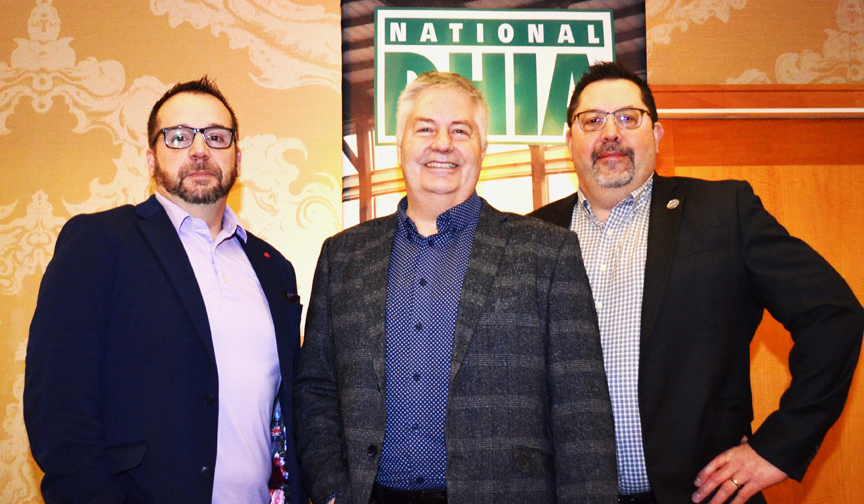
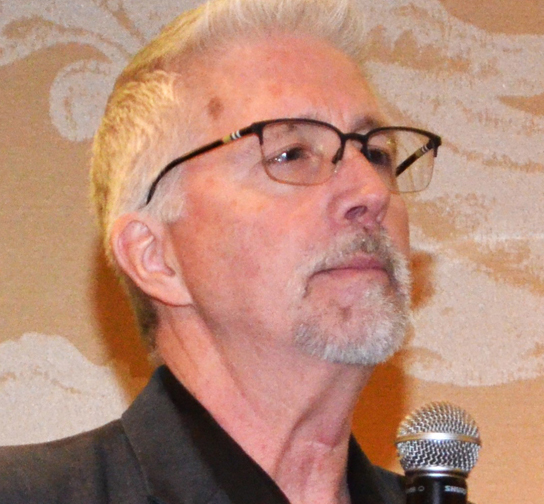
The National Association of Animal Breeders (NAAB) represents U.S. based AI organizations and is a component of CDCB. President Jay Weiker presented statistics of semen sales for beef and dairy both domestically and internationally. The use of beef semen on dairy has also begun to be recorded. He presented 2022 figures explaining that final 2023 results were not tabulated quite yet. On March 12, NAAB issued those 2023 results showing a five percent decline in total units sold compared with 2022. Dairy units were down 2.5 million to a total of 46.9 million units. Beef units were down only two percent to 19.2 million. Beef on dairy increased by about 1.5 million units for both in the U.S. and for export. The news release with more detail can be found here. https://dairybusiness.com/2023-semen-sales-report-reflects-global-trends/
Weiker said that the NAAB Doak Graduate Fellowship had been presented to an international student for the first time. The recipient, the sixth, is Florentino Paz Da Silva of Brazil, studying at The Ohio State University. Weiker briefly described research results showing the risk of disease from using frozen semen not produced to CSS standards. He also mentioned the upcoming technical conference to be held in September in Madison, Wis.
Beef on Dairy
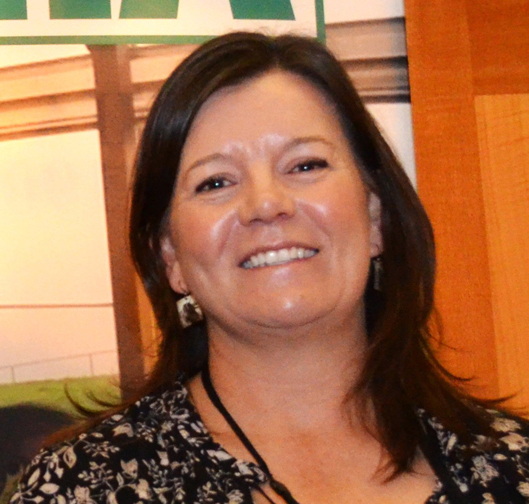
Dr. Randie Culbertson of Iowa State spoke about beef on dairy from the perspective of beef feedlot operators and processors who sell beef to consumers. She said dairy cattle provide about 18 percent of the beef market, including prime beef but with longer rib eyes. On feedlots, dairy cattle have higher energy requirements and a slower rate of gain, but feedlot operators learned to manage Holsteins and Jerseys. Then in 2017 when packers started rejecting Holstein fed calves, the use of sexed semen and genomics meant that many more dairy cows could be bred to produce a crossbred beef calf. She said right now calf prices are sky high so there is a lot of incentive for beef on dairy.
She said a study conducted at Texas Tech at feedlots showed intermediate efficiency of crossbreds… better than dairy but not as good as pure beef. She said feeders struggle to figure out how to feed these calves because of the variability of performance. She said health issues are harder to detect in these calves. Of particular concern she said is that a high rate – 40 to 60 percent – are coming in with liver abscesses.
She said typically a dairy producer will pick beef bulls with the “three c’s” in mind… cost, conception and calving ease, with maybe coat color – black – as a fourth “c.” She believes going forward, the terminal traits of carcass weight and quality will have to be included in sire selection. She noted that both Angus and Simmental breeds are developing genetic indexes for beef sires to be used on dairy females. She also said that there needs to be research to solve the liver abscess problem, but, she said, that falls into a gray area with beef and dairy each saying it’s the other guy’s problem.
Leadership Award
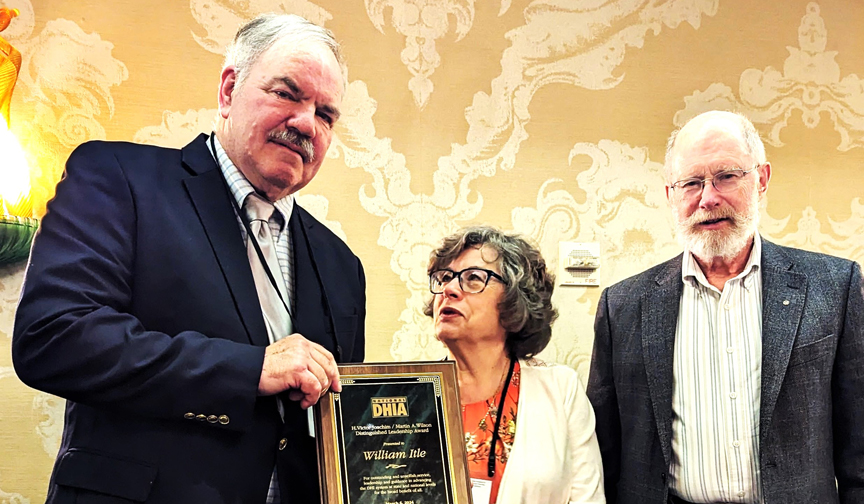
A highlight of the annual banquet held the evening of March 6 was the presentation of the Martin Wilson Memorial / Victor Joachim Leadership Award to Bill Itle of Vale Wood Farms at Loretto, Pa. Itle has been a long time leader in Pennsylvania DHI, on the board for transition from Pennsylvania Extension through to the creation of DairyOne, with the merger with herds in New York. His fifth generation family farm milking 250 cows includes a dairy processing and milk retailing business with home delivery. Bill has been president of the Pennsylvania Milk Dealers Association and is active in the Northeast Dairy Foods Association. A leader in his community, he’s a graduate of Penn State University and a veteran of five years of service in the U.S. Navy. He and his wife Joyce have three daughters.
Bill and his daughter, Carissa, were featured on the DairyVoice podcast which can be heard here.
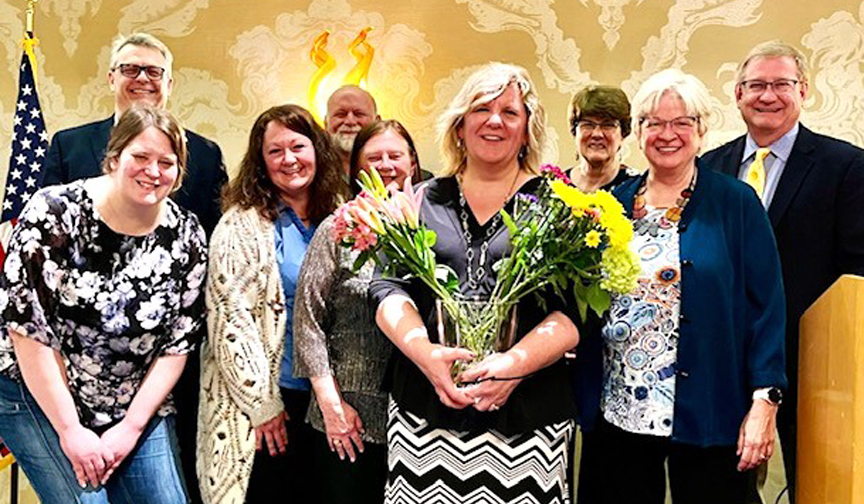
Also at the banquet, Leslie Thoman, NDHIA business operations, was surprised with recognition by a “flower parade” from leaders, each with a description of the help she provides for the day-to-day business activities of the organization, including coordinating the annual meeting and scholarship auction. She was presented with an engraved crystal vase to hold all the flowers and provide a lasting tribute.
Scholarship Auction
As in recent years, an auction of donated dairy related items, art, clothing and food products was held as a fund raiser for the college scholarships provided to undergraduate students each year. Elizabeth Straw from Indiana State Dairy Association was committee chair for the sale that generated about $15,000. Lynn Lee, an auctioneer sponsored by Idaho DHI, provided his expertise and humor crying the sale.
Commercial firms that provided financial sponsorship for the meeting were Bentley Instruments, Datamars Livestock, Eurofins DQCI, Foss North America and VMR.


Be the first to comment