
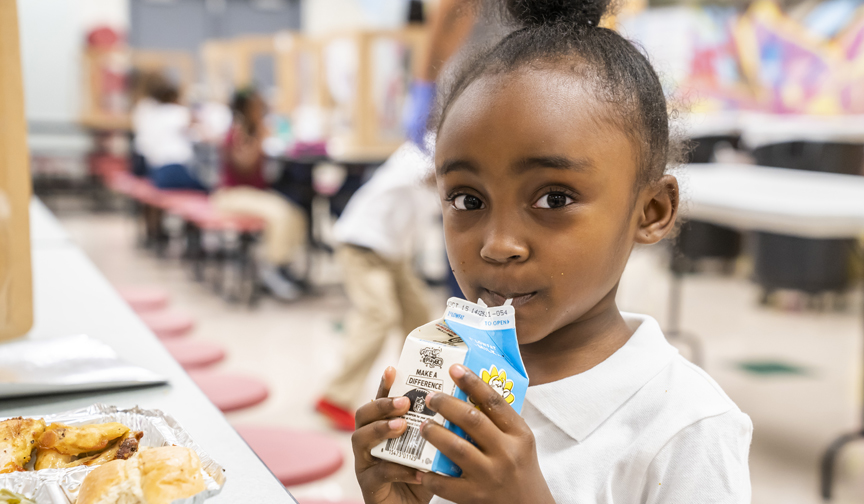
I probably took for granted the milk I consumed at school growing up on a farm in rural Oklahoma. It was always available, and we knew it was nutritious. My school milk experience helped set me on a path to become a lifelong dairy lover, and I have spent over 20 years working on behalf of the country’s dairy farm families who make that school milk possible.

What saddens me, however, is learning that not every child today is benefiting from school meals and consuming milk as I did. It becomes even more dire when you consider that 30 million kids in the U.S. rely on school meals for a significant portion of their daily nutrition that many are not getting at home.
This especially hits me hard as a registered dietitian as I have spent my career working to help people, particularly children, understand the nutritional benefits of foods such as dairy deliver. It is also why I am so passionate about my role with GENYOUth and the opportunities we have to continue making a difference.
GENYOUth holds a unique position as an organization co-founded by America’s dairy farmers and the NFL, which has grown to become one of America’s leading non-profits in support of youth and school wellness programs. Our work focuses on helping school children thrive by living well-nourished and physically active lives.
Each year we conduct research to help us better understand the school environment and, importantly, the perspectives, knowledge and behaviors of youth. We have tackled various topics over the years, including sustainability and farming, how students managed COVID-era learning, and the role that factors such as technology plays in kids’ health and wellness journeys. These topics are based on insights from organizations including the Centers for Disease Control and American Academy of Pediatrics, as well as the National GENYOUth Council consisting of 15 exceptional student leaders across the country. Student input is vital and as our youth council members remind us, “if it’s about me, don’t do it without me.”
We surveyed over 1,000 kids ages 13-18, representing a range of geographies, ethnicities and socioeconomic levels. The report’s findings are illuminating as we learned more about the factors that drive healthy eating, their mealtime beliefs and behaviors, and where and how kids learn about nutrition.
The report also reinforced the reality of childhood hunger. One striking revelation is that about one-third of kids surveyed express concerns about having enough to eat. This group tends to skip meals more frequently than those who do not share those same worries. We also found that “youth who worry” are more likely to rely on school breakfast for healthier food options.
Breakfast habits play a pivotal role in students’ overall well-being and education, as indicated by other key insights from the research:
- Youth who skip breakfast are less likely to eat healthy.
- More than half of youth (54%) skip breakfast at least once a week.
- Over half of youth from lower-income households (58%) say they skip breakfast every day, a few times a week, or at least once a week.
- Grab and Go school breakfast dramatically increases participation, yet only 28% say their school offers it.
For GENYOUth, the report further verifies that ours is the right mission to help change and make a difference in the lives of school children through nutrition and physical activity. The school nutrition equipment grants we distributed, for example, have led to an average 27-percent increase in school breakfast participation, and they support the adoption of programs such as Grab and Go and breakfast in the classroom. This far exceeds the national level average of about 1 percent annual growth in school meal participation.
We are coming off a recent success after teaming with the Dairy Council of Nevada, the NFL and other partners for Super School Meals, a community initiative which increased access to and participation in healthy school meals in Nevada, site of this year’s Super Bowl. This collective effort provided grants for Grab and Go equipment packages, including milk coolers and mobile meal carts, for 73 high-need Nevada schools, which will increase access to more than 10 million healthy school meals, which contain milk and dairy, among 40,000 students.
It goes without saying that when school meal participation rises, so does milk consumption. This is why we’re especially grateful for the support of America’s dairy farmers and other partners who make our work possible.
We will keep pursuing our purpose to nourish school children everyday and bring the positive school milk experience to them, the same one I had as a kid back in Oklahoma.
To learn more about GENYOUth, visit www.genyouthnow.org. For more information about your national dairy checkoff, visit www.USDairy.com/forfarmers or to reach us directly, send an email to TalkToTheCheckoff@dairy.org.
Be the first to comment