
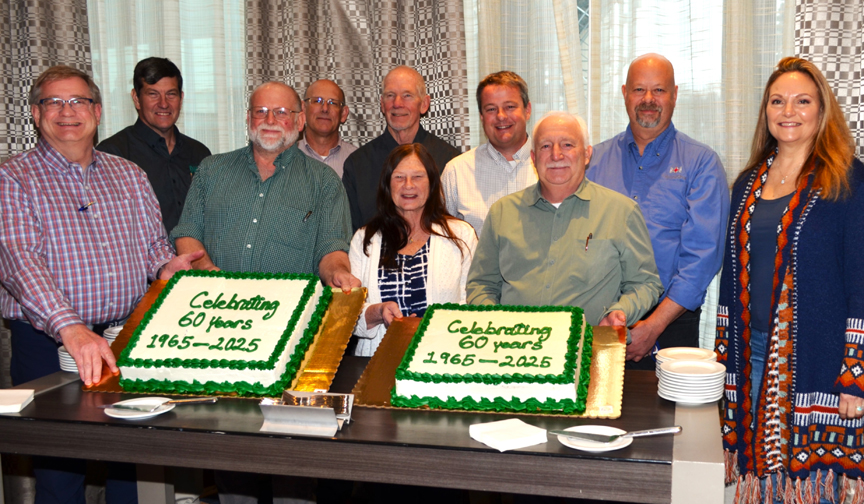
Celebrating the organization’s 60th anniversary, the National Dairy Herd Information Association held its annual meeting with leadership sessions March 4 – 6, 2025, in Nashville, TN. Officers, delegates and industry guests numbering some 115 heard updates on research and technology, reelected officers and approved resolutions supporting animal ID, USDA’s Animal Genomics Improvement Laboratory (AGIL) and the continued development of a new milk meter sampler device.
National DHIA is a trade association composed of 13 members, milk recording organizations across the U.S. These organizations collect on farm and then analyze representative milk samples providing milk volumes, component analysis and diagnostic screening tests at DHI laboratories for herd management decisions and genetic evaluations.
A second is DHIA Services, Inc., offering products integral to the DHI program including visual tags, electronic animal identification, and accessories including EID readers and indicators. DHIA Services also offers meters for milk yield measurement and sampling for dairy cows and dairy goats. National DHIA member organizations enjoy discounts on these products and can offer farmers competitive prices. Also, DHIA Services places orders for Ori-Collector milk samplers for DHI affiliates. The Ori-Collector is key for collecting milk samples in robot milking systems. Ori-Collectors are certified with multiple brands of robotic milking systems including DeLaval, Galaxy, and Lely systems.
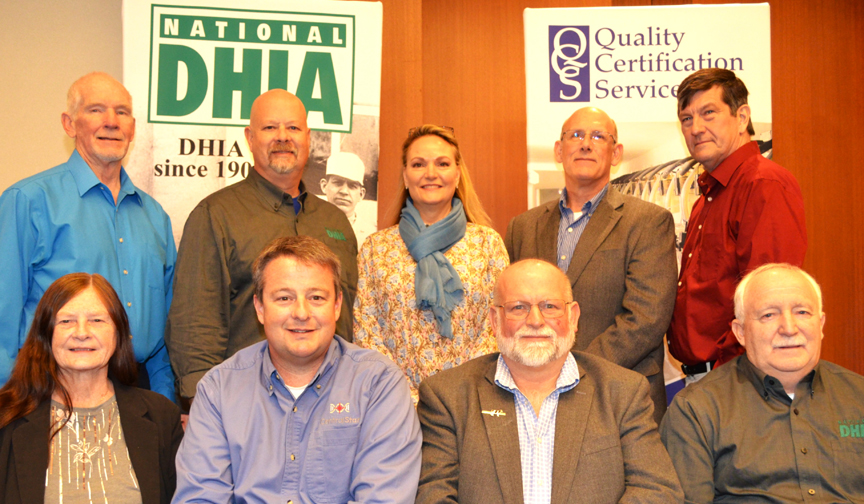
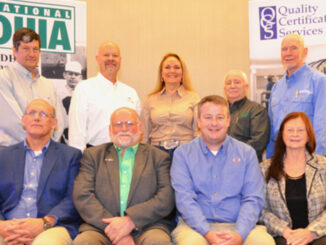
Allen Chester is the organization’s president. A dairy producer from Lisbon, N.Y. and a leader in DairyOne, he’s now serving his third term. Vice President is Kevin Haase, manager of CentralStar Cooperative, Kaukauna, Wis. and reelected secretary is Susan Lee, dairy producer and manager of Idaho DHIA in Twin Falls. Third term treasurer is Dave Scapanski, dairy producer from Sauk Rapids with Minnesota DHIA. Directors are John Gloss, a manager at DairyOne; Jeffrey Horning, dairy producer from Manchester, Mich., with CentralStar; Robert McKaig, dairy producer from Logansport, Ind., with Indiana State Dairy Association; Daniel Nodolf, dairy producer from Belmont, Wis., with AgSource; and Julee O’Reilly, manager at DHI Cooperative in Columbus, Oh. Also on the board and heading up NDHIA staff is CEO Jay Mattison, Verona, Wis.
DHI Managers’ Meeting
Leading off the session in Nashville was the DHI managers’ meeting, providing an opportunity for managers and directors to understand the latest developments in milk recording technologies and organizations both nationally and internationally. Steven Seivert, QCS manager of certification services, provided an overview of the newest on-farm milk measuring equipment. The meeting this year included discussion sessions focusing on challenges around recruiting, training and managing staff, working with today’s large dairy herds, encouraging DHI herds to allow their records to be included in the national data base and attracting new herds to the system.
Industry Leadership Sessions
Open to all attendees, these sessions covered various research topics and reports from industry partners. Leading off on March 5, Dr. Alex Turner, director of animal disease traceability and veterinary accreditation center at USDA / APHIS, led off noting that on any given day, there are a million head of cattle being transported in the U.S. He cited impressive statistics showing how improved animal ID had dramatically reduced the time needed to identify a diseased breakout – just four days in the “mad cow” positive test last July, with the affected market shut down in 15 minutes. He said the rules for electronic cattle ID went into effect in late 2024, with USDA providing tags for producers with funding for five more months.
Robert Fourdraine from DRMS in North Carolina spoke of ID from the perspective of dairy processing centers. He said providing correct heifer ID could result in over 83 percent more records for the national data base from herds already in the system.
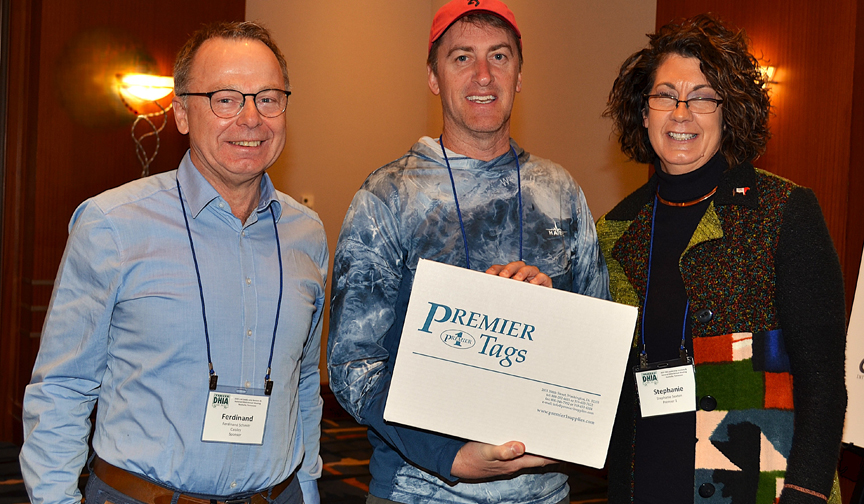
Continuing with ID, Ferdinand Schmitt of the German company Caisley International GMBH, introduced the ear tag system from his company now approved by USDA and offered in the U.S., including visual and electronic tags that allow collection of tissue sample for genomic testing. Speaking with him was Stephanie Sexton with Premier 1, the Iowa based firm that will laser print the tags and distribute them in the U.S.
Dr. John Cole with the Council on Dairy Cattle Breeding (CDCB) gave an overview of the genetic base change coming in April 2025, with averages moving from cows born in 2015 to those born in 2020. He also reviewed changes in the new calculations of the Net Merit indexes that will also debut then and offered possibilities of future refinements. Dr. Asha Miles on the USDA/ARS AGIL staff briefly summarized her research validating genomic evaluations in the face of updated management, herd health and nutrition changes since 2009.
The morning program concluded with a session for DHI folks only on the new universal milk sampler and combination sampler / meter being developed, referred to as the “toTest” project. The engineers working on this technology presented on Zoom from Holland. The work is being funded in partnership with six other international DHI organizations in Denmark, Germany and Ireland. The equipment will be field tested in several U.S. states later this spring with the goal of introducing this new generation of equipment for milk recording on a global basis in 2026.
Returning to the podium, Robert Fourdraine provided an overview of dairy farm “resiliency,” information being developed by the Dairy Records Processing Centers (DRPCs) for herds that are part of the national dairy database at CDCB. More than the term “sustainability,” economic indicators would allow producers to check their progress across some 43 traits identified by International Committee for Animal Recording (ICAR).
From Dairy Management, Inc., the check-off promotion organization, Stan Irwine described how this national entity supports local dairy promotion groups. He said in 2024 dairy enjoyed what he termed a “cultural renaissance” with renewed consumer interest and even an increase of 3.4 percent consumption of fluid milk after decades of slow declines. He said sales of plant based beverages had dropped by 5.9 percent. He said total U.S. dairy consumption had grown from 122,400 billion lbs. in 1983 when the check-off was established to 233,421 billion in 2023.
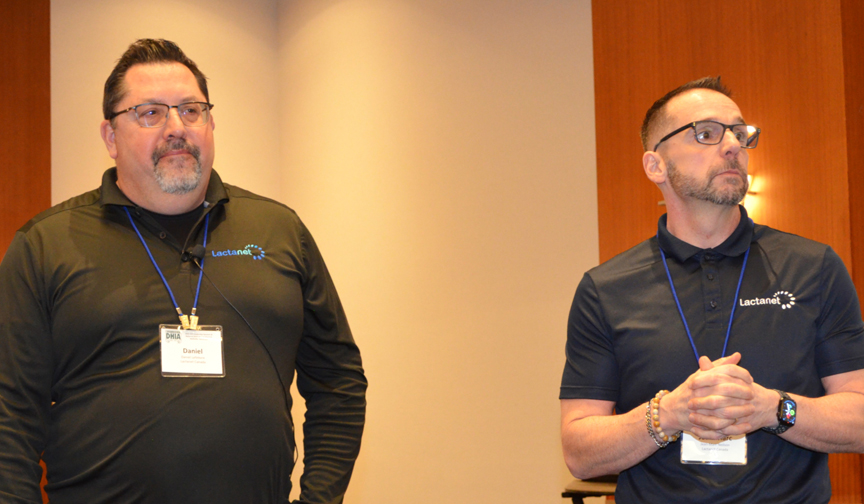
Reporting from Lactanet, National DHIA’s sister organization in Canada that provides milk recording and genetic evaluation services in Canada were Daniel Lefebvre, chief operations officer and Jean-Marc Neilson, national sales & service director. Noting the fifth anniversary of DHI consolidation in the country, they described innovations in services offered to dairy producers as the number of dairies using robots has increased significantly across the country. Looking ahead, they will be introducing calf health evaluations, enhanced genetics website for beef on dairy and a new version of LPI, the breeding index. Farther out there will be increased use of dairy data moving from monthly to daily, further milk analysis and efforts to measure sustainability as driven by processors and their customers. Lefebvre also briefly summarized his work with ICAR as its current board president.
From CDCB, Katie Schmitt, outreach officer, described the nine-member producer advisory committee which meets twice a year and has four more conference calls. She said an open meeting for producers is set for March 31 at the Western Dairy Management Conference in Reno. The National Cooperator Database Workshop will be held August 26 – 28 in Milwaukee, Wis. She also described the public relations campaign getting underway showing how CDCB data drives genetic improvement.
Speaking at the annual meeting, CDCB’s Joao Durr, CEO, noted that current changes in the federal administration showed the importance of the original justification for CDCB’s creation, in effect to privatize the U.S. dairy genetics program. Using a single slide… unusual for his presentations… he described the seven operational divisions in the organization now with a staff of 30. He said new efforts are being made to increase the incentives for dairy producers to allow their DHI herd records to flow through to the National Cooperative Dairy Data Base.
Awards Banquet and Scholarship Auction
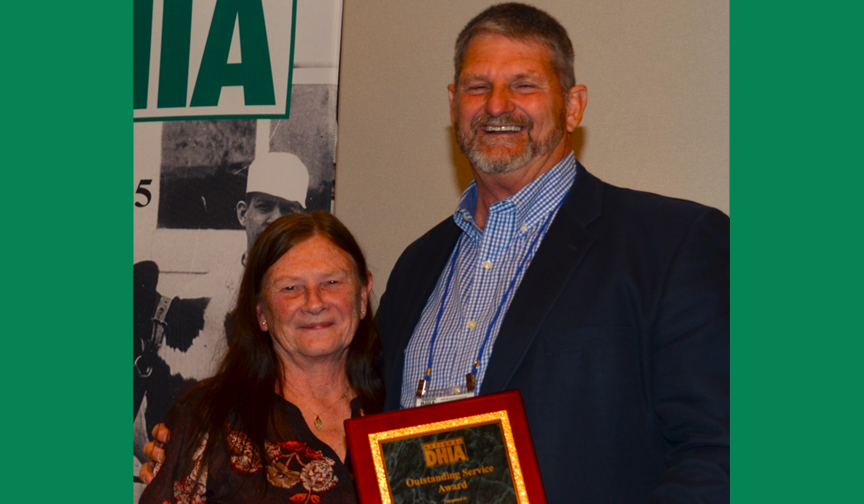
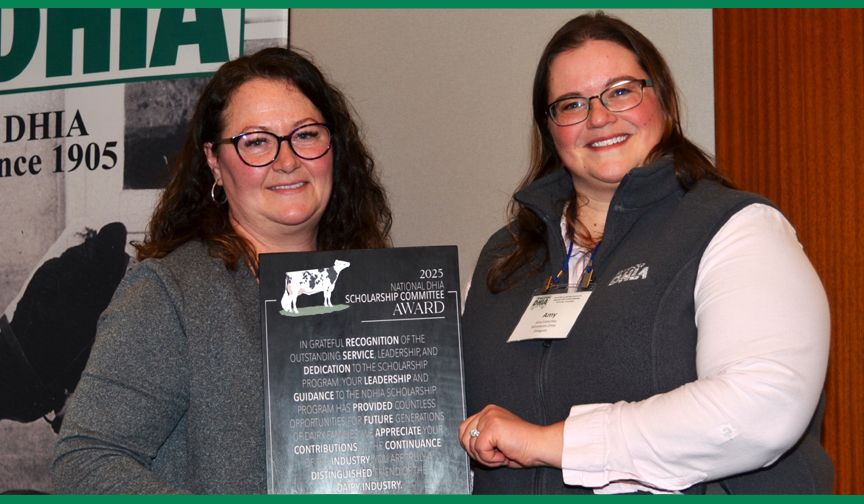
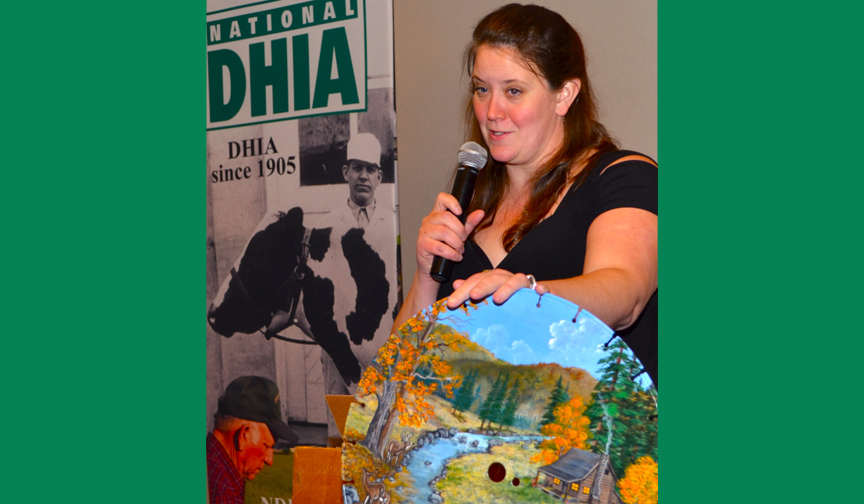
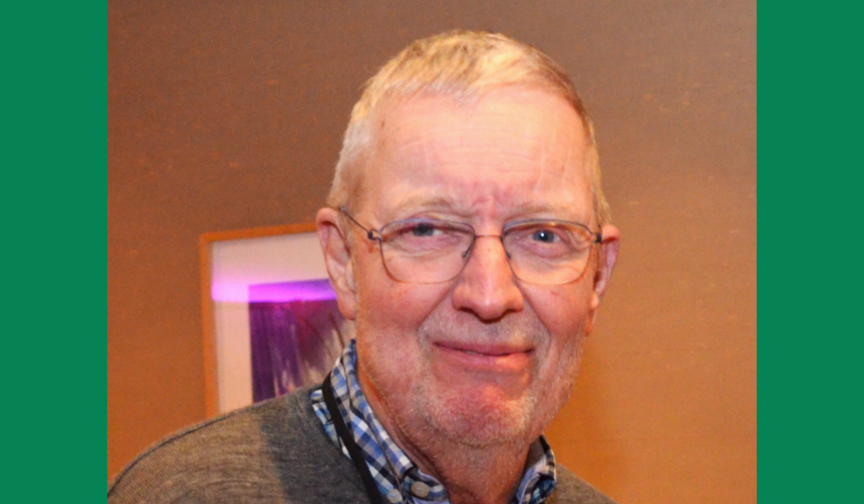
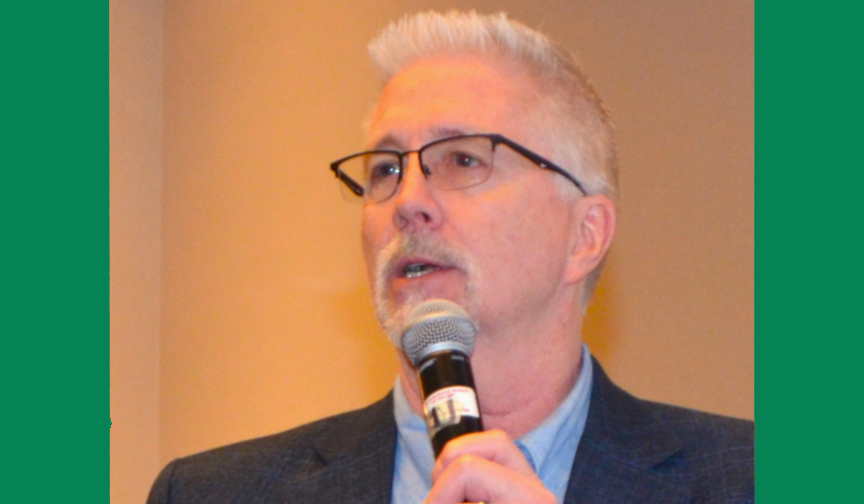
The evening of March 5, the annual banquet featured the presentation of the Distinguished Service Award to Lynn Lee, noted dairy and livestock auctioneer from Tennessee who has volunteered to conduct the scholarship auction for many years. Susan Lee made the presentation and it’s her Idaho DHI association that has sponsored his travel to the event. Elizabeth Straw of Indiana was auction committee chair again this year. She and her team collected, organized and presented some 40 lots of donated items with an additional 20 or so sold with silent bidding. The target amount of $15,000 was raised again this year. On behalf of the committee, Holly Thompson presented an award to Bruce Dokkebakken for his support of the fund. He is recently retired and was not present so his successor as Minnesota DHI general manager, Amy Loeschke, accepted on his behalf.
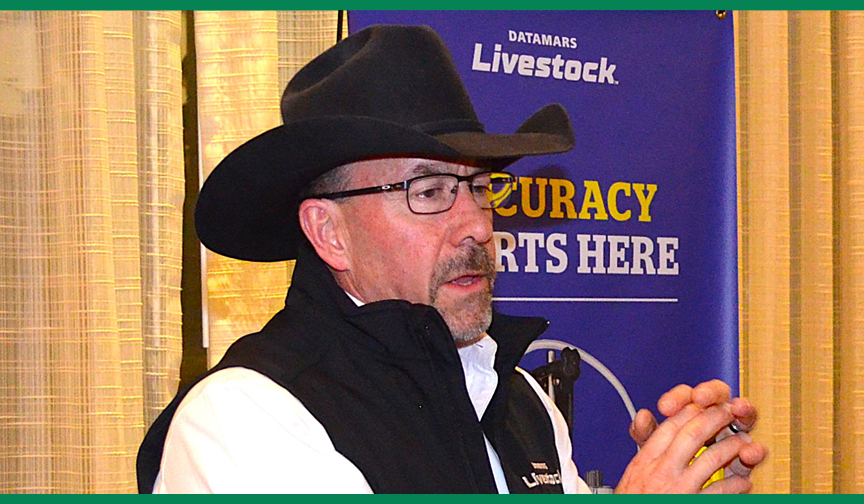
Joel Hastings was banquet MC, and he recognized the meeting sponsors who received applause. Datamars Livestock sponsored the opening reception, and others were Bentley Instruments, Caisley International, DairyGuard by Safeguard Biosytems, Foss, VMRD and Y-Tex.
Annual Meeting
The annual meeting got underway on March 6 with the call to order by President Chester and the Pledge of Allegiance. Robyn Buttars, whose husband is a dairyman from Utah and former National DHIA president, introduced a YouTube video of a song she composed, inspired by her family’s great uncle who lost his life in World War I. It can be found here https://www.youtube.com/watch?v=cVtV4-6tiqY
Three Zoom presentations from National DHIA international collaborators were led off by Reinhard Reents from VIT, the German DHI organization who presented information about iDDEN – International Dairy Data Exchange Network – a software platform developed in 2020 by a partnership of seven DHI organizations including National DHIA to facilitate data exchange not only within the DHI system but with the major dairy equipment manufacturers. Next was Rodrigo Caaneco of Sayca, who spoke of next steps with the Ori Collector, a universal raw milk sampler for robotic systems. National DHIA offers this equipment to members through DHI Services. Niels Henning Nielsen of Viking in Denmark briefly summarized the new sampler and combo meter/sampler project funded by National DHIA along with DHI organizations in Germany and Ireland as described above.
“Live on stage” in Nashville, Jay Weiker, CEO of the National Association of Animal Breeders (NAAB) presented annual statistics of semen sales by the AI industry, showing growth in sales for both dairy and beef units after two slower years, reaching 69 million units total both domestic and foreign. Many details are available on the website http://www.naab-css.org.
In his President’s Address, Allen Chester thanked the members for participating in this meeting and encouraged others to get involved. He thanked Director Julee O’Reilly for leading the discussions focused on DHI organizational challenges and the other directors for chairing the various sessions. Treasurer Dave Scapanksi presented the financial results for National DHIA and the two subsidiaries. Total revenue for all three entities combined amounts to over $1.6 million.
With an overview of some key DHI statistics, Fiona Guinan, a PhD fellow at the University of Wisconsin – Madison, summarized her research being done with support from both National DHIA and CDCB. While total U.S. dairy cows on some form of DHI testing amount to about 55 percent of the total dairy herd, in 2023 only about 400,000 cows had records processed for the national data base. Processed cows have dropped from 50 percent of DHI cows to 40 percent in the past ten years. In a second presentation, she described her research related to identifying traits applying to what she termed “anonymous” cows… that is, high performing but trouble free cows that don’t need special care. These cows exhibit what she termed consistency – a high level of performance in variable conditions. She was using large numbers of daily milk weights and DHI records in this work to identify the traits associated with the resilient cow vs. inconsistent cows.
In his CEO report, Jay Mattison celebrated National DHIA’s 60th anniversary, citing DHI and industry collaboration which has improved both genetics and management for the U.S. dairy herd. He said in spite of plant based beverages and lab grown milk, real cream, butter, milk and real dairy protein are increasing. He said, “We have to be prepared for challenges, opportunities and competitors so that animal and dairy protein is produced in a framework that contributes to food security in the world.” He finished by thanking speakers and attendees for their participation and then recognized staff, welcoming Kim Hill and thanking Business Operations Manager Leslie Thoman who does a lot of the heavy lifting around annual meeting preparations.
Kent Buttars as nominating committee chair, working with Kevin Haase and Bob McKaig said that there had been no inquiries for the three directors’ positions and that incumbents were ready to continue. So, he nominated John Gloss of DairyOne for the management seat and Susan Lee, Idaho, and Dave Scapanksi, Minnesota, for their producer positions… unanimous choices.
The meeting was recessed while the board reelected officers which were announced to the group as identified above and in the board photo. The meeting was adjourned at 12:08 p.m.
Be the first to comment