
Peninsula Pride Farms members reduce erosion, phosphorus loss
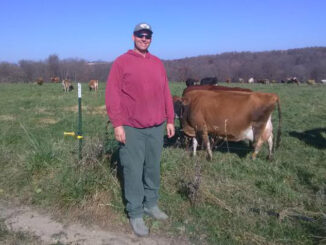
Cornette, who milks 360 cows and operates 1,000 acres together with his brother, Tom, first tried no-tilling about 12 years ago. When the results he hoped to see didn’t come to fruition, he resumed conventional practices that disturbed the soil, with the goal of trying no-till again another time. That time came two years ago, and Cornette now experiences more success with the practice each year. He gives much credit to Peninsula Pride Farms (PPF).
“The collaborative efforts and shared experiences that came with the formation and growth of Peninsula Pride Farms have really made a big difference around here,” Cornette said. “We’ve been able to learn from each other’s successes and failures, and no-till and cover crop acreage have exploded in the area.”
Cornette is a member of PPF, a farmer-led conservation group in Kewaunee and southern Door counties with 50 members who represent 76,500 acres and 42,663 dairy animals, beef cattle and pigs. The group collaborates with university researchers, environmental groups and community leaders to implement innovative farming practices that protect and improve ground and surface water in a geologically sensitive part of the state.
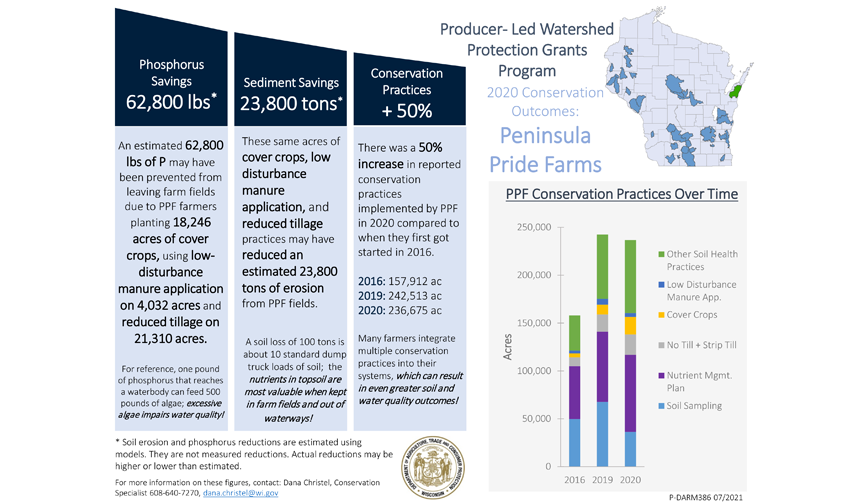
Data is showing that these practices are significantly reducing the chance of harmful runoff into streams and lakes. The farmers in 2020 potentially prevented an estimated 62,800 pounds of phosphorus from leaving the fields and reduced 23,800 tons of sediment erosion, according to research shared by the state Department of Agriculture, Trade and Consumer Protection; the University of Wisconsin-Madison; and The Nature Conservancy (TNC). For comparison, 100 tons of sediment is about 10 standard dump truck loads, and 1 pound of phosphorous in a lake or stream has the potential to cause the growth of up to 500 pounds of algae, which can degrade water quality.
The modeling-based analysis calculated an estimate of the impact of cover crops, low-disturbance manure application and reduced tillage compared to more conventional methods typical to the group’s area.
TNC is a key supporter of PPF and helps to fund the annual analyses, which are based on member surveys.
“Peninsula Pride Farms members continue to be leaders in their proactive efforts to try new conservation practices, get more acres under conservation management and share new techniques and lessons learned with farmers in their area,” Steve Richter, TNC’s director of agricultural strategies in Wisconsin, said.
“The work that PPF farmers are doing to implement soil health practices, such as cover crops and no-till planting, and to track their outcomes shows that agriculture can be part of the solution to our water quality challenges,” Richter said.
Cornette now stacks more conservation practices with no-till, including cover crops and low-disturbance manure applications, and he watches his crops thrive.
“With the extreme weather we’ve had, I had crops just days away from being completely lost, but as soon as we got just a little bit of rain, the crops took off and are now awesome,” he said. “The soil structure buffers against extreme weather and keeps nutrients in an available form for the plants. This is impressive.”
BY THE NUMBERS
Number of acres covered by conservation practices among Peninsula Pride Farms members:
- 2016 ― 157,912
- 2020 ― 236,675
Potential impact of conservation practices in 2020:
- Phosphorus runoff reduction ― 62,800 pounds
- Sediment erosion reduction ― 23,800 tons
Peninsula Pride Farms is a nonprofit organization of dairy and crop farmers and corporate members committed to protecting and improving ground and surface water in Kewaunee and southern Door counties in Wisconsin. The group leverages the ingenuity of the agricultural community, university research and scientists to implement practices with measurable outcomes. The group receives support from members and partners, including agricultural and environmental organizations and the state Department of Agriculture, Trade and Consumer Protection. More information: peninsulapridefarms.org

Be the first to comment