
Strained Processing Capacity
Ranging from a few days to two weeks or even indefinitely, at least 18 plants have been closed down due to issues with COVID-19 over the previous two months. In some cases, the closures were due to outbreaks among workers at the plants. In other cases it is a struggle to keep workers, who are afraid of getting sick, coming into the plant. Some of these facilities, such as the JBS facility in Greeley, Colorado, have already reopened their doors. That makes estimating the country’s processing capacity a moving target, but we can estimate that at times over the previous few weeks, pork processing capacity has been reduced by as much as 20% and beef processing capacity has been reduced by as much as 10%. These estimates are derived from publicly available information and company announcements about packing plants and further processing facility closures, it is not factoring in reductions in capacity due to slowing throughput and reduced line speeds at these facilities.
One potential way we can gauge the impact of this reduced capacity is by examining actual slaughter numbers reported by USDA. USDA reports an estimated daily slaughter number, while and a more official federally inspected slaughter number is reported on a two-week time lag.
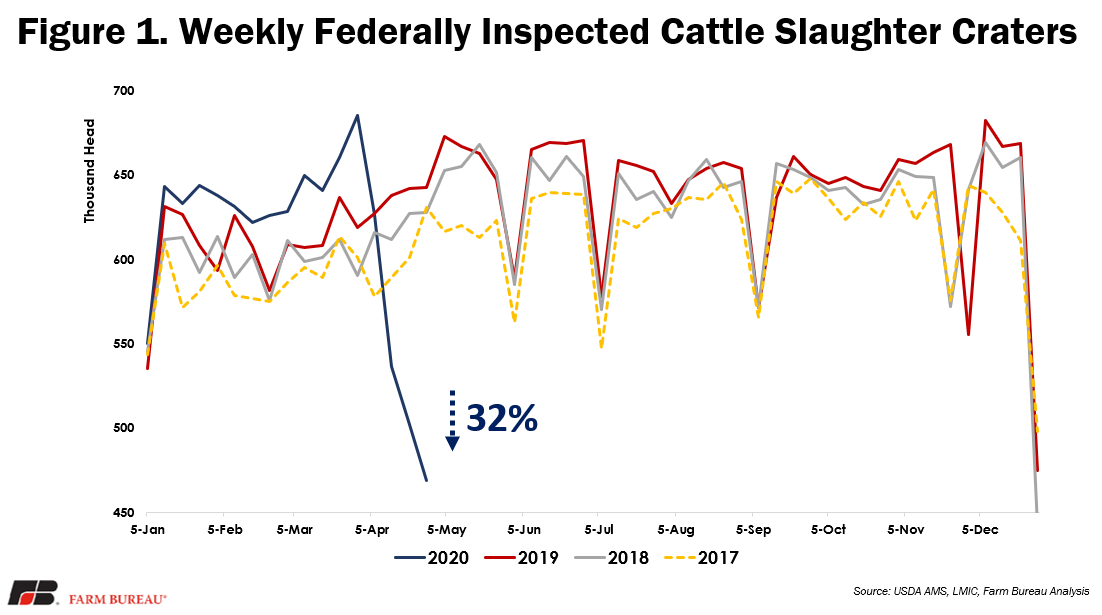

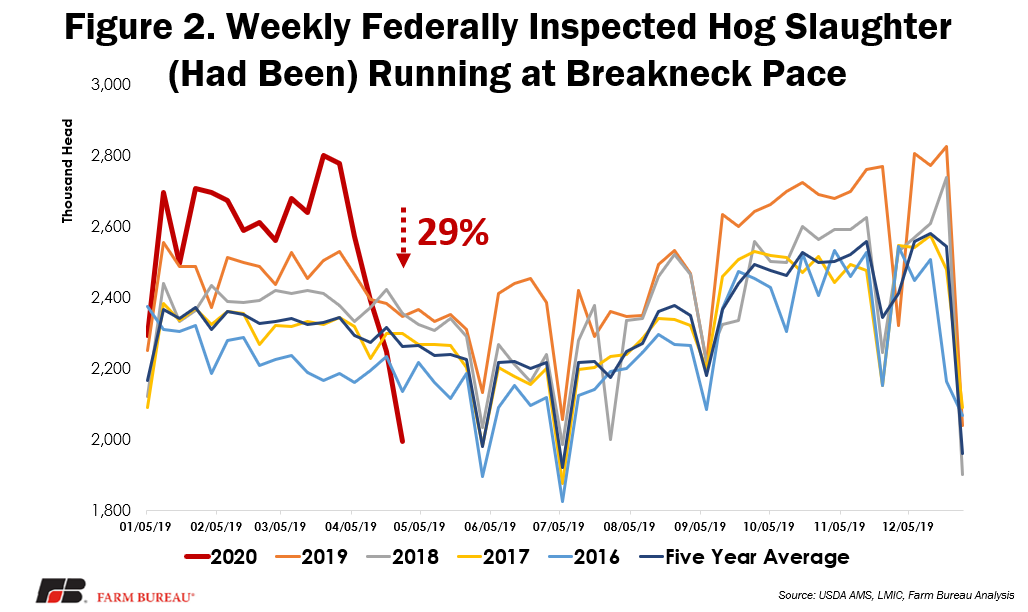
Figure 2 shows a similar story but for pork production. Hog slaughter has declined by 30% from its March high of 2.8 million head, declining by over 800,000 head to just under 2 million head in the most recent week. This slaughter number is a 15% decline from the same week in 2019.

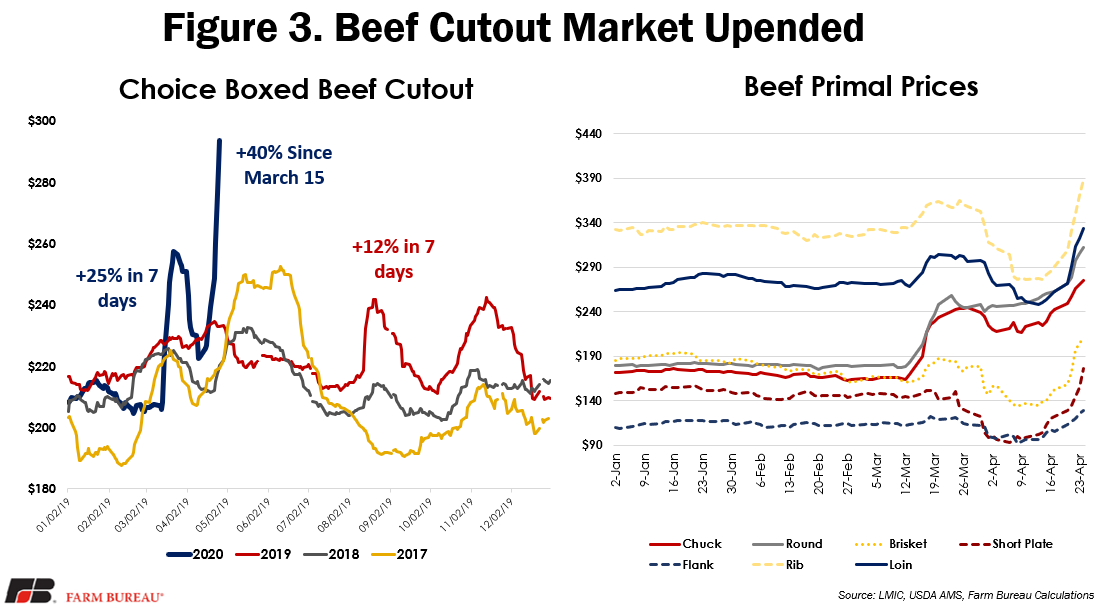
One thing that tends to accompany these types of disruptions in processing is a disruption in the meat markets as well. Figure 3 shows the drastic changes in the beef cutout over the previous few months. The value of the beef cutout has risen an astonishing 40% since March 15, with the normal relationships between primal cuts thrown completely out of sync.

Conclusion
While it is difficult to fully quantify COVID-19’s impact on the animal protein supply chain, we can piece together a picture showing a significant disruption in the supply chain, with a roughly 30% reduction in weekly cattle and hog slaughter, and a 40% increase in the cutout value since March 15. The meat and livestock sectors are under increased pressure right now and the industry is preparing for more difficult times ahead. We don’t yet know the details of the President’s actions to address meat packing plant closures but are hopeful it will protect the health and safety of workers while keeping farmers and ranchers in the business of providing food for families across America.

Be the first to comment