
Best management considerations for taking care of dairy calves in cold weather
Cornell Cooperative Extension’s Southwest New York Dairy, Livestock, and Field Crops Program shares best management considerations for taking care of dairy calves in cold weather.
With temperatures dropping and the first snow flying, it is important to confirm farms are ready for the winter. While animal care is a top priority for dairy farms year round, there are some additional considerations to keep in mind during cold months, especially for vulnerable groups like calves. Ensuring our calf care is up to date for the winter season can set them up for success in the future.
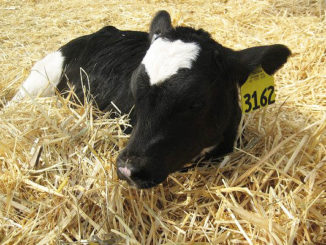
There are three top considerations for calves during the winter: maintaining body temperature, ventilation, and nutrition. While these areas are important year-round, they become even more critical in cold weather. Beginning with body temperature, calves are born with only 2-4% body fat, making them susceptible to freezing. Providing calves an adequate amount of clean, soft, dry bedding can help them stay warm. In cold weather, it is recommended to provide calves with straw that is deep enough they can nestle into. The University of Wisconsin has developed a nesting score card which describes a score of 3 as ideal for winter where the calves legs should generally not be visible when they lay down. Additionally, calf coats or jackets can be put on in extreme weather, but should be examined for proper fit, dryness, and cleanliness.
Finally, it is important to increase the quantity of milk calves receive for growth and warmth. Additional calories are burned by calves in the winter to keep warm, making an increased milk quantity without compromising quality vital. Calves can consume 16 liters of milk per day with no negative health effects. Calves are also susceptible to dehydration during cold weather, making water provision essential. A plan for providing calves with clean, fresh, non-frozen water should be communicated with all caretakers.
Cornell Cooperative Extension’s Southwest New York Dairy, Livestock, and Field Crops Program specialists are here to help provide research-based resources and support during this challenging time. Their team of four specialists includes Katelyn Walley-Stoll, Farm Business Management (716-640-0522 or kaw249@cornell.edu); Joshua Putman, Field Crops (716-490-5572 or jap472@cornell.edu); Alycia Drwencke, Dairy Management (517-416-0386 or amd453@cornell.edu); and Amy Barkley, Livestock Management (716-640-0844 or amb544@cornell.edu). While specialists are working remotely at this time, they are still offering consultations via phone, text, email, videoconferencing, and mail. They are also providing weekly updates with timely resources and connections via email and hardcopy and virtual programming. For more information, or to be added to their notification list, contact Katelyn Walley-Stoll, Team Leader, at 716-640-0522, kaw249@cornell.edu or visit their website swnydlfc.cornell.edu.
The Southwest New York Dairy, Livestock, and Field Crops Program is the newest Cornell Cooperative Extension regional program and covers Allegany, Cattaraugus, Chautauqua, Erie, and Steuben Counties. The Southwest New York Dairy, Livestock, and Field Crops regional specialists work with Cornell faculty and Extension educators to address the issues that influence the agricultural industry in New York by offering educational programming and research based information to agricultural producers, growers, and agribusinesses in the Southwestern New York Region. Cornell Cooperative Extension is an employer
If you would like more information about this topic, please contact Alycia Drwencke at 517-416-0386 or amd453@cornell.edu. For more information about Cornell Cooperative Extension, contact your county’s Association Executive Director. Allegany County – Laura Hunsberger, lkh47@cornell.edu or 585-268-7644. Cattaraugus County – Dick Rivers, rer263@cornell.edu or 716-699-2377. Chautauqua County – Emily Reynolds, eck47@cornell.edu or 716-664-9502. Erie County – Diane Held, dbh24@cornell.edu or 716-652-5400. Steuben County – Tess McKinley, tsm223@cornell.edu, or 607-664-2301.
– Southwest New York Dairy, Livestock, and Field Crops Program

Be the first to comment