
Training protocols should be simple, easy to understand and most importantly, translated in the language that best fits your employees.
To ensure that the training information is conveyed properly, we must use the training methods that work better for the farm employee audience. It has been reported that only 60% of the dairy operations in the U.S. provide training to their personnel. Out of this 60%, 41% of the farmers provided oral presentation trainings, while only 12% provide training using interactive teaching methods, such as educational videos. Although any type of training (e.g., on-the-job, lecture, or a combination of both) would be beneficial, a combination of oral presentations and hands-on demonstrations have been shown to significantly increase the knowledge and skills of farm employees. In one of our studies, we found that employees that were trained using both oral presentations and hands-on demonstrations had a 23.7% gain in knowledge. Furthermore, using visual aids such as videos or photos is a great way to increase understanding and communication of job practices.
To prevent mastitis, personnel need to be trained not only about how to perform pen and milking practices but also about the “whys” behind these practices. By doing this, personnel will be able to understand the reasons behind these
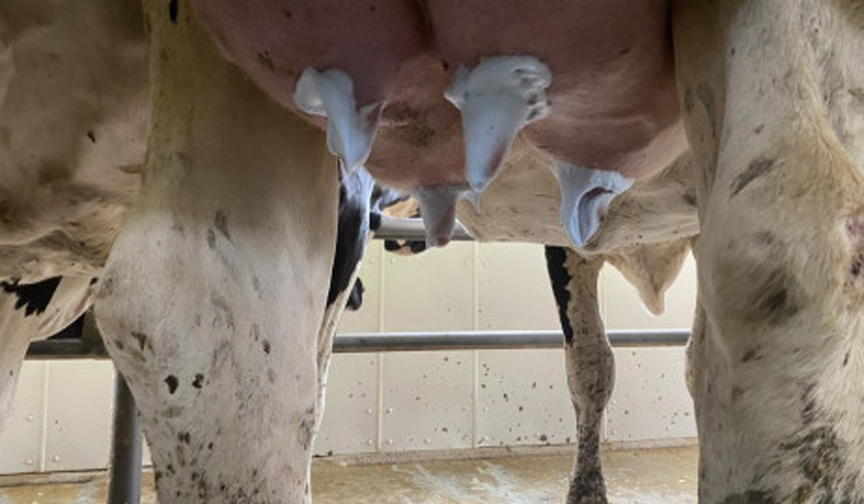
Another important area to train milking personnel is how to manage cows that were diagnosed with mastitis. A practice that may be very common in modern dairy farming but is worth mentioning, is that employees must always wear gloves while milking cows. One of the main reasons for this, on top of employee’s safety, is that the smooth surface of gloves allows for a faster and better cleaning of the gloved hands after diagnosing mastitic quarter. Employees must understand that after they have touched a mastitis quarter, they cannot touch any other quarter until they wash their hands thoroughly. Ideally, employees must clean their hands, first with water and then with the pre-dipping solution. In farms with high contagious mastitis incidence and employee training issues, it may be recommended to train milking personnel to change gloves rather than washing after finding a quarter with mastitis. This is a simple and easy-to-understand communication practice that could be implemented in the short term.
Employees must be trained on other practices such as how to milk mastitis quarters, proper communication of mastitis cases to their manager, and where to move those cows after milking. Regardless of the practices implemented, protocols should be simple, easy-to-understand and accessible (including being translated to the language that best fits your employees).


Be the first to comment