
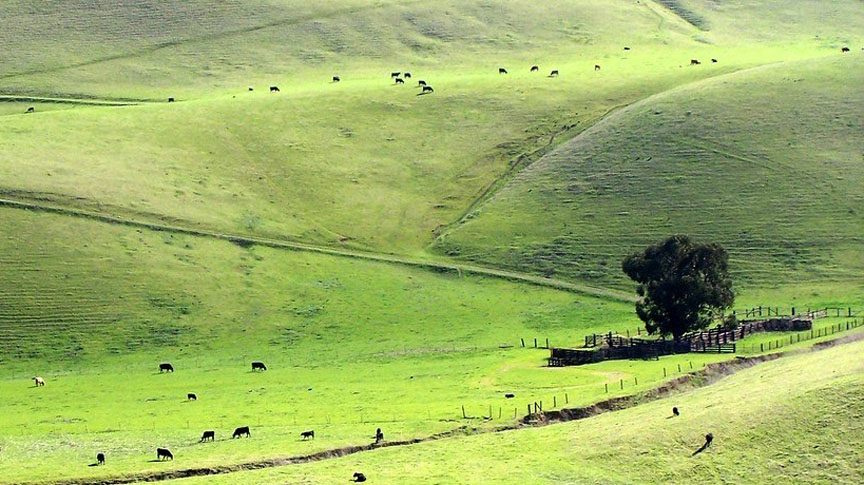
Drought classifications range from D0, or abnormally dry, to D4, exceptional drought. Figure 1 shows how virtually all of the Western U.S. is experiencing some level of drought conditions, with D4 and D3 drought areas covering a greater share of the land. Many of the areas experiencing drought are key areas for grazing livestock.
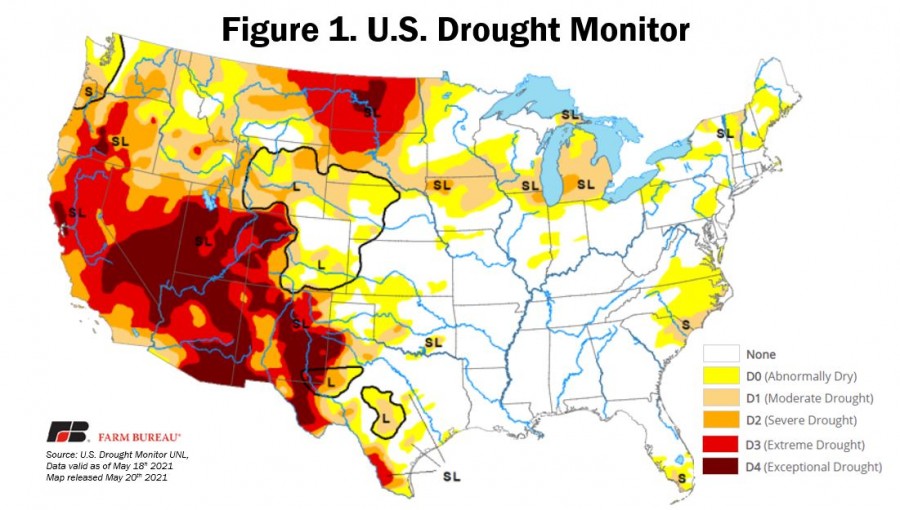
As of May 18, 60% of the continental U.S. is experiencing drought to some degree. This is up significantly from this time last year, when 31% of the country was in some level of drought. As Figure 2 shows, 15% of the country is experiencing a D0 drought, 13% of the country is experiencing D1 drought, 9% of the country is experiencing D2 drought,12% of the country is experiencing D3 drought, and 10% of the country is classified as D4 drought.
Also very striking is how the drought has worsened over the previous year. There were slight adjustments in the overall levels of D0-D2 drought over the past year, but most of the change has been in the addition of the more severe categories. The area of D3 drought expanded considerably in September and October 2020, while the expansion of D4 drought kicked in in November and December.
Pasture and Rangeland Conditions
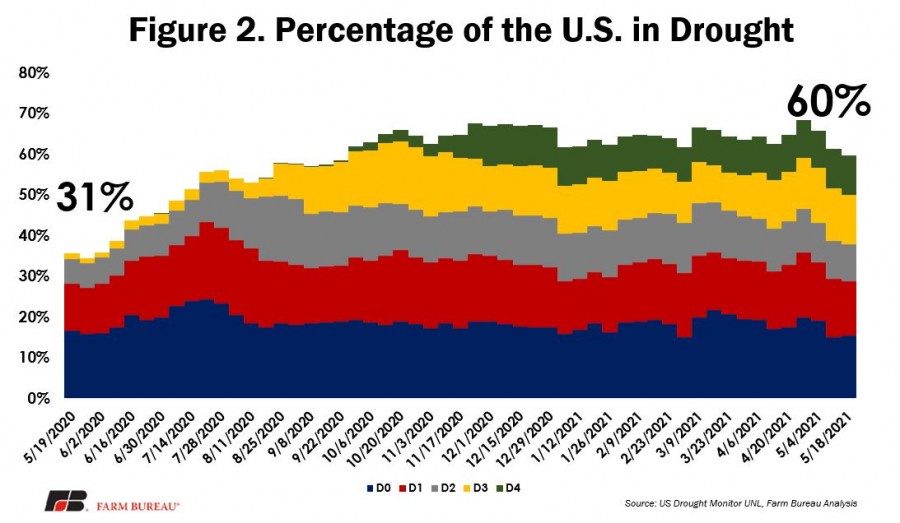
Figure 3 shows the divergence of 2021’s national crop and condition ratings from the last few years, as well as the five-year average. Each of the first three weeks of this year set records in terms of pastureland ratings in both the good-
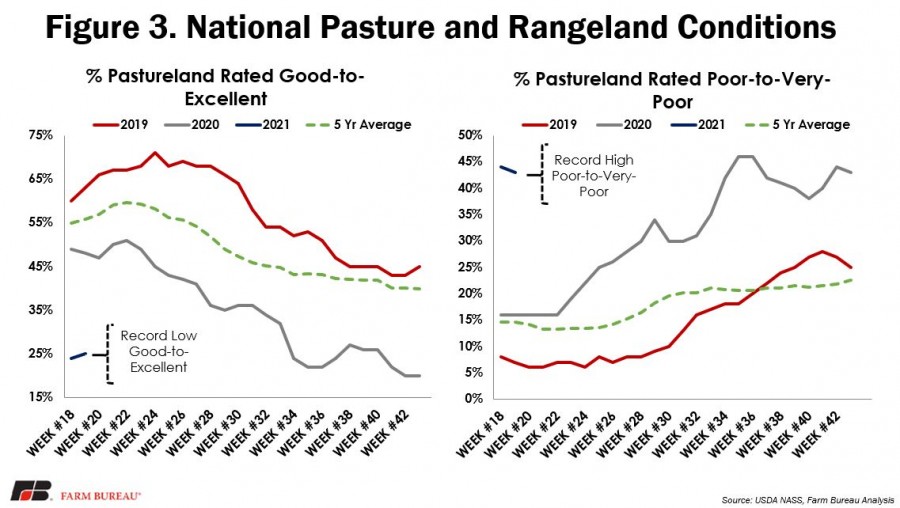
Keep in mind, these are national numbers and conditions often vary by state. Regional differences in precipitation and temperature have led the Western states and portions of the Northeast to experience lower good-to-excellent conditions than other areas of the country.
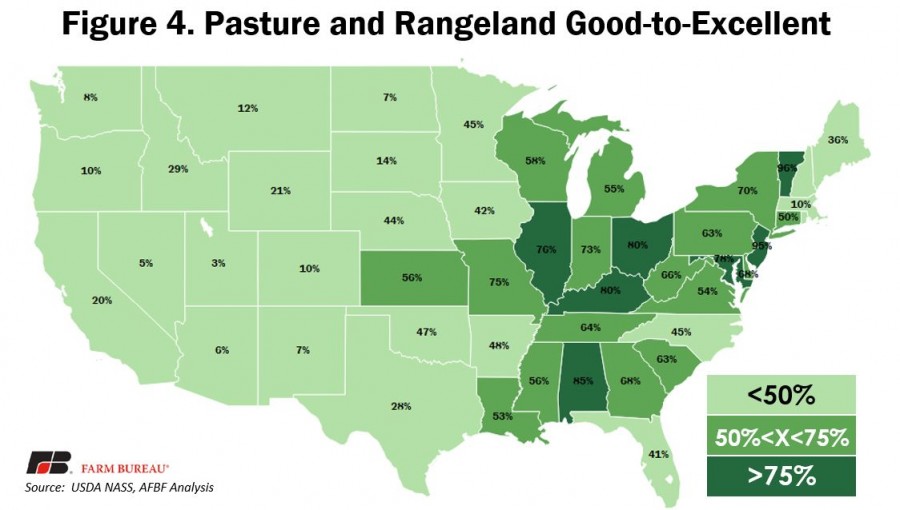
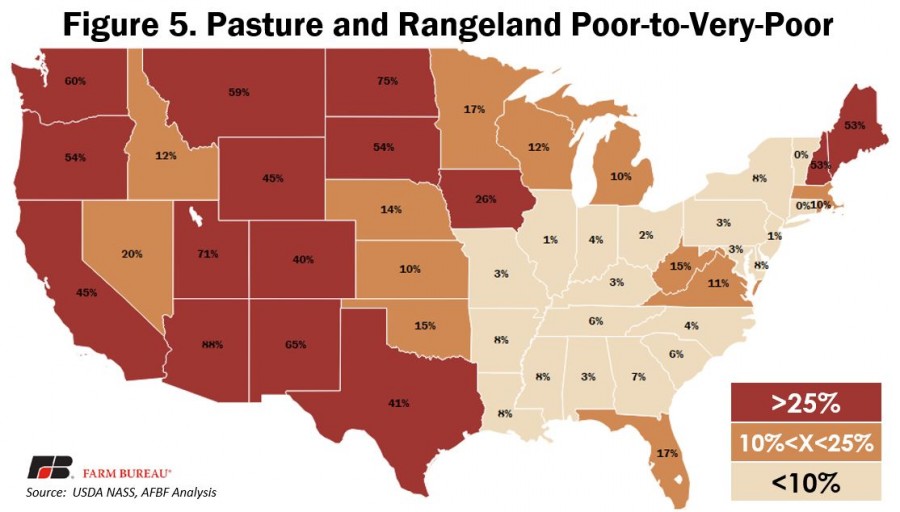
On the opposite end of the spectrum are poor-to-very poor conditions. The regional distribution for this category largely follows the good-to-excellent ratings, with poor conditions concentrated in the Western U.S., as well as the Northeast. Arizona has the worst conditions in the continental U.S., registering nearly 90% of pasture and rangeland at poor-to-very-poor, with North Dakota and Utah close behind at 75% and 71%, respectively.
Summary
As drought has spread throughout much of the Western and Southwestern part of the country, pasture and rangeland conditions have suffered. Critical cattle-producing states are experiencing a drastic increase in the amount of pasture and rangeland in their states rated as poor-to-very-poor, while the share of pasture and rangeland rated as good-to-excellent has decreased in much of the rest of the country. The percentage of acres rated good-to-excellent has started at a record low 25% nationally, while the percentage of acres rated poor-to-very-poor has started at a record high of 43%.
Contact:
Michael Nepveux
Economist
(202) 406-3623
michaeln@fb.org
twitter.com/@NepveuxMichael

Be the first to comment