
- Apples to apples: Silage barriers aren’t all the same
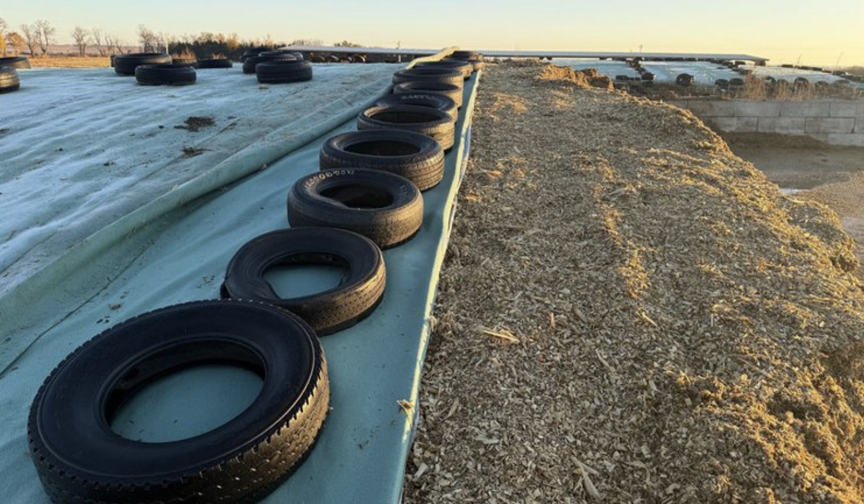
There’s a boatload of silage barrier research going back several years, and all of it points to one thing: barriers work to protect the top three feet of piles and bunkers. We often say that silage doesn’t know if it’s being fed to dairy cattle or beef cattle; both benefit from better nutrient profiles and less spoilage. How many more pounds of milk or gain can you get from cattle that eat a more appetizing, cleaner ration?
Some people don’t know that there is a wide variation in the quality of oxygen barrier films. Sure, you can test strength by trying to tear it, but the kicker is you can’t see the amount of barrier polymer in a film. A lab test measures the amount of oxygen that goes through a film in 24 hours, and if we know the OTR (Oxygen Transfer Rate) of films, we can compare apples to apples. Those tests cost hundreds in a lab, but we can also do a quick test with bananas – a decisive test we developed when we began working with oxygen barriers many years ago.
Buyer beware. Not all barriers are the same. Whether you’re a small or large dairy farmer, whether you feed a few or tens of thousands of cattle, know what you’re putting on your pile.
Sealpro Silage Barrier Films are the highest quality for barrier properties and strength. And the barrier doesn’t know if it’s used on small grain silage, corn silage, or high moisture corn.
2. Telling it like it is. Seeing the difference.
We are an educational company first – we’ve said that all along. There isn’t much that Ron hasn’t seen in fermented feeds, and he’s had some great teachers and influencers along the way. Over 30 years ago, he recognized that dairy farmers could save money on waste, have more feed to feed, and do it in a way that was safer. He saw people on top of piles, pitching rotten silage, which only months ago was healthy corn in the field. What a waste of input dollars. He worked to find new scientific methods and products to cut those losses, knowing that silage would also be safer. He’s earned a working man’s Phd by asking questions, studying cause and effect, and doing proctored research trials.
Have a question about your silage? Are you seeing waste where there shouldn’t be? Would you like your harvest to be more efficient? Do you need some frank, objective advice? Let us know—we’ve got years of experience to share. Get hold of us soon. We’ll be going to the International Silage Conference to learn some more. If we can’t answer your question, we’ll find someone there who can.
Be the first to comment