

Protein choices in early lactation impact economic returns
Providing either more protein in the ration or providing ration protein that better matches the amino acid needs for milk production can result in improved milk yield, less weight loss in early lactation, and can also assist in getting cows back in calf. At this stage of production, cows are eating less and therefore consuming less protein, meaning they must mobilize body tissue to meet the demands of lactation. A ration that provides adequate protein in mid lactation may therefore not be providing enough protein for cows just after calving. Several studies have shown that this has consequences.
According to researchers at The Ohio State University1, meeting the amino acid needs of lactating cows in early lactation not only improves performance but also carries over into later stages of lactation. The researchers provided cows three experimental diets: a control diet with 17% crude protein, one test group of cows with additional protein from a commercial treated soybean meal diet, and another test group of cows received a diet with additional protein from a commercial canola meal blend. All diets provided the same percentages of corn silage, alfalfa silage and alfalfa hay. Cows received these diets for the first 25 days in milk only, and all cows were then given a common 16% protein diet from days 26 through 92 when the trial ended.
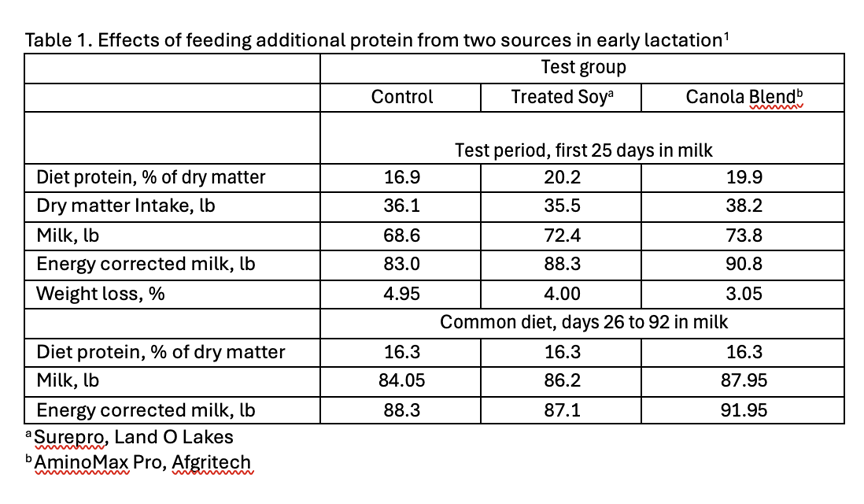
As table 1 shows above, providing additional protein for the first 25 days in milk not only increased milk and energy corrected milk yields but also reduced weight loss. In addition, greater yields were maintained after the cows were given a common diet.
The addition of the canola meal blend improved milk yield and maintained weight to a greater degree than the addition of soybean meal. Canola meal has an amino acid profile that is like that of milk, and the canola meal blend was formulated to have an amino acid composition that matched milk protein.
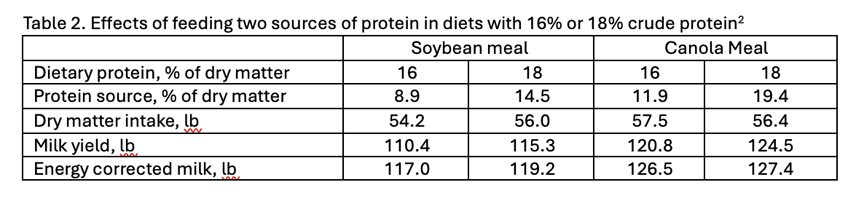
Similar results were found in a trial conducted at the U.S. Dairy Forage Research Center2. In that trial, cows were provided with either 16% crude protein diets or 18% crude protein diets, with vegetable protein provided by either soybean meal or canola meal. The diets were provided continuously for the first 16 weeks of lactation. Milk yields were greater when cows were given the higher levels of protein with both protein sources (Table 2). However, within each protein level, milk yields were greater when canola meal was given. The explanation given for the superior performance was an improvement in amino acid balance.
Many farms do not have the capacity to isolate early lactation cows, or to provide a separate diet for cows in early lactation. Research has again shown that formulating proteins to match the amino acid needs of cows can improve milk yield and reproduction.
In a California study3, milk yield was reduced when a portion of the diet canola meal was replaced by soybean meal. However, there was less milk loss with the soybean meal diets when the diet also contained additional rumen protected methionine, the amino acids generally thought to be first limiting in many dairy cow rations. Because this was a large commercial study, weight loss could not be determined. However, cows with the more balanced diets experienced less loss in body condition score. Table 3 summarizes these results.
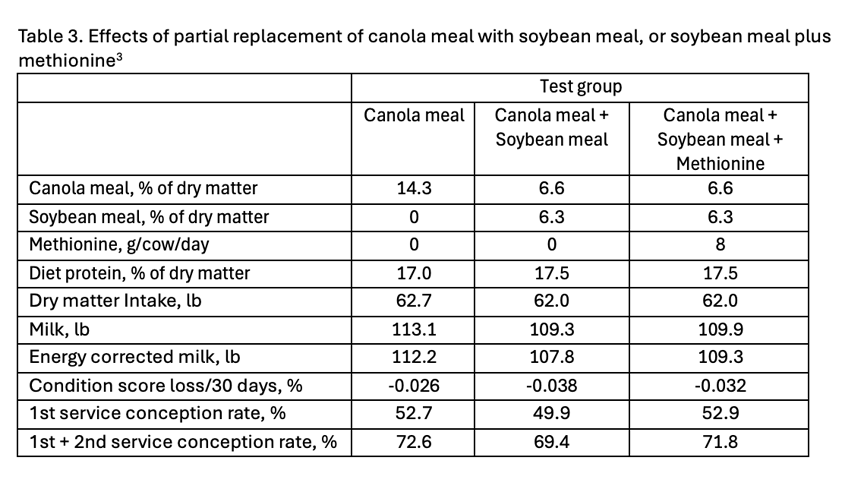
Amino acid balance can also impact reproductive performance. In this study, conception rates were greater for the canola meal diet than the soybean meal diet, but improved when the soybean meal diet was augmented with methionine.
Dairy producers are well aware of the problems associated with reduced dry matter intake and insufficient energy for cows in early lactation. Often not considered, however, is the fact that the lower intakes also reduce the availability of protein and critical amino acids. These three studies show that additional protein and an improved amino acid balance during early lactation can result in greater milk production, less weight and less body condition loss, and improved conception rates. All are critical economic parameters. Increasing protein in early lactation, when possible, as well as the inclusion of a protein source that improves amino acid balance can be instrumental in ensuring better financial returns.


Be the first to comment