
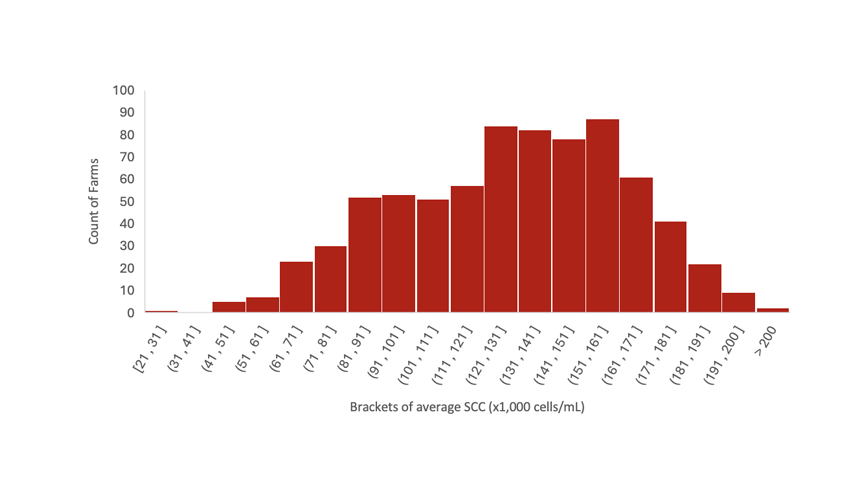
The Empire State Milk Quality Council (ESMQC) has been the administrator of the Super Milk program in NY, a program that recognizes dairies that produce exceptionally high-quality milk. Farms look forward to adorning their barns with the blue “Super Milk” signs provided to the award winners. In the past, farms shipping milk from their locations in NY must 1) maintain
The program is in its 35th year of completion and members of the ESMQC board look forward to honoring long-term achievers of the award summer of 2025. Academics, consultants and industry professionals have recognized evident downward trends in specific quality benchmarks such as somatic cell count (SCC) over the course of the past decade. The ESMQC, which includes farmers, equipment experts, veterinarians, certified milk inspectors, nutritionists, milk quality extension experts, and other dairy professionals is therefore faced with re-evaluating the definition of ‘“Super” Milk.’ To this end, during its annual spring meeting, the executive board unanimously voted to lower the somatic cell count (SCC) threshold required to qualify for this award. For perspective, the last amendment lowered the 250,000 cells/mL cutoff to 200,000 cells/mL approximately 10 years ago in 2015.
The Super Milk 100 award will remain unchanged. Also, farms that have earned a Super Milk award for the 34 years of the program or who are targeting to win an award for the 2024 milk will continue to have opportunity to do so under the original requirements for the remainder of this year.
The new requirements are listed here and will begin in January 2025:
- For the first year, in addition to nomination, farms will need to maintain average monthly counts ≤150,000 cells/mL for at least 9 of 12 months.
- For the second year and beyond, in addition to nomination, farms will need to maintain average monthly counts ≤150,000 cells/mL for at least 10 of 12 months.
How have NY farms performed historically and what impact will this change have?
What are the industry trends for SCC overall?
In 2022, half of all bulk tanks across the four Federal Milk Marketing orders had SCCs less than 200,000 cells/mL. From a volume perspective, more than 50% of total milk shipped has consistently had counts below 200,000 cells/mL since 2012; more recently 67.4% of milk has met this qualification (USDA-APHIS, 2022). More recently for 2023 the national average for DHI herds (8,947 farms; 3.8 million cows) was 181,000 cells/mL. From a state perspective, NY farms landed “above average” with a cell count of 175,000 cells/mL (Progressive Dairy, 2024). NY state currently ranks as the fifth largest milk producer. ESMQC therefore has elected to incentivize these 3,000+ farms to further improve by awarding those able to commit to better-than-average SCC.
How can a farm receive assistance to meet the new goals of the program?
Targets for controlling SCC specifically include maintenance of a clean, dry and comfortable environment, proper maintenance and use of milking equipment, proper milking procedures, appropriate management of mastitis cases (including culling chronically infected cows), maintaining biosecurity for contagious pathogens, effective dry cow management, and good record keeping/review/monitoring of udder health practices (NMC, 2020).
The following are great resources that farms could rely on for current knowledge related to milk quality
- Veterinarians
- Cooperative or Processor’s field staff
- Certified Milk Inspectors
- Quality Milk Production Services https://www.vet.cornell.edu/animal-health-diagnostic-center/programs/quality-milk-production-services · Dairy One (www.dairyone.com)
- NYSCHAP (www.vet.cornell.edu/animal-health-diagnostic-center/programs/nyschap)
- National Mastitis Council (www.nmconline.org)
For individuals interested in knowing more about qualifications of the Super Milk program, awarded farms, or if your organization is interested in sponsorship, please visit www.supermilkny.org.



Be the first to comment