
The natural defenses of the ruminant body are deeply interconnected, from hair to skin to respiratory function. The digestive tract is another key physical defense, housing roughly 80% of immune mechanisms that prevent the spread of pathogens. It also serves to convert feed into absorbable nutrients, which are required to maintain bodily functions. Science has shown that some nutrients have a greater impact on immune function than others. Specifically, certain feed additives have shown to mitigate pathogen interaction or enhance immune response. Therefore, science-backed nutritional solutions can help improve animal health and welfare and optimize herd performance.
A More Robust Gut Microbiome
In mammals, the first interaction between the digestive system and the immune system comes from consumption of colostrum, which provides a rich source of immunoglobulins for disease protection. Shortly after birth, gaps within a calf’s intestinal lining allow immunological components to pass into other areas of the body, affording passive immunity. Colostrum exerts antimicrobial properties, provides beneficial microflora to populate the gastrointestinal tract, and it has a natural prebiotic effect.
Both immunologists and nutritionists are continually developing nutritional strategies that leverage the gastrointestinal tract microbiota population to impact nutrient digestion and gut health. For instance, yeast and yeast components can alter the colonization of gut microbes and are a subject of multiple research studies that aim to understand the link between nutritional interventions, gut health and overall immune function.
Research in Ruminants
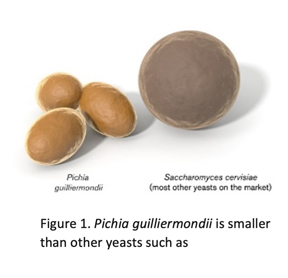 Certain yeast can influence the rumen microbial population by shifting nutrient digestion and absorption, while other yeast has been shown to be active in the small intestine. Pichia guilliermondii (Figure 1) is a unique, whole-cell, inactivated yeast that has been shown to adhere to gut pathogens and modulate the immune system. Pichia guilliermondii is smaller than Saccharomyces cerevisiae, a common yeast used in animal diets, and has a surface area that is four times greater per pound. Thus, Pichia guilliermondii can exert a greater impact within the digestive system.
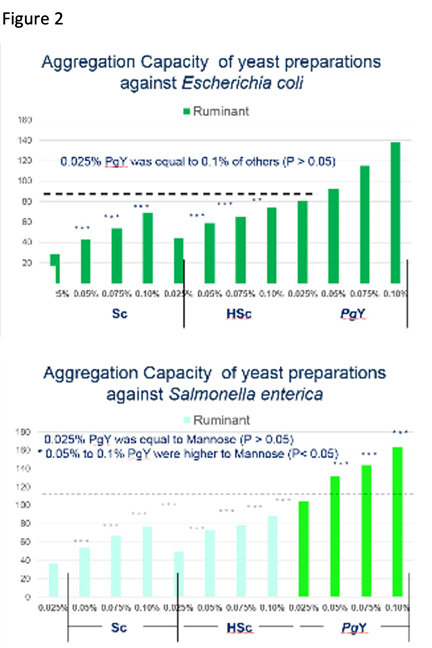 A study published in The American Society of Animal Science Journal examined how different strains of yeast interact with certain pathogens (Figure 2). Three yeasts, Saccharomyces cerevisiae (Sc), Hydrolyzed Saccharomyces cerevisiae (HSc) and Pichia guilliermondii (PgY), were included at four different rates and tested for response against several strains of E. coli and Salmonella. In each case the Pichia guilliermondii yeast demonstrated significantly better aggregation compared to the other two treatments.
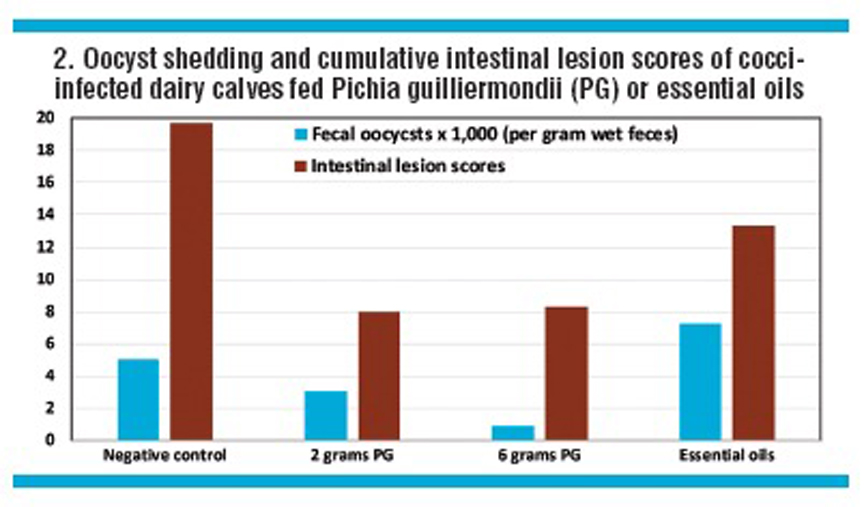
At the Instituto Nacional de Investigaciones Forestales, Agrícolas y Pecuarias (INIFAP) government livestock research facility in Mexico, Pichia guilliermondii was evaluated to determine its impact on cocci infected calves. Cocci has been identified as one of the most harmful diseases to strike young calves and exists in nearly every environment. This study evaluated weight gain, cocci shedding, gut lesions and the incidence of scours. The treatment group receiving the Pichia guilliermondii (PG) yeast exhibited statically lower incidence of all measures relative to the cocci challenge (Figure 3).
The unique properties the yeast contributed to the results exhibited in both trials led to the conclusion that not all yeasts are created equal. Additionally, yeast has demonstrated the potential to positively affect both young and mature animals.
Research at the University of Arkansas substantiated yeast supplementation to brood cows resulted in calves with better health status and growth. This suggests that incorporating this novel feed component into maternal nutritional programs results in positive benefits for the cow and calf herd.
This hypothesis was tested in another study where late gestating cows were randomly assigned to a control or treatment (Pichia guilliermondii) group. Cows went onto their respective treatment 60 days prior to calving. Once the cows had calved, they were moved off treatment and onto a common program to isolate the effect of treatment pre-calving. At 25 days of age, each calf was given an immune challenge. Blood was collected from the calves on day 32, 39, 46 and 53 to assess immune response. Calves whose mothers consumed Pichia guilliermondii mounted a better antibody defense compared to the negative control (P<0.01).
Mitigating Other Signs of Stress
When a ruminant’s innate immune system experiences pathogenic pressure, toxin ingestion or general stressors such as extreme weather, weaning, birthing and shipping, it responds with inflammation. This natural defense mechanism demands energy away from other bodily functions and reduces the digestive system’s ability to absorb nutrients. Modulating the inflammatory response can result in optimal animal performance.
Here, too, proper nutrition can improve animal health and welfare while maintaining a level of immune protection. Nutritional components that act as anti-inflammatories modulate immune response and influence repair of damaged tissue. Yeast and phytomolecules have demonstrated value for impacting barrier functions of the gut lining and helping minimize inflammation.
Applications to Optimize Animal Performance
It is beneficial for ruminants to be fed yeast continuously, as it is especially advantageous during times of stress. For an effective proactive management tool, producers can feed yeast to their cows 30 to 60 days in advance of a known stress event, such as calving, weaning or shipping, and continue the practice for 30 days after the event.
Novel feed additives such as yeast and phytomolecules enhance animal performance and overall health in both academic and commercial settings. Their inclusion in ruminant diets continue to be supported by research studies that validate their benefits to the animal and add to a producer’s bottom line.
Incorporating these additives in a proactive manner provides an opportunity to maintain herd health while minimizing the need for reactive intervention practices. Producers should consult with a reputable nutritionist or feed company to ensure they receive proper nutritional support for their operations.

Be the first to comment