
Tips to keep in mind during the frantic nature of harvest time
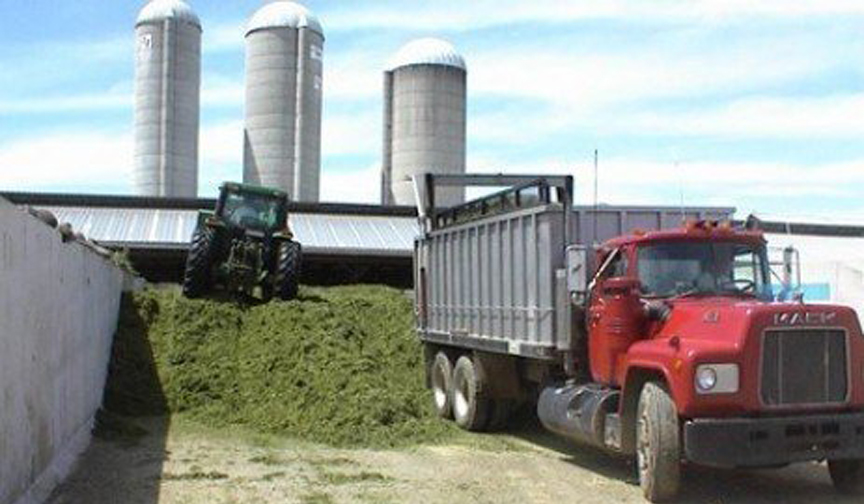
Let’s start our discussion with bunker silos. Bunker silos are feed storage systems where feed is piled around 6-20ft high in long piles, sometimes contained by side walls. The size of these structures varies by the size of the operation, but they have similar hazards in common. When creating and packing a silo, the goal of the operator is to drive their truck or tractor over the pile quickly and pack the silage in the pile tightly. This is done to obtain the optimal, oxygen free, environment for fermentation. In order to get that optimal compaction, a “progressive wedge” is formed during filing of the silo in order to provide a safe slope of about 1% to 3 % on both sides for unloading and packing, thus minimizing risk of roll-over.
Many large beef or dairy operations may utilize dump trucks to haul forage to the silo. Alongside the straightforward overturning during unloading, operators are encouraged to be mindful of the increased instability when raising the truck bed during unloading. Dump trucks become less stable as the bed is raised. Additionally, tire ruts from previous loads, and a random gust of wind, all on an uneven surface, add to that instability. Operators are encouraged to be mindful of where their machine’s center of gravity is, and to keep it between the frame rails of the truck’s frame.
Harvest is an exciting and turbulent time on any operation. A season’s work, and patience is gathered to feed livestock high quality feed. Use the tips shared in this article to allow your family and employees to have a safe season. The information for the above article was from (https://extension.psu.edu/horizontal-silo-safety). Residents of Stearns, Benton, and Morrison counties can direct questions to either my email (adam1744@umn.edu) or call my desk phone at (320) 255-6169 x 3.


Be the first to comment