
 Proper silage harvest management is the key to quality feed all year long. We can’t always control or manage all aspects of harvest but there are several we can. With forage inventories being low this year, it is more important than ever to make sure that the aspects of silage harvest we can manage, we do well. These aspects are harvesting at optimum moisture, proper chop length, and achieving sufficient kernel processing, followed by recommended storage practices. “Taking time and putting in the effort to control the controllables, will pay off with high-quality silage,” says Mark Kirk, Business Development and Customer Relations Manager for Rock River Laboratory
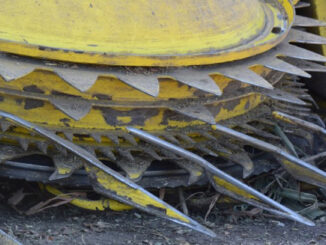
The next most important condition of corn silage harvest is kernel processing. The kernel processing score (KPS) is used to measure how thoroughly the corn kernels are processed or broken down. “This score covers the percentage of the starch or kernels that will pass through a 4.75-millimeter screen on a Ro-Tap device,” explains Kirk. “A good KPS score is 70 percent or higher.” Kernel processing increases starch digestibility, which can directly influence milk production and feed efficiency. Kirk recommends checking the KPS on the first day of chopping and at least every other day, or when switching fields in order to maintain a good score and adjust rollers if necessary.
 Chop length or Theoretical Length of Cut (TLC) is also another aspect that needs to be managed. TLC is dependent on at least a couple of factors. “The wetter the corn silage, the longer the chop length can be up to three-quarters of an inch,” says Kirk. “But drier corn silage needs to be cut shorter - maybe even down to three-eighths of an inch.” TLC may need to be adjusted if the corn silage has an Undigestible Neutral Detergent Fiber 240 (UNDF240) over 12 percent. “There is some evidence that a shorter TLC may overcome the negative effects of UNDF240 on dry matter intake,” adds Kirk.
Once the corn silage is out of the field, proper storage is essential – and one of the most controllable. One thing that can help is placing a decision-maker on the pack tractor or bagger. “Many times, we leave these jobs up to someone less interested in how well the job gets done,” says Kirk. “Pushing all the air possible out of the silage during storage is imperative to proper fermentation. Using a research-proven inoculant is another added protection to preserve the quality of the silage you harvest”. Several silage inoculants exist, but Kirk advises checking the research to back up the associated claims. “And most importantly, seal the pile or bag as quickly as possible and ensure any holes are mended,” says Kirk. “Oxygen is one of the biggest nemesis to proper fermentation.”.
Putting a plan together for best practices before harvest and working that plan to the best of your ability is essential to reach optimal silage quality. “Check to make sure all of the controllables have been addressed before harvest begins, and ensure your team is on the same page to check each of them,” says Kirk. “When the coming year’s feed depends on those few short days of harvest and storage preparation – it pays to do it correctly and make sure those on the team know the importance, too.”
Be the first to comment