
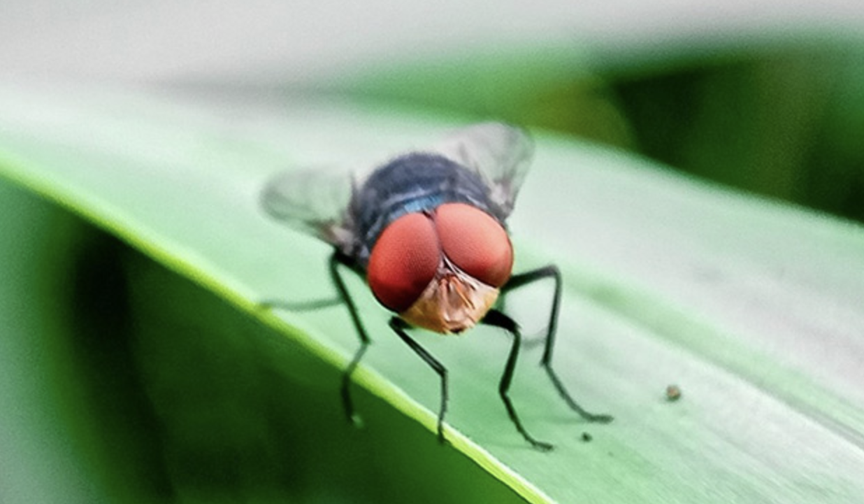
Reported on July 9th 2025, the latest case of New World Screwworm (NWS) identified in Mexico was in Ixhuatlan de Madero, Veracruz. Some 370 miles from the United States border, this most recent case resulted in the U.S. Southern Border Ports “phased reopening” being halted.
Since CDQAP’s May newsletter article on the Screwworm threat, USDA has made plans to retrofit a facility in Texas to serve as a sterile fly dispersal facility in addition to opening a new sterile fly production facility in Texas. These projects are expected to take a minimum of one to two years for completion.
USDA is also providing Mexico with $21 Million to renovate an existing fly facility. The renovation is expected to take a minimum of 12-18 months to complete and is anticipated to produce 60-100 million more flies a week. Currently the Panama facility is producing some 110 million sterile flies for release every week.
In terms of our capacity to produce sterile flies, it’s useful to remember approximately half of the flies produced in these facilities are males. Since female flies mate only once, mating with a sterile male leaves her eggs unfertilized and nonviable, breaking the Screwworm lifecycle.
Information for California Producers:
In June California Department of Food and Agriculture (CDFA) updated its New World Screwworm factsheet. It includes important information on reporting suspect cases and procedures for taking samples.
If producers or veterinarians suspect New World Screwworm (NWS), they should immediately contact the CDFA. CDFA will assign a specially trained Foreign Animal Disease Diagnostician, who may request you collect samples of the suspected screwworm larvae (maggots) send them to the National Veterinary Services Lab (NVSL) for official identification
The following is an overview of the recommended sampling protocol for suspected presence of NWS:
1. To obtain samples for identification, gently remove larvae from several sites and depths within the open wound using forceps. Place a minimum of 10-15 larvae in an empty conical tube (no coatings). Cover the larvae with 70% ethanol (70% isopropyl alcohol can also be used). Samples can be kept at room temperature.
2. Because secondary fly strike may be present and is most often found near the surface of the wound, it is especially important to collect specimens from the deepest part of the lesion. If possible, collect larvae of different sizes for submission.
3. A Parasite Submission Form (VS Form 5-38) will need to be completed to provide information on the samples collected.
4. If there is high suspicion of NWS the premises will be placed under a hold order and CDFA will provide information on treatment options.
CDFA is currently collaborating with multiple agencies at the state and federal level to plan and prepare for the potential of a NWS incursion into the United States.
For more information view CDFA’s updated Screwworm fact sheet.
Be the first to comment