
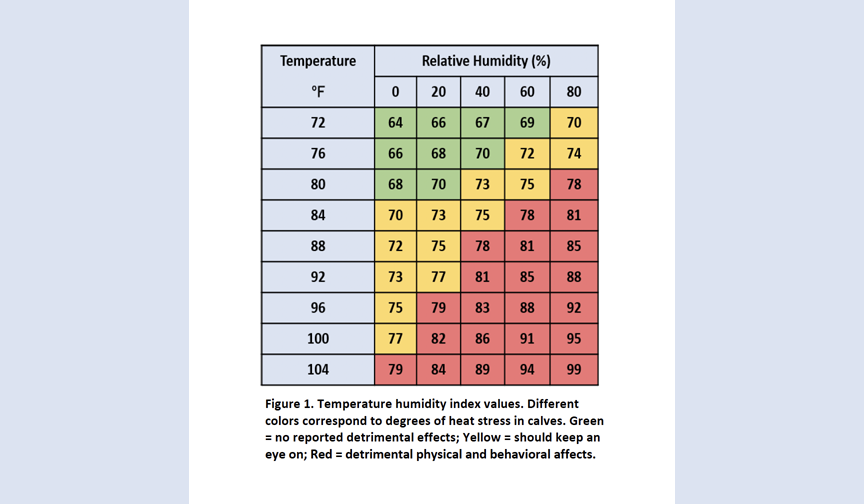
Heat stress is a significant threat in livestock agriculture, impacting animal health, productivity and overall welfare. It is commonly assessed using the
Dairy calves are particularly vulnerable to the negative effects of heat stress. Though the literature on the THI value that signifies heat stress in calves is sparse, a study by Kovacs et al. (2020) established that a THI of 78 indicates heat stress in calves, based on observed physiological responses related to compromised calf wellbeing. A THI of 78 is equivalent to a temperature of 88 degrees with 40% humidity (Figure 1). This article will explore the physiological and behavioral impacts of heat stress on dairy calves and stress the importance of proactive mitigation measures.
The Impact of Heat Stress on Calves
- Physiological Responses: Heat stress disrupts the normal functions of dairy calves, causing an array of negative effects. As the environmental temperature rises, the calves’ ability to dissipate heat diminishes, leading to increased respiration and heart rates, panting, higher rectal and ear temperatures, and elevated salivary cortisol concentrations. Research also reveals that heat-stressed calves eat less5, which compromises nutrient absorption and impairs gastrointestinal function, all culminating in insufficient growth rates and weakened immune responses.
- Growth and Development: High ambient temperatures can impede nutrient use and increase energy requirements for thermoregulation, diverting crucial resources from growth. This energy deficit affects calves’ ability to attain optimal body weight, skeletal development and muscle mass. Moreover, heat-stressed calves often display delayed puberty and diminished reproductive performance later in life, impacting overall dairy herd productivity.
- Immune Function: Heat stress undermines the immune system of dairy calves, increasing their susceptibility to diseases and infections. Long-term exposure to high temperatures disrupts immune cell function and enhances vulnerability to bacterial, viral and parasitic pathogens. Elevated stress hormone levels, such as cortisol, suppress the immune response, resulting in decreased disease resistance and increased mortality rates.
- Behavioral Changes: Heat stress prompts dairy calves to modify their behavior as they try to alleviate thermal discomfort. Calves may reduce activity, spending more time lying down and seeking shade. Alternatively, they might display signs of restlessness as the calf attempts to dissipate heat.
Strategies to Mitigate Heat Stress in Calves
- Adequate Shelter and Ventilation: It is crucial to provide dairy calves with well-designed and properly ventilated housing to mitigate the effects of heat stress. Suitable shade, ventilation and cooling systems can help establish a favorable microclimate, reducing overheating risks and heat-related illnesses. Well-ventilated hutches such as those that have rear and roof ventilation panels help improve air flow which helps reduce moisture and ammonia build up that can cause respiratory diseases.
- Nutritional Management: Providing nutrient-rich, balanced diets is essential to support the growth and development of dairy calves under heat stress. A key feeding strategy is ensuring calves have constant access to fresh, clean water. This can be achieved by checking and changing the water after each feeding, or—if feeding occurs in the morning and evening—by refreshing the water in the afternoon. Adding electrolytes to the water can also help maintain hydration during hot weather. One often-overlooked factor is the color of feeding and water buckets. Bucket color affects water temperature and calf drinking behavior. For example, black rubber buckets absorb more heat and can raise water temperatures, potentially discouraging calves from drinking. In contrast, white plastic buckets stay cooler and may promote better water intake. Finally, increasing the energy density of the diet is recommended to meet the higher maintenance requirements caused by heat stress.
- Heat Stress Alleviation Techniques: Cooling strategies can substantially reduce heat stress impact on dairy calves. Evaporative cooling, misting and sprinkler systems can improve heat dissipation and provide relief from high temperatures. Shaded areas such as hutches can also help create a comfortable environment for calves. However, hutches may be susceptible to solar radiation and can elevate interior temperatures more than external ones. Therefore, well-ventilated hutches are essential to lower internal temperatures.
- Heat Stress Monitoring: Regular monitoring of environmental conditions and calf behavior is essential for identifying signs of heat stress. Under normal conditions, calves have a respiration rate of 24 to 36 breaths per minute13. Heat stress can cause a noticeable increase in this rate, often accompanied by panting. Tools such as temperature loggers and visual observations can help assess the severity of heat stress and guide adjustments to management practices. When using temperature loggers, place them in shaded areas that closely mimic the calves’ living conditions to obtain accurate readings. Additionally, regularly observing calves for signs like rapid breathing or open-mouth panting can provide valuable insight into their comfort and well-being.
Conclusion
Heat stress is a considerable challenge to the health and welfare of dairy calves, affecting their growth, immunity and future performance. Dairy producers must implement proactive measures to reduce its impact. By providing suitable shelter, optimizing nutrition and using heat stress alleviation techniques, dairy farmers can safeguard their calves’ welfare and performance, thus contributing to a sustainable and profitable dairy industry.
References at: https://texasdairymatters.tamu.edu/wp-content/uploads/sites/10/2025/07/Heat-Stress-Calves_July-2025_FINAL.pdf


Be the first to comment