
Weed Management in Forages
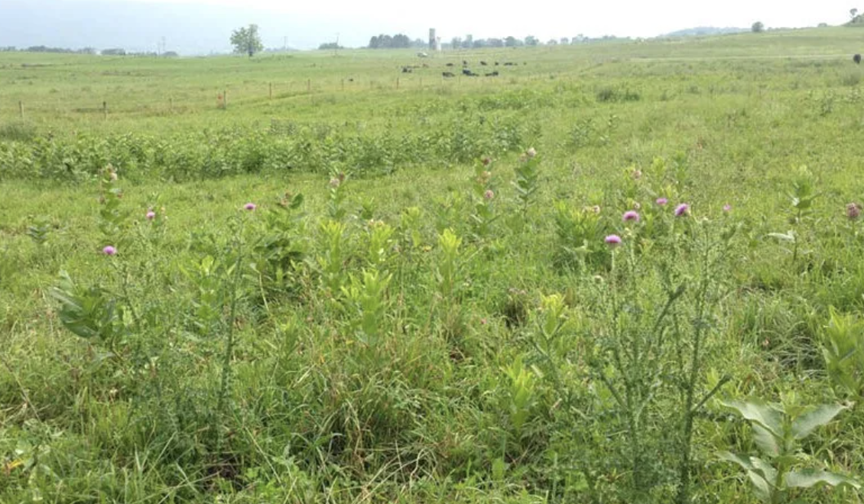
We are approaching an excellent time of year to manage biennial and perennial weeds, especially in grass pastures and hayfields. Biennials such as common burdock, wild carrot, and thistles (bull, musk, and plumeless) are much easier to kill while in the rosette stage of growth and before they survive a winter. Once they start growing in the spring, they rapidly develop toward reproduction, making them harder to control. As you have heard many times before, late summer and fall are the best times to control most perennials with a systemic herbicide because the
The most common herbicides used to control many of the broadleaf weeds in the fall are 2,4-D and dicamba (Clarity, etc.) for broadleaves. However, other systemic products such as triclopyr (e.g., Crossbow, Candor, Crossroad, Remedy Ultra, PastureGard HL) or metsulfuron can be options as well. The use of picloram products such as GrazonPD3, Graslan, Gunslinger P+D, and Triumph XTR can be used to manage more difficult-to-control weeds like horsenettle and milkweed in permanent pasture settings; but don’t use these in hayfields. A combination of
Mow Japanese Stiltgrass in Pastures Soon
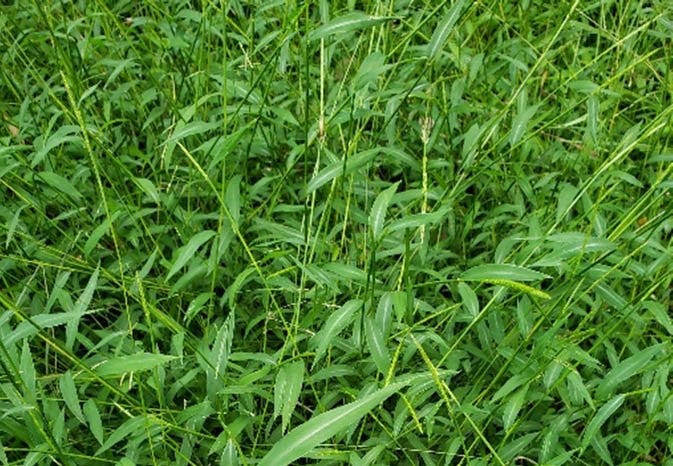
Japanese stiltgrass is an aggressive annual species and will die off this fall; however, it is best to prevent as much seed production before it dies. Unlike crabgrass and other grassy weeds, stiltgrass flowers and sets seeds much later, from mid-September through October. When you start seeing seed heads but before they drop their seeds, mow as low as possible to destroy them. Spot spraying with glyphosate can help if the seeds have not progressed too far into their maturation phase. Currently, there are no labeled post herbicides that effectively and selectively control stiltgrass without injuring the desirable forage grasses. Plateau can be used at 4 to 6 fl oz/acre earlier in the season but it can cause some crop injury especially to timothy and tall fescue. Furthermore, stiltgrass will be too mature for effective control with selective herbicides such as Plateau. Prowl H2O or Satellite HydroCap can be applied in early spring to control germinating seedlings.
Weed Control in Fall-seeded Forages
Keep in mind that several herbicides (e.g., Butyrac, Pursuit, Raptor/Beyond Xtra, Prowl, Kerb, Meastro, MCPA, Poast, Select) can be used to kill winter annual weeds that compete with newly seeded forage stands. However, make sure the forages have developed enough to tolerate the herbicides applied. In most cases, alfalfa needs at least 2 fully expanded trifoliate leaves; however, this can vary depending on the herbicide. If it is a mixed stand of alfalfa/grass, most herbicides might cause significant injury or death to the seedling grasses (e.g., Pursuit, Prowl). Therefore, it is best to wait until the grasses are fully established next year and have gone through a first cutting.
Kill Declining Stands of Sod Now
Fall is the best time to kill declining sod stands (i.e., pure stand alfalfa or mixtures). Although glyphosate is better at controlling alfalfa in the fall than in the spring, an additional herbicide application (e.g., 2,4-D/dicamba) or tillage will be required to completely control the alfalfa/mixture. Unless you plan to get one last spring cutting, now is the time to control that old hay field; do not wait until spring when it is more difficult to get an effective burndown kill prior to planting.
Weed Management After Silage Harvest
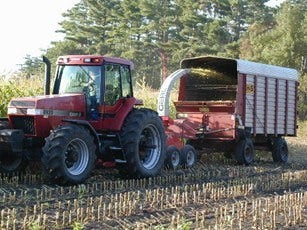
Now is the time of year when we start to get questions about the possibility of controlling weeds after silage harvest. The answers depend on what kind of weeds are being targeted. If perennial weeds (such as pokeweed, horsenettle, smooth groundcherry, Canada thistle, quackgrass, Johnsongrass, and dandelion) or biennial weeds (such as common burdock, wild carrot, and bull thistle) are present after silage harvest, then
If annuals are the target, the primary goal right now would be to prevent seed production. Of extreme importance, monitor the status of Palmer amaranth and waterhemp once the crop is removed. If the plants are not cut low enough, new shoots can develop at the nodes and produce viable seed this fall. Hopefully, no new Palmer germination flushes or much growth will occur in the coming weeks, but it still could happen if the weather stays mild. Palmer plants do not need to reach a few feet tall to develop a seed head. Even if a plant is less than a foot tall, it can still set seeds. Consider applications of 2,4-D, dicamba, Gramoxone, or Liberty if these weed species continue growing or start to germinate after harvest. Tillage can also be a means of control if possible. (On another note, if harvesting a field infested with Palmer or waterhemp, make sure to thoroughly clean the combine or chopper before moving to the next field or farm. Consider moving to a field that will be planted to corn next season, since better herbicide options exist in that crop to control these weeds. If possible, it is best to harvest contaminated fields last in order to spend time this winter removing components and doing a comprehensive cleaning of the machine. Since the seeds are very small, it is extremely difficult to remove them, but this is necessary to prevent spread.)
Furthermore, below are some important considerations when making late-season herbicide applications:
- Make sure that the foliage on the weeds appears relatively healthy and capable of absorbing the herbicide spray. Plants that have been damaged by insect feeding, drought, harvest equipment, frost, or autumn leaf senescence are not good candidates for fall applications.
- Make sure to use adequate herbicide rates, high spray volumes, and get good spray coverage over the weeds for effective kill.
- Favorable air temperatures should be a consideration immediately before, during, and after application. In general, the warmer the better, with daytime high temperatures in the mid-50s at a minimum. Cold nights and cool, cloudy days will reduce and slow the effectiveness of the applications. The more active the weeds are growing, the better the herbicide performance.
- Consider crop rotations, since some herbicides that are very effective on many perennial weeds may interfere with crop establishment either this fall or next spring.
Appendices
table 2.6-11a – Relative effectiveness of herbicides (Tradename and rate/acre) used in grass pasture, hay, and CRP grassland for winter annuals
| Plant | 2,4-D1 (2–3 pt) | 2,4-D + dicamba1 (1 qt + 1 pt) | Aim (1–2 oz) | Chaparral (2–3 oz) (VA,WV) | Dicamba (1 pt) | Crossbow1 (2–4 qt) | DuraCor (12 to 20 fl oz/a) (PA, VA, WV) | GrazonNext HL (1.5–2.6 pt) (PA,VA,WV) | Grazon P+D (3–4 pt) (VA,WV) | Metsulfuron 60DF (0.1–0.3 oz) | Milestone (5–7 oz) | PastureGard HL (1–1.5 pt) | Remedy Ultra (2–4 pt) | Roundup/glyphosate (1–2 qt) (spot treatment) | Stinger (0.66–1.33 pt) | Surmount (1.5–3 pt) (VA, WV) |
|---|---|---|---|---|---|---|---|---|---|---|---|---|---|---|---|---|
| Site of Action Number | 4 | 4 | 14 | 4/2 | 4 | 4/4 | 4/4 | 4/4 | 4/4 | 2 | 4 | 4/4 | 4 | 9 | 4 | 4/4 |
| Chamomile, mayweed | 7 | 10 | 6 | L | 8+ | 8 | — | 7+ | — | 10 | — | — | — | 9 | 9 | — |
| Chickweed, common | 7 | 8 | 6 | 10 | 7 | 9 | 8+ | 9 | 8 | 10 | 7 | 8 | 7+ | 10 | 6 | 9 |
| Cockle, corn | 8 | 10 | 9 | L | 10 | 8+ | — | — | — | L | — | — | — | 10 | N | — |
| Cockle, cow | 8 | 10 | 9 | 9+ | 10 | 8+ | — | — | — | 9 | — | — | — | 10 | N | — |
| Fleabane spp. | 9 | 10 | 7 | 9 | 8 | 9+ | L | 8 | 9 | 9 | L | — | — | 8+ | 9 | — |
| Henbit/deadnettle | 6 | 8+ | N | 9 | 7+ | 9+ | 9 | 8 | 9+ | 9 | 8+ | 8+ | 7+ | 9+ | — | 9 |
| Horseweed/marestail | 9 | 9 | N | 9 | 9 | 10 | 9 | 9 | 10 | 9 | 9+ | 6 | 6 | 9+ | 9+ | 9 |
| Mustard, garlic | N | 8 | 7 | 8 | 7 | 8 | — | — | — | 8 | — | — | 8 | 8 | N | — |
| Mustard spp. | 9 | 10 | 8+ | 8 | 8 | 10 | — | 7+ | 7 | 8+ | N | 8 | 8 | 10 | N | — |
| Pennycress, field | 9 | 10 | 8+ | 10 | 8 | 9+ | — | 8 | 10 | 9 | — | L | — | 10 | N | 9+ |
| Pepperweed spp. | 9 | 10 | 8+ | 8 | 8 | 9+ | L | 8 | 7 | 10 | N | 8 | 8 | 10 | N | — |
| Rocket, yellow | 9 | 10 | 9 | 8+ | 9 | 10 | — | 8 | — | 9 | — | — | — | 9 | 6 | — |
| Shepherdspurse | 8+ | 10 | 9 | 10 | 8 | 9 | — | 8 | — | 10 | — | — | — | 10 | N | — |
Table 2.6-11b. Relative effectiveness of herbicides (Tradename and rate/acre) used in grass pasture, hay, and CRP grassland for Summer annuals
| Plant | 2,4-D1 (2–3 pt) | 2,4-D + dicamba1 (1 qt + 1 pt) | Aim (1–2 oz) | Chaparral (2–3 oz) (VA,WV) | Dicamba (1 pt) | Crossbow1 (2–4 qt) | DuraCor (12 to 20 fl oz/a) (PA, VA, WV) | GrazonNext HL (1.5–2.6 pt) (PA,VA,WV) | Grazon P+D (3–4 pt) (VA,WV) | Metsulfuron 60DF (0.1–0.3 oz) | Milestone (5–7 oz) | PastureGard HL (1–1.5 pt) | Remedy Ultra (2–4 pt) | Roundup/glyphosate (1–2 qt) (spot treatment) | Stinger (0.66–1.33 pt) | Surmount (1.5–3 pt) (VA, WV) |
|---|---|---|---|---|---|---|---|---|---|---|---|---|---|---|---|---|
| Site of Action Number | 4 | 4 | 14 | 4/2 | 4 | 4/4 | 4/4 | 4/4 | 4/4 | 2 | 4 | 4/4 | 4 | 9 | 4 | 4/4 |
| Amaranth, spiny | 9 | 10 | 9 | 8+ | 9 | 9 | L | 8 | 7+ | 8 | 8 | N | N | 9 | 6 | 9 |
| Cocklebur, common | 9 | 10 | 8 | 10 | 10 | 10 | 9 | 9 | 10 | 8+ | L | 8+ | 8+ | 9 | 9 | 9 |
| Groundsel, common | 7 | 7 | 8 | 9 | 6 | 8 | — | 7 | — | 9+ | — | — | — | 9 | 9 | L |
| Jimsonweed | 8 | 10 | 9 | 8+ | 10 | 9 | 8+ | 9 | 7 | 9 | 8+ | — | — | 9 | 8 | 7+ |
| Lambsquarters, com-mon | 10 | 10 | 9 | 9+ | 10 | 10 | 10 | 9 | 9+ | 9 | 9+ | 9 | 9 | 9 | 6 | 10 |
| Lettuce, wild/prickly | 9+ | 10 | 9 | 10 | 8+ | 9 | 8 | 9 | 10 | 9 | 9+ | 9 | — | 9 | 9 | 9 |
| Nightshade, eastern black | 7+ | 8+ | 9 | 8+ | 8+ | 8+ | — | 7 | 6 | 8 | 9 | 6 | — | 9 | 8 | L |
| Perilla mint | 7 | 8 | — | — | 7 | 8 | 8 | 8 | 7 | — | — | — | — | 8+ | — | — |
| Pigweed spp. | 9 | 10 | 9 | 9 | 9 | 9 | 8+ | 8 | 7 | 10 | 9 | 9 | 8 | 9 | 6 | 9+ |
| Ragweed, common | 9 | 10 | 7 | 9 | 9 | 10 | 9 | 9 | 9+ | N | 9 | 9 | 8+ | 10 | 9+ | 9 |
| Ragweed, giant | 8+ | 10 | N | 9 | 9 | 10 | 8+ | 9 | 9+ | N | 9 | 9 | 8+ | 10 | 9+ | 9 |
| Smartweed spp. | 7 | 9 | N | 9 | 8 | 9 | L | 9 | 9 | 7 | 8+ | N | — | 9 | 8+ | 9+ |
| Stiltgrass, Japanese1 | N | N | N | N | N | N | 7 | 7 | N | N | 7 | N | N | 9 | N | N |
| Velvetleaf | 8+ | 10 | 9 | 8 | 10 | 9 | — | 8 | 8+ | 8 | — | 9 | — | 9 | 6 | 9 |
Table 2.6-11c. Relative effectiveness of herbicides (Tradename and rate/acre) used in grass pasture, hay, and CRP grassland for Biennials
| Plant | 2,4-D1 (2–3 pt) | 2,4-D + dicamba1 (1 qt + 1 pt) | Aim (1–2 oz) | Chaparral (2–3 oz) (VA,WV) | Dicamba (1 pt) | Crossbow1 (2–4 qt) | DuraCor (12 to 20 fl oz/a) (PA, VA, WV) | GrazonNext HL (1.5–2.6 pt) (PA,VA,WV) | Grazon P+D (3–4 pt) (VA,WV) | Metsulfuron 60DF (0.1–0.3 oz) | Milestone (5–7 oz) | PastureGard HL (1–1.5 pt) | Remedy Ultra (2–4 pt) | Roundup/glyphosate (1–2 qt) (spot treatment) | Stinger (0.66–1.33 pt) | Surmount (1.5–3 pt) (VA, WV) |
|---|---|---|---|---|---|---|---|---|---|---|---|---|---|---|---|---|
| Site of Action Number | 4 | 4 | 14 | 4/2 | 4 | 4/4 | 4/4 | 4/4 | 4/4 | 2 | 4 | 4/4 | 4 | 9 | 4 | 4/4 |
| Burdock, common | 9 | 10 | N | 8+ | 8 | 9 | 9 | 8 | 9+ | 7 | 9 | 9 | 9 | 9 | 9 | 8 |
| Carrot, wild | 9 | 10 | N | 10 | 8 | 9+ | 10 | 8 | 9+ | 9 | N | 7 | 7 | 9 | 6 | 8+ |
| Evening primrose, common | 9 | 10 | 7+ | 9 | 8 | 9+ | — | 9 | — | — | 9 | — | — | 10 | — | — |
| Evening primrose, cutleaf | 9 | 10 | N | 8+ | 7 | 8 | L | 9 | 9 | 7+ | 9 | 8 | 8 | 6 | — | — |
| Hemlock, poison | 7+ | 9 | 7+ | N | 8 | 9 | L | 8 | 8+ | N | N | N | N | 9 | N | 8 |
| Mullein, common | N | 6 | N | 9+ | N | N | L | — | 7+ | 8 | — | N | N | — | N | 7+ |
| Parsnip, wild | 9 | 10 | N | 9 | 9 | 10 | 9 | 8+ | 8+ | 7 | 7 | — | — | 9 | N | — |
| Teasel | 7+ | 10 | 8 | 9 | 9 | 8+ | 9 | 8+ | 8+ | 6 | 9 | 9 | 9 | 9 | 9 | — |
| Thistle, bull | 9+ | 10 | N | 9+ | 9 | 9+ | 10 | 9 | 9 | 6 | 9 | 6 | 7 | 9 | 9+ | 9 |
| Thistle, musk | 8+ | 10 | N | 9+ | 9 | 9+ | 10 | 9 | 9 | 8 | 9+ | 6 | 7 | 9 | 9+ | 8+ |
| Thistle, plumeless | 8+ | 10 | N | 9+ | 9 | 9+ | 10 | 9 | 9 | 8 | 9 | 6 | 7 | 9 | 9+ | 8+ |
Table 2,6-11d. Relative effectiveness of herbicides (Tradename and rate/acre) used in grass pasture, hay, and CRP grassland for Herbaceous Perennials
| Plant | 2,4-D1 (2–3 pt) | 2,4-D + dicamba1 (1 qt + 1 pt) | Aim (1–2 oz) | Chaparral (2–3 oz) (VA,WV) | Dicamba (1 pt) | Crossbow1 (2–4 qt) | DuraCor (12 to 20 fl oz/a) (PA, VA, WV) | GrazonNext HL (1.5–2.6 pt) (PA,VA,WV) | Grazon P+D (3–4 pt) (VA,WV) | Metsulfuron 60DF (0.1–0.3 oz) | Milestone (5–7 oz) | PastureGard HL (1–1.5 pt) | Remedy Ultra (2–4 pt) | Roundup/glyphosate (1–2 qt) (spot treatment) | Stinger (0.66–1.33 pt) | Surmount (1.5–3 pt) (VA, WV) |
|---|---|---|---|---|---|---|---|---|---|---|---|---|---|---|---|---|
| Site of Action Number | 4 | 4 | 14 | 4/2 | 4 | 4/4 | 4/4 | 4/4 | 4/4 | 2 | 4 | 4/4 | 4 | 9 | 4 | 4/4 |
| Aster spp. | 9 | 10 | N | 9 | 8+ | 9 | L | 7 | 8 | 7 | — | — | — | 9 | 9+ | — |
| Bedstraw, smooth | 7 | 7 | 6 | 9 | N | 8 | L | 9 | 7 | N | 9 | L | — | 9 | 7 | L |
| Bindweed, field | 8 | 8+ | 6 | — | 8+ | 8 | — | 7 | 6 | N | — | 7 | 7 | 8 | N | 8 |
| Bindweed, hedge | 9 | 10 | N | — | 9 | 9 | — | 8 | 8+ | N | — | 7+ | 8 | 8 | N | 8+ |
| Brackenfern | 7 | 7 | N | 7 | N | 7+ | — | 7 | — | 7 | — | — | — | 6 | — | — |
| Buttercup spp. | 8+ | 9 | 7 | 8+ | 8 | 10 | 10 | 9 | 10 | 9 | 8+ | 8 | 8 | 9 | 8 | 8+ |
| Catsear, common | 7 | 9 | N | 9 | 7+ | — | — | 9 | — | — | 9 | — | — | 8+ | — | — |
| Chickweed, mouseear | 6 | 8 | 6 | 10 | 7+ | 8+ | 9 | 7 | 9 | 10 | 8 | 8 | 8+ | 9 | 6 | 9 |
| Chicory | 9 | 10 | 7 | 9 | 8 | 9 | 9 | 9 | 9+ | 7+ | 9 | 9 | 8+ | 9 | 9 | 8+ |
| Clover spp. | 7 | 8+ | N | 10 | 8+ | 8+ | 9 | 9+ | 10 | 8+ | 9+ | 8+ | 9 | 10 | 9 | 10 |
| Cockle, white | 7 | 9 | 6 | 8 | 8+ | 9 | — | N | — | 8 | — | L | — | 9+ | 9 | L |
| Daisy spp. | 9 | 10 | N | 9 | 8+ | 9+ | L | 9 | 8 | 6 | 9 | — | — | 8+ | 8+ | — |
| Dandelion | 9+ | 10 | 6 | 8+ | 7 | 9+ | 9 | 9 | 9 | 7+ | 9 | 8 | 7+ | 7 | 7 | 9 |
| Dock spp. | 8 | 10 | 7 | 9 | 8 | 9 | 9 | 9 | 9 | 8+ | 9 | 8 | 8 | 9 | 7+ | 9 |
| Dogbane, hemp | 6 | 7 | N | N | 7 | 8 | — | 6 | 7 | N | N | 7 | 7 | 8 | 6 | 8+ |
| Dogfennel | 7 | 7+ | N | N | 7 | 7 | — | 7 | 7+ | 6 | N | 9 | 8 | 8 | 6 | 9 |
| Garlic or onion, wild | 8 | 8+ | N | 9 | 7 | 8 | — | 6 | N | 9+ | N | N | N | 9 | N | N |
| Goldenrod spp. | 8 | 8+ | N | 8 | 7 | 8 | N | 8 | 9 | 8 | 6 | 7 | 7+ | 9 | 6 | 9 |
| Groundcherry spp. | 7 | 7+ | 7 | 9 | 7 | 8+ | — | 7 | — | — | 9 | — | — | 8 | N | — |
| Hawkweed spp. | 8 | 9 | 6 | L | 7+ | 9 | L | 8 | 6 | 7 | L | — | — | 9 | 8 | — |
| Horsenettle | 6 | 7+ | N | 9 | 7 | 8 | 9 | 8+ | 9 | 7 | 9 | 6 | 6 | 8 | N | 8+ |
| Ironweed, tall | 8 | 9 | N | 8+ | 8+ | 9 | 9 | 9 | 9+ | N | 8 | 7 | 6 | 9 | 6 | 8+ |
| Knapweed, spotted | 7 | 8 | N | 8+ | 7 | 7 | 9+ | 9 | 9 | 6 | 8+ | 6 | 6 | 9 | 9 | 8+ |
| Knotweed, Japanese | 7 | 7+ | 6 | 7+ | 7+ | 7 | 8+ | 7 | N | — | 7+ | N | 6 | 8 | 8 | L |
| Lespedeza, sericea | N | N | N | 6 | N | 7+ | — | N | 6 | 6 | N | 8 | 8 | 7 | N | 7 |
| Milkweed, common | 6 | 7 | N | N | 6 | 7 | — | 6 | 7 | N | N | 6 | 6+ | 7+ | N | 8+ |
| Mugwort | 6 | 7 | 6 | 8 | 7 | 8 | L | 8 | 7 | 7 | 8 | — | — | 7 | 8+ | — |
| Nettle, stinging | 8 | 9 | 6 | 8 | 8 | 9 | — | 9 | 9 | 6 | 9 | 9 | 9 | 9 | 7 | 9 |
| Nightshade, bitter | 7 | 8+ | 6 | — | 7 | — | — | 7 | 7 | — | — | — | — | 9 | 8 | — |
| Plantain spp. | 8 | 10 | 7 | 9 | 8 | 9 | 10 | 7+ | 9 | 9 | N | 9 | 8 | 9 | N | 8+ |
| Pokeweed, common | 7 | 7 | N | 6 | 7 | 9 | 7 | 8 | 7+ | N | 7+ | N | N | 8 | N | 8+ |
| Snakeroot, white | 8 | 9 | 7 | — | 9 | 9 | 9 | 8 | 8 | N | — | — | — | 8 | N | — |
| Sorrel, red | 6 | 10 | 8+ | 8 | 8+ | — | — | — | 9 | 8+ | — | 6 | — | 9 | 8 | — |
| Sowthistle, perennial | 7 | 9 | N | 8+ | 8 | 8 | 9 | 9 | 9+ | 7 | 9 | 8 | 8 | 9 | 8 | — |
| Star-of-Bethlehem | N | N | 8+ | — | N | — | — | — | — | — | — | — | — | 8 | — | — |
| Thistle, Canada | 7 | 7+ | N | 9+ | 7 | 8 | 9 | 9 | 9 | 7 | 9 | 8 | 6 | 8 | 9 | 7 |
| Toadflax, yellow | 7 | 8 | 8+ | — | 7+ | — | — | 7 | — | — | — | — | — | 8 | N | — |
| Waterhemlock, spotted | 7+ | 9 | N | — | 8 | 9 | — | 7 | — | N | — | — | — | 9 | N | — |
| Wingstem | 8+ | 8+ | N | 9 | 6 | 7+ | 9 | 9 | 9 | N | 9 | 6 | 7+ | — | 6 | 8+ |
| Woodsorrel, yellow | 7 | 7+ | 7 | L | 7 | 8 | — | 8+ | — | 9 | — | — | — | 9 | 8 | — |
| Yarrow, common | 7 | 9 | N | L | 9 | 8+ | L | 7 | — | 8 | L | L | L | 9 | 7 | L |
Table 2.6-11e. Relative effectiveness of herbicides (Tradename and rate/acre) used in grass pasture, hay, and CRP grassland for Woody Perennials
| Plant | 2,4-D1 (2–3 pt) | 2,4-D + dicamba1 (1 qt + 1 pt) | Aim (1–2 oz) | Chaparral (2–3 oz) (VA,WV) | Dicamba (1 pt) | Crossbow1 (2–4 qt) | DuraCor (12 to 20 fl oz/a) (PA, VA, WV) | GrazonNext HL (1.5–2.6 pt) (PA,VA,WV) | Grazon P+D (3–4 pt) (VA,WV) | Metsulfuron 60DF (0.1–0.3 oz) | Milestone (5–7 oz) | PastureGard HL (1–1.5 pt) | Remedy Ultra (2–4 pt) | Roundup/glyphosate (1–2 qt) (spot treatment) | Stinger (0.66–1.33 pt) | Surmount (1.5–3 pt) (VA, WV) |
|---|---|---|---|---|---|---|---|---|---|---|---|---|---|---|---|---|
| Site of Action Number | 4 | 4 | 14 | 4/2 | 4 | 4/4 | 4/4 | 4/4 | 4/4 | 2 | 4 | 4/4 | 4 | 9 | 4 | 4/4 |
| Blackberry spp. | 6 | 6+ | N | 8 | 6 | 8 | — | N | 7+ | 7 | N | 7 | 7+ | 8 | 7 | 8 |
| Creeper, trumpet | 6 | 7+ | N | — | 6 | 8 | N | N | 7 | N | — | — | L | 7+ | N | 7 |
| Creeper, Virginia | 7 | 9 | N | — | 8 | 8+ | — | 7 | — | — | — | L | L | 8 | N | — |
| Dewberry spp. | 6 | 7 | N | L | 6 | 7+ | — | N | — | 8+ | — | — | — | 7 | 7 | 7 |
| Grape, wild | 8 | 9 | N | — | 8 | 9 | — | 8 | — | — | — | L | — | 8 | N | L |
| Honeysuckle spp. | 7 | 7+ | N | L | N | 8+ | — | 7 | 8 | 10 | — | L | — | 8 | N | L |
| Kudzu | N | 6 | N | 8 | 6 | 6 | L | 8 | 9 | N | 8 | 7 | 7 | — | — | — |
| Locust, black | 7 | 8+ | N | L | 8 | 8 | — | L | — | 7 | L | L | L | 8 | N | 9+ |
| Olive, autumn | 7 | 8 | N | — | 7+ | 8 | — | 7 | — | — | — | — | 9 | 8 | N | — |
| Poison-ivy, oak | 7 | 8+ | N | 6 | 7+ | 8+ | — | 7 | 8+ | 6 | — | L | L | 8 | N | 7 |
| Rose, multiflora | 6 | 7+ | N | 8 | 6 | 8+ | 6 | 7 | 8+ | 8+ | 6 | 6 | 8+ | 8 | N | 7 |
| Sumac spp. | 6 | 7+ | N | — | 7 | 8+ | — | L | 7 | N | — | L | L | 8 | 7 | 8 |
Weed control rating: 10 = 95–100%; 9 = 85–95%; 8 = 75–85%; 7 = 65–75%; 6 = 55–65% ; L = weed is listed as control on herbicide label, but local data is limited; N = less than 55% or no control ; — = not applicable or no local data available
*Herbicide contains multiple active ingredients. See Table 2.6-10 for prepackaged mixture, or co-packs, and their constituents.
This table compares the relative effectiveness of herbicides on individual weeds. Ratings are based on labeled application rates and weed size or growth stage and proper timing of application (see Table 2.6-17). Results may differ with variations in weed size, temperature, rainfall, soil moisture, soil type, and soil pH. Spike 20P also is available for control of problem woody perennials as well as some herbaceous perennials. See a Spike label for additional information. Some products show for which states they are registered under the rate. These products should only be used in the listed states.
1 Japanese stiltgrass control in grass forages is inconsistent. Prowl H2O or Satellite HydroCap can be applied to established forage grasses in early spring to control germinating Japanese stiltgrass seedlings. Aminopyralid-containing products can provide some residual control when applied in the early spring. Currently there are no labeled, POST herbicides that effectively and selectively control stiltgrass without injuring the desirable forage grasses. Facet L (quinclorac) is labeled in grass forages and has activity on foxtails, crabgrass, barnyardgrass (<2″ tall); but it has poor activity on Japanese stiltgrass and kills clover. Acclaim Extra (fenoxaprop) is not labeled for forages. Plateau controls stiltgrass but some cool season forages grasses are sensitive to it (see label for details). Pursuit also controls stiltgrass, but the label is ambiguous about its utility in grass forage settings.


Be the first to comment