
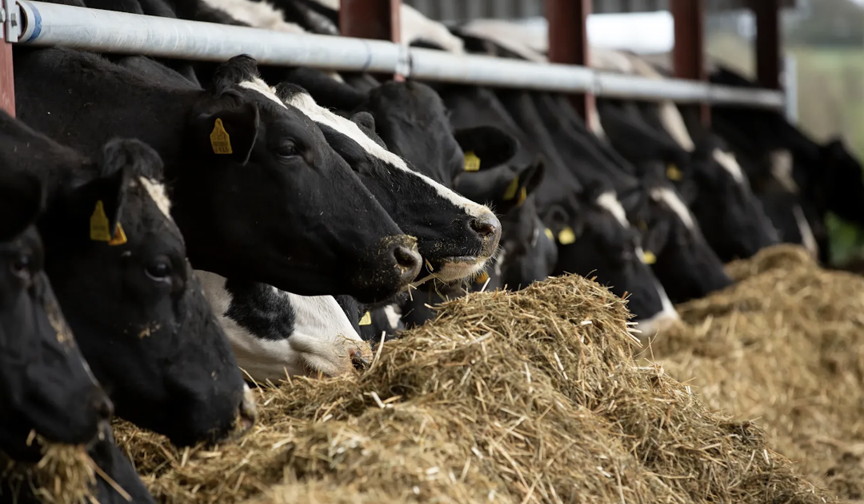
Dairy and cattle farmers can meet the challenge of rising temperatures and humidity by implementing practical strategies for cooling, hydration and nutrition in their herds. Improving ventilation and airflow, providing shade and clean drinking water, and supporting feed intake and dry matter intake can all help lower heat load and protect health, comfort and performance year-round.
What causes heat stress in dairy cows and beef cattle?
Heat stress occurs when cattle generate or absorb more heat than they can release. Cows are inefficient at sweating, and they rely heavily on breathing and heat loss through the skin to regulate their body temperature.
Cows will respond to heat stress by seeking shade, moving around less, and drinking more water. Producers may also see:
-
Reduced feed intake (>25.5˚ C)
-
Higher body temperatures (39˚ C)
-
Increased respiration rates (>70 RPM)
-
Hormonal changes
-
Lower immune function
-
Changes in rumen fermentation
Effects of heat stress on dairy and beef performance
The consequences of heat stress can be substantial. Dairy cow heat stress is commonly associated with milk yield losses of 10–25%, reduced milk components, and poorer reproductive performance. In beef cattle, reduced dry matter intake and altered feeding behavior result in lower daily liveweight gain and poorer feed efficiency.
Across all systems, heat stress increases maintenance energy requirements, elevates the risk of acidosis due to disrupted rumen function, and increases susceptibility to lameness, mastitis and higher somatic cell counts. These effects can persist beyond the heat event itself, particularly when animals are exposed to repeated periods of high temperatures.
Factors in heat stress levels
Multiple interacting factors may change stress levels, including:
-
Size of animal
-
Level of milk production
-
Ambient temperature
-
Humidity level
-
Degree of cooling at night
-
Duration of heat exposure
-
Ventilation and airflow
-
Water availability
-
Hair coat depth
Cooling strategies to reduce heat load in cattle
Providing effective shade, both indoors and outdoors, remains the single most effective strategy for reducing heat load in beef and dairy cattle. Shade reduces radiant heat gain and helps maintain lower body temperatures, particularly during the hottest part of the day.
Even at night, poor airflow and inadequate nighttime cooling can prevent animals from dissipating accumulated heat, leading to progressively higher body temperatures over consecutive days.
Equally important is ensuring unrestricted access to clean drinking water, as insufficient water availability rapidly compounds the effects of heat stress by limiting the animal’s ability to regulate body heat. Note that water intake can increase dramatically under heat stress: adult dairy cows may consume up to 100 liters per day, while beef cattle also show increased demand.
Managing heat stress in dairy systems during milking
In dairy systems, targeted cooling before and during milking can significantly reduce the negative effects of heat stress. High‑producing lactating cows yielding 45 liters of milk per day generate approximately 6,000 BTU of heat per cow, equivalent to the heat output of five hair dryers running on high speed. When large numbers of dairy cows are confined in a collecting yard, this heat production rapidly increases heat load.
Practical cooling measures during milking may include:
-
Minimizing time spent in collecting yards
-
Splitting up milking groups and milking at cooler times of day
-
Reducing movement during peak air temperatures
-
Installing and using fans and sprinklers
Improved airflow and increased wind speed in cubicle housing can also increase lying time, supporting rumination and dry matter intake.
Feed and silage management during heat stress
Hot weather also presents challenges around feed management and silage quality. Reduced feed intake during periods of heat stress means it can take longer to progress across the pit face, increasing the risk of silage heating and spoilage. As silage deteriorates, mycotoxins are more likely to develop, posing an increased risk to animal health, particularly in heat‑stressed cows whose immune function is already compromised.
Taking smaller, more frequent grabs from the pit face and maintaining a sharp block cutter or shear grab helps preserve a clean, compact silage face and limit spoilage.
Maintaining dry matter intake in hot conditions
Maintaining feed intake is critical, because reduced dry matter intake is one of the primary drivers of lost performance in both beef and dairy herds.
Some simple ways to maximize feed intake include:
-
Feeding during cooler parts of the day, such as early morning and late evening
-
Including highly digestible and palatable feed ingredients
-
Feeding smaller amounts more frequently
-
Keeping feed fresh and pushing it up regularly throughout the day
“Live yeast supplementation attenuates the effects of heat stress in dairy cows,” a 2025 study published in the journal Veterinary Sciences, reported that Holsteins supplemented with a live yeast culture based on Saccharomyces cerevisiae had significantly higher dry matter intake and milk yield. Read the study.
Supporting rumen health in heat-stressed cows
Heat stress also increases the risk of subacute ruminal acidosis in both beef cattle and dairy cows, due to altered feeding behavior and changes in rumen fermentation. As intake declines, offering more energy‑dense rations utilizing slower‑degrading starch sources can help maintain performance while minimizing rumen pH fluctuations. Supporting rumen stability becomes particularly important during prolonged periods of heat stress.
Alltech’s solutions for optimal rumen function have been shown to support dry matter intake. Feeding Yea‑Sacc® and Optigen® together provides a synergistic approach to stabilizing the rumen environment by optimizing rumen pH in heat‑stressed cows. This combination optimizes protein supply to meet higher energy requirements, supporting more consistent performance and feed efficiency in both beef and dairy herds throughout the summer.
Mineral nutrition and heat stress resilience
Mineral balance is another important consideration during hot weather, as increased sweating and saliva loss result in greater losses of sodium, potassium and magnesium.
Maintaining adequate mineral status is essential for regulating feed intake, water balance and metabolic function during periods of high heat load.
Alltech’s Bioplex® proteinated mineral range helps reinforce mineral availability, supporting resilience in cattle exposed to elevated ambient temperatures and high humidity.
The importance of managing heat stress
With increasingly variable and extreme weather patterns across Europe, the importance of reducing the effects of heat stress cannot be overstated. Proactive management, effective cooling strategies and targeted nutritional support allow both beef and dairy farmers to better manage heat production, maintain feed intake and protect animal performance and welfare throughout the summer months.
Frequently asked questions (FAQ)
What is the temperature humidity index (THI) threshold for heat stress?
For most cattle, heat stress begins when temperature humidity index (THI) exceeds 70. High-yielding dairy cows and finishing beef cattle are more vulnerable due to higher metabolic heat production.
How can dairy farmers protect dry matter intake during hot conditions?
Maintaining feed intake is critical, because reduced dry matter intake is one of the primary drivers of lost performance. Feeding during cooler parts of the day and keeping feed fresh can help stabilize intake patterns during hot conditions.
What are the most effective cooling strategies for cattle and dairy farming systems?
Providing effective shade and unrestricted access to clean drinking water are the most effective strategies for reducing heat load. Improving ventilation and airflow also helps cattle dissipate accumulated body heat over consecutive days.
Product availability will vary by region, and product descriptions and associated claims are not applicable in all markets.

Be the first to comment