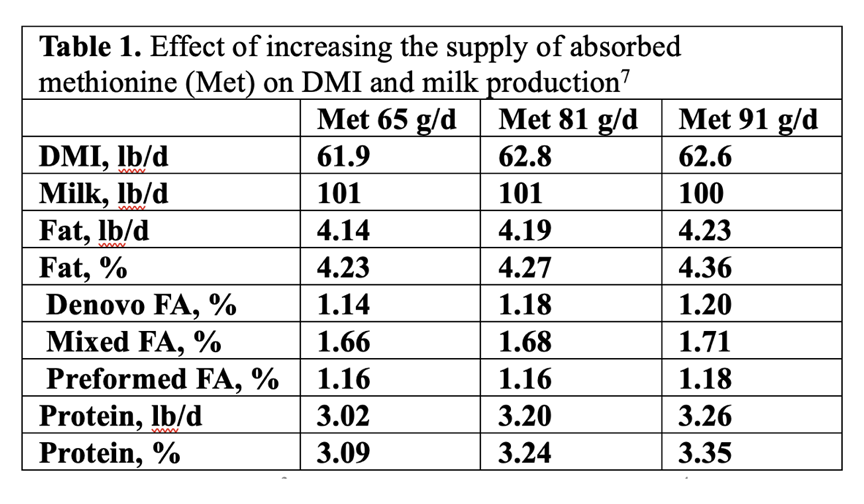
In recent studies, increasing the supply of AA to meet the requirements for production increases milk protein and, to a greater extent, increases milk fat. Using recommendations for AA previously determined at Cornell University5,6, the study7 shown in Table 1 assessed the effect of increasing the dietary inclusion of a rumen-protected methionine product to increase the methionine supply from 65 to 91 grams/day. Increasing methionine increased milk protein percent and yield, and increased milk fat by increasing de novo and mixed FA which are synthesized in the mammary gland. Meeting the requirements for AA can be achieved by feeding highly digestible NDF, starch, and sugar sources while balancing protein sources that are digested in the rumen (soybean meal, canola meal, hay crop silages) with protein sources that provide AA post-rumen (bloodmeal blends, heat-treated soybean meal, rumen-protected AA sources) to maximize microbial protein and reduce the excretion of protein nitrogen.
NMPF’s latest Regulatory Register is a special edition about the 2025 National Conference of Interstate Milk Shipments (NCIMS), which took place April 11-16 in Minneapolis, MN. The report provides an overview of the conference and [Read More …]
2024 contest includes new format, new categories, and over $28k in cash prizes The California Milk Advisory Board (CMAB) today announced the launch of the 2024 Real California Pizza Contest, the sixth annual search for [Read More …]
The money for Georgia milk producers allows for operation, education, and promotion Georgia dairy farmers voted in balloting held May 1 through May 30, to continue the one cent assessment per hundred pounds of milk [Read More …]
Copyright 2026 DairyBusiness, LLC. All Rights Reserved.
We use cookies to ensure that we give you the best experience on our website. If you continue to use this site we will assume that you are happy with it.



Be the first to comment