

Nutrition plays a vital role in the functionality of a cow’s immune system. It works synergically with the cow’s physiology to maintain its overall health and optimal immune strength. Deficiencies in key nutrients will greatly reduce immunity, so feeding to requirements, without cutting corners, must be the basis of every dairy operation. However, new research shows that targeted supplementation can boost immune function beyond what is considered normal or average. This allows herds to better tolerate common production stresses and udder challenges, for improved overall health and performance.
Cows with stronger immune systems do a greater job of fighting off mastitis-causing pathogens:
The immune system has numerous different components, both pathogen specific and nonspecific, which can reduce or eliminate bacterial invasion of the mammary gland. Nutrition can impact these components in a variety of ways, either supporting or impairing immune function. First, immune cells require specific nutrients, like selenium, copper, zinc, calcium, and vitamins (e.g., vit A, D, and E), and when cows are fed a diet lacking them, this can impair their defenses, all the while still providing proper nourishment for other important functions, such as milk and components production. So, while a diet might support substantial milk production, at the same time, the risk of mastitis can increase due to deficient immune function. Second, proper nutrition can reduce the occurrence of metabolic conditions (e.g., fat cow syndrome, ketosis, hypocalcemia) that suppress immunity, helping reduce the risk of mastitis. Finally, nutrition can go beyond meeting requirements, and boost immune function beyond average.
Research shows postbiotics can have a positive effect on reducing mastitis:
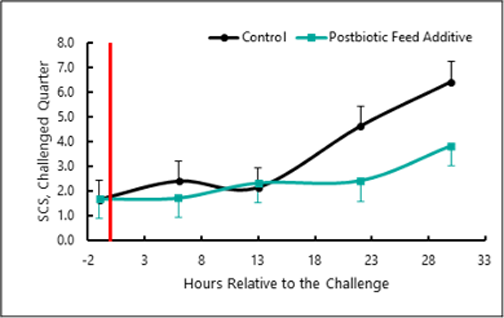
At the end of the day, the goal is to feed the immune system in a way that helps maintain udder health. Incorporating key micronutrients is crucial and impactful. However, we can go a step beyond and incorporate feed additives as supplements to get additional beneficial effects. This is where a natural postbiotic feed additive comes in. Research has shown the direct benefits of feeding a postbiotic feed additive to dairy cows on their udder health.
Promising results showing reduced mastitis incidence and lower somatic cells scores from use of postbiotic feed additives, specifically a Saccharomyces cerevisiae fermentation product (SCFP), were first reported by Dr. Jim
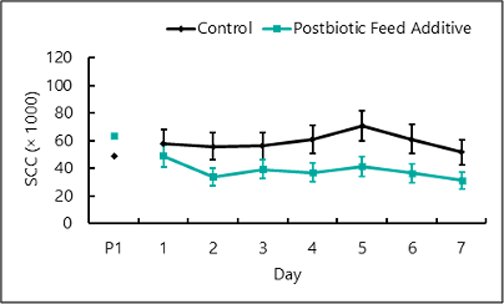
Heat stress can also compromise the reproduction, productivity, and health of a dairy cow. Among these negative effects, the decreased milk production and increased bulk milk SCC during summer are the most recognized and directly related to udder health. For example, a 2020 Iowa State University trial conducted in Dr. Lance Baumgard’s lab included the same SCFP postbiotic feed additive in dairy cow diets and then subjected them to a week-long heat stress challenge via electric heat blankets. Compared to control cows not fed the postbiotic additive and also subjected to heat stress, SCFP fed cows had almost 50% lower plasma cortisol, the stress related and immune suppressant hormone, and higher amounts of immune cells (9 to 26% more) in their blood. So is no surprise that postbiotic fed cows had a 36% lower somatic cell count during the intense heat stress challenge.
Somatic Cell Count (SCC)
As the immune system does not solely focus on defending the mammary gland, nutritional strategies to boost udder health, such as incorporating a postbiotic feed additive, will have great effects on all other systems, generating returning benefits in reproduction, and gut, feet, and respiratory health.



Be the first to comment