
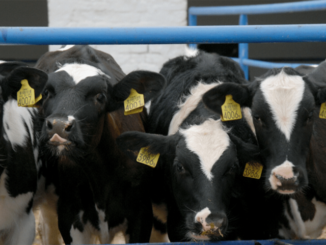
While there doesn’t seem to be much happening on the outside, inside the cow is an ongoing microscopic battle between good and evil. It happens within the cow’s microbiome, made up of trillions of bacteria, fungi, protozoa and archaea involved in either supporting or limiting a myriad of body functions.
Not all organisms are beneficial to the cow. While some organisms break down plant fibers that provide energy and other nutrients for the cow, others can be harmful and cause significant issues inside the cow that could even turn out to be fatal.
Outside Pressures Impact the Microbiome
The environment outside the cow impacts the microbiome inside the cow as well. We’ve seen this in research conducted on different Clostridium species. Certain parts of the country have specific Clostridium species that are not prevalent in other areas of the country, due to environmental factors—temperature, humidity, moisture levels, etc.—or different feedstuffs. For example, rations in California are generally higher in corn silage compared to New York rations which generally have higher haylage concentrations, which has an impact on pathogen load and type.
Regional differences aside, there are opportunities to influence the microbiome population by enhancing the number of beneficial organisms while limiting the growth of harmful ones. A useful tool to support this effort comes from feeding Bacillus organisms.
Bacillus are spore forming bacteria fed as microscopic spores that become active once they enter the cow. The first use of Bacillus was to inhibit pathogens in the rumen and gastrointestinal tract. Pathogens such as E. coli, Clostridium perfringens, Salmonella and others are present inside the cow’s digestive tract and can do significant harm. Certain Bacillus strains can produce antimicrobial peptides that inhibit pathogen growth.
More Than Just Controlling Pathogens
While reducing pathogen loads inside the gastrointestinal tract is important, we discovered they can do much more than just inhibit pathogen growth. One benefit is their ability to enhance the population of fiber digesting bacteria inside the rumen, which can help improve degradation of plant material and rumen efficiency.
While their work inside the rumen to enhance the role of beneficial bacteria is important, the good work of Bacillus continues farther down the digestive tract. One of the primary barriers to the entrance of harmful bacteria into the cow lies within the small and large intestine. This mucosal barrier includes cells bound together to create a protective wall to keep harmful bacteria from passing through. The tighter the junction between cells the more effective barrier they can create.
Research has shown that Bacillus can impact tight junction proteins to help create a tighter barrier inside the small and large intestine and prevent pathogens from entering the bloodstream through thedigestive tract. This helps prevent leaky gut syndrome, which can become a problem when cows are under stress—such as during transition or periods of excessive heat.
Because there are numerous strains of Bacillus, one strain is not like the other and each strain has a unique function. In the lab, we’ve seen that some strains of Bacillus inhibit pathogens very well while others have virtually no impact. This holds true for the effect on the cow’s immune system and other elements.
Targeting Region-Specific Issues
Understanding this regional diversity and unique nature of certain Bacillus strains, we’ve created regional batches of Bacillus to target issues that happen in specific areas. We’ve also developed Bacillus formulations for certain large dairies to help address specific challenges happening on a dairy.
Since Bacillus can inhibit pathogen growth, improve rumen efficiency and support better immune health, it would seem that overall production efficiency would be a benefit from the overlap of these activities. Increasing the tight junction proteins to make gastrointestinal tracts more resilient and inhibiting pathogen spread support better health, which enhances the performance of the cow. And performance continues to improve as a more beneficial population of microbes is present in the rumen to support efficiency gains.
With Bacillus products producers can create more resilient animals that can overcome health and stress challenges. Including a Bacillus product in the ration can help cows overcome reoccurring stressors and focus more on maintaining health and productivity.


Be the first to comment