

Why the Delay?
In fall 2020, the process of amending the wage methodology for the H-2A program began. First, in September, USDA issued a notice that it would no longer conduct the Farm Labor Survey, which is typically carried out in April and October and released in May and November, respectively. This change was important because the Department of Labor uses the data from the two surveys to calculate the annual national average gross wage rate for field and livestock workers, which becomes the AEWR. The annual national average gross wage rate for field and livestock workers is included in the November FLS report. Second, in November, DOL announced a final rule that would have updated the methodology for determining the annual AEWR in the H-2A visa program. Both actions were challenged in court by farmworker organizations.
Now, Those Wages
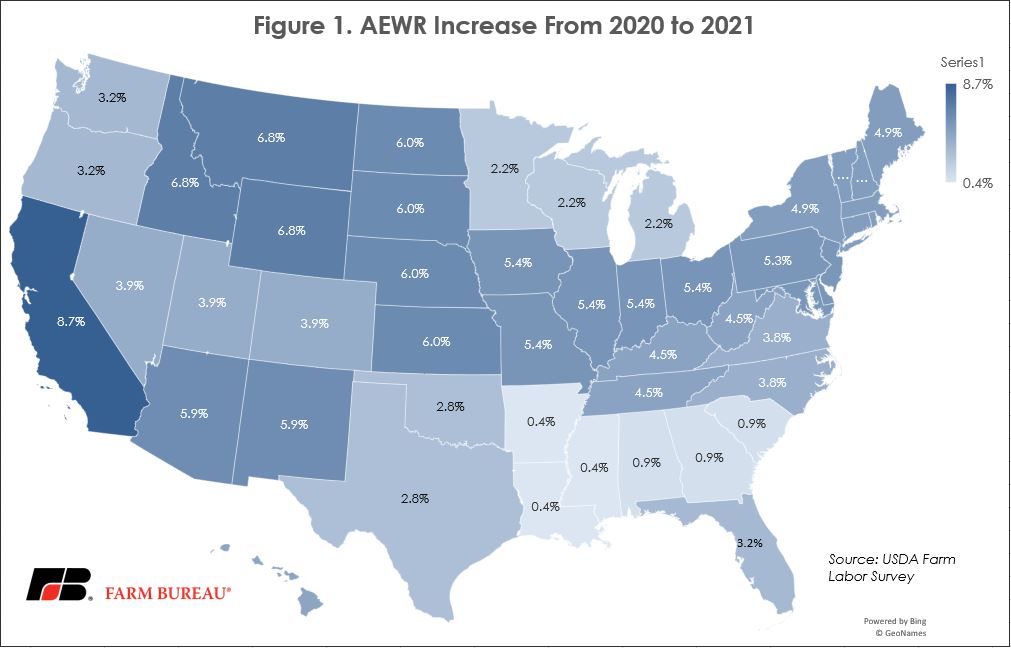
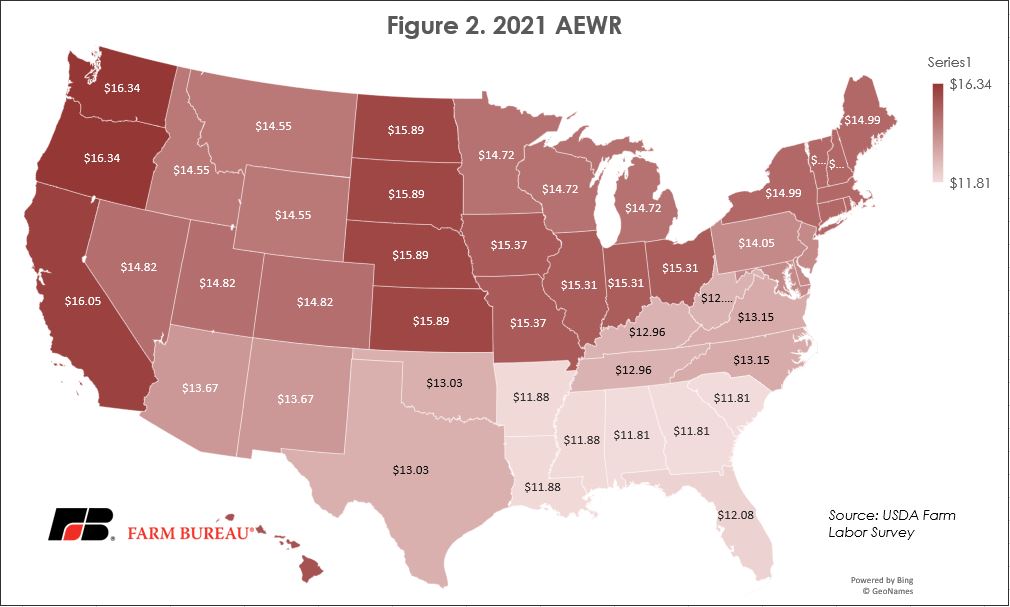
According to the FLS, the annual national average gross wage rate for field and livestock workers was $14.62 in 2020, up $0.63, or 4.5%, from $13.99 in 2019. By comparison, according to the BLS’ Employment Cost Index, nationally, compensation costs for private industry workers increased 2.6% for the 12-month period ending in December 2020.
The Long View
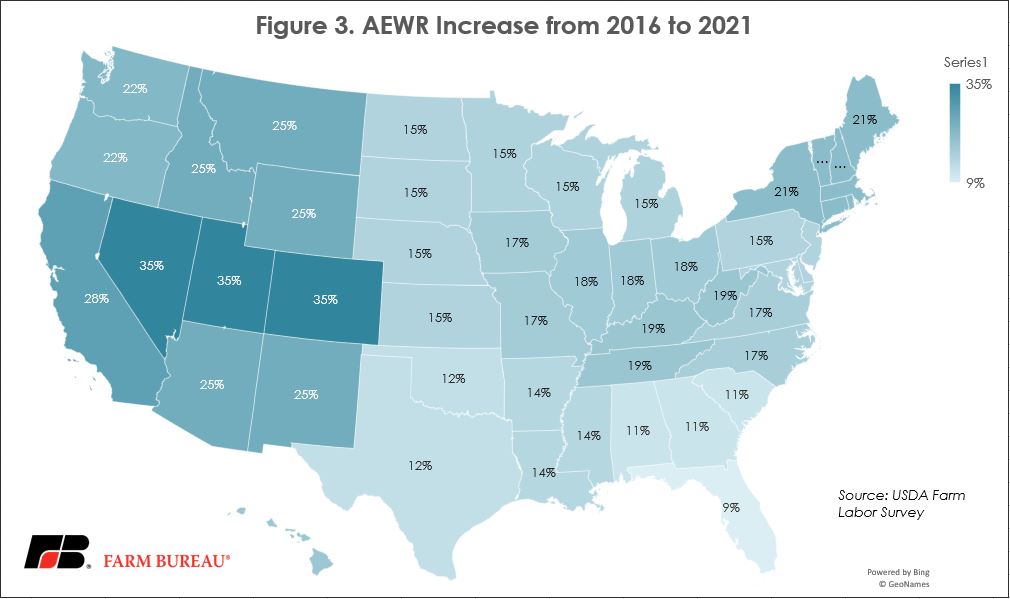
While a 4.5% single-year increase is sizable, the 2021 AEWR jump comes on the heels of several years of considerable wage rate increases. Over the last five years, the national average AEWR has increased by 20%. Again, however, regional wages are what really count. From this perspective, depending on the region, wages have increased between 9% and 35% over the last five years.
Contact:
Veronica Nigh
Economist
(202) 406-3622
veronican@fb.org
Allison Crittenden
Director, Congressional Relations
(202) 406-3634
allisonc@fb.org
twitter.com/@acritty

Be the first to comment